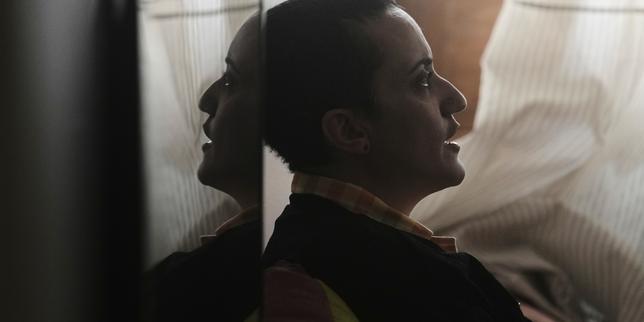
Western commentators love a neat, tidy story about press freedom. Usually, it goes something like this—a brave reporter fights a cartoonish villain, wins a shiny international award, and suddenly democracy blooms.
Lina Attalah doesn't buy that script. Not for a second.
If you look closely at her career in Cairo, the reality is way messier, tougher, and honestly much more instructive for anyone who actually cares about journalism today. Attalah, the co-founder and editor-in-chief of Mada Masr, has spent over two decades reporting in Egypt. Her core message is blunt. Nobody ever handed Egyptian journalists a "free space" to work in. Not before 2011, not during the revolution, and certainly not in the years since.
They had to carve out every millimeter of it themselves.
Why the "Golden Age" Myth Falls Apart
A lot of outside observers assume Egyptian media enjoyed some idyllic golden era right around the 2011 uprising before everything collapsed. That's a massive misconception.
When I look at the trajectory of Egyptian press history, the restrictions didn't suddenly materialize out of thin air in 2013 or 2014. Under Hosni Mubarak, red lines were everywhere. You knew where they were, even when they weren't written down in a penal code. State security watched newsrooms closely, editors practiced heavy self-censorship, and crossing the wrong business tycoon or military official could shut down an entire print run overnight.
What changed wasn't the existence of pressure. It was the sheer scale and technical sophistication of the squeeze.
In the mid-2000s, Attalah worked at Al-Masry Al-Youm and later led Egypt Independent, the English-language edition that became famous for sharp, uncompromising reporting. When management abruptly shut down Egypt Independent in 2013—literally pulling the final print edition right before it hit the streets—Attalah and her colleagues didn't pack up their desks and quit. They built Mada Masr from scratch in June 2013.
Think about the timing. June 2013 was one of the most polarized, volatile months in modern Egyptian history. Launching an independent, investigative outlet right then wasn't just bold. It was borderline stubborn.
The Illusion of Granted Freedom
Here is what Attalah gets that so many media executives in New York or London miss. Press freedom isn't a gift a government bestows on polite reporters. It's a constant tug-of-war.
When journalists wait around for legal protections or official blessings before doing hard investigative work, they've already lost. Attalah has repeatedly pointed out that every single inch of editorial independence in Cairo had to be claimed through daily practice, legal battles, and stubborn persistence. You publish the story first. You deal with the fallout second.
How Mada Masr Survives When Websites Get Blocked
You can't talk about Lina Attalah without talking about the mechanics of digital censorship. In May 2017, Egyptian authorities blocked access to Mada Masr inside the country, alongside dozens of other news sites including Al Jazeera and HuffPost Arabi.
For most digital publications, losing direct domestic web traffic overnight is a death sentence. Ad revenue craters. Casual readers disappear.
Mada Masr adapted fast. Instead of relying solely on a single domain name that censors could blacklist with a few keystrokes, the newsroom treated distribution like an ongoing guerrilla operation.
- Mirror sites and alternative domains. Every time authorities blocked a new URL, the tech team spun up another one.
- Social media as full-text publishing platforms. Rather than just posting links that led to a dead, blocked webpage, they published entire articles directly on Facebook and X (formerly Twitter) so readers in Cairo didn't need a VPN just to read a report.
- Newsletters and messaging apps. Direct email delivery and Telegram channels bypassed national internet service provider blocks altogether.
It worked. Readers kept finding them.
The Cost of Staying Independent
Let's not romanticize this. Running a newsroom under constant legal and financial siege takes a brutal toll on human beings.
In November 2019, plainclothes security forces raided Mada Masr's Cairo office, detaining Attalah and several colleagues for hours and confiscating phones and laptops. In May 2020, security forces arrested Attalah outside Tora Prison while she was interviewing Laila Soueif, the mother of imprisoned activist Alaa Abd El-Fattah. Later, in 2022 and 2023, prosecutors interrogated her and her staff over coverage involving political parties and the war in Gaza, slapping them with charges ranging from spreading false news to operating a website without a license.
Notice that last charge. "Operating without a license."
Under Egypt's 2018 media regulation law, websites must obtain licenses from the Supreme Council for Media Regulation. Mada Masr applied for a license years ago, following every bureaucratic requirement on paper. Authorities simply left the application sitting in limbo, then turned around and prosecuted the outlet for not having the very license they refused to issue.
That's how modern administrative censorship works. You don't always need to padlock the front door if you can trap an organization in an endless maze of paperwork, frozen bank accounts, and suspended court cases.
What Journalists Everywhere Can Learn From Cairo
If you work in media—or honestly, if you just read the news—it's easy to view Egypt as some distant exception. That's a mistake. The playbook used against Attalah and her team is spreading globally, even in countries that pride themselves on constitutional protections.
Look at the financial model first. Mada Masr couldn't survive on Egyptian corporate advertising because major local companies are terrified of displeasing state authorities by funding an independent outlet. So Attalah's team built a hybrid model combining international foundation grants, reader memberships, and consulting work. Diversification kept them alive when local ad markets dried up completely.
Look at editorial priorities second. Many struggling newsrooms try to survive by chasing cheap clicks, outrage bait, and surface-level hot takes. Mada Masr went the exact opposite direction. They doubled down on deep, verifiable investigative reporting—covering everything from Sinai security operations and economic policy to public health and environmental degradation. When people risk real consequences to read your work, fluff won't cut it. Readers only jump through hoops to bypass a censorship block if the journalism waiting on the other side actually matters.
Why International Awards Don't Shield Local Reporters
Attalah has won major international recognition, including being named one of Time magazine's 100 Most Influential People in 2020 and receiving the Knight International Journalism Award from the International Center for Journalists.
Those honors bring brief bursts of diplomatic attention. Sometimes they make authorities hesitate before handing down a harsh prison sentence.
They don't pay the rent, though. And they definitely don't stop prosecutors from issuing summonses the moment the international press cycle moves on to another crisis. Attalah herself has always been clear-eyed about this. External solidarity helps, sure, but survival depends entirely on local resilience and the bond between a newsroom and its domestic audience.
Practical Ways to Support Independent Journalism Right Now
If you're tired of watching independent newsrooms get squeezed out of existence while state-backed propaganda and algorithmic slop flood your feeds, stop treating press freedom like a spectator sport. Here is what actually moves the needle.
- Pay directly for independent reporting. Grants fluctuate and ad models are broken. Recurring monthly memberships—even small ones—give outlets like Mada Masr predictable revenue that isn't tied to corporate sponsors or political pressure.
- Subscribe to direct distribution channels. Stop relying on social media algorithms to show you investigative journalism. Sign up for email newsletters and RSS feeds so a platform tweak or regional block can't cut off your access to reliable reporting.
- Share full context, not just headlines. When independent outlets face domain blocks, sharing archived links or key excerpts helps vital reporting reach readers who can't access the original URL.
- Back legal defense funds. Organizations like the Committee to Protect Journalists (CPJ) and Reporters Without Borders (RSF) provide emergency legal aid, relocation grants, and digital security training that keep reporters out of prison when crackdowns hit.
Lina Attalah didn't wait twenty years for someone to hand her permission to do real journalism. She built the room, held the door open, and kept reporting anyway.


