The phone rings in a secure room in Tokyo long before the sun clears the jagged silhouette of Mount Fuji.
It is 4:00 AM. In Washington, the clock reads 3:00 PM the previous afternoon, a temporal lag that feels increasingly like a widening chasm. Across the Pacific, a shifting political landscape has turned the old playbook into shredded paper. The man who holds the keys to the American executive branch is back, his schedule volatile, his instincts transactional, his gaze fixed squarely on Beijing.
For decades, Japanese diplomats operated with a comforting rhythm. They knew the vocabulary of alliances. They understood the architecture of treaties, joint communiqués, and slow-moving bureaucratic consensus. But that rhythm is dead.
Consider the silence that hangs over the Prime Minister’s official residence right now. It is a heavy, anxious quiet. In this hypothetical yet entirely plausible room, a senior strategist stares at a cold cup of green tea, watching the flicker of cable news. The ticker scrolls relentlessly: tariffs, supply chains, Taiwan straits, rare earth minerals. Every word from Mar-a-Lago or the Oval Office carries the weight of a tremor.
Japan is a nation built on order, predictability, and meticulous planning. Yet it now finds itself navigating a high-stakes geopolitical poker game where the dealer changes the rules mid-hand.
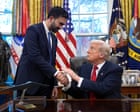
To understand why Tokyo is rushing to secure face-to-face diplomacy with Donald Trump, you have to look past the crisp suits and the handshakes captured by official photographers. You have to look at raw vulnerability.
Japan’s economy is an intricate, delicate machine. It imports nearly all of its energy. It feeds its population through sea lanes that pass directly through waters increasingly dominated by an assertive Chinese navy. For generations, Tokyo relied on the American security umbrella as an absolute constant, an unyielding law of nature.
That law is no longer guaranteed.
When a nation of 124 million people realizes its primary protector views foreign policy through the lens of a ledger sheet—asking what allies pay, what they buy, and what leverage they offer—panic takes root beneath the polished surface.
China looms over every manufacturing line, every microchip facility, and every maritime trade route in East Asia. Beijing’s economic gravity is immense. Its military footprint is expanding outward into the Pacific with terrifying speed. Tokyo cannot simply ignore its neighbor, nor can it fight its rise alone. It needs America. Specifically, it needs an American president who sees value in keeping the alliance intact against the rising tide of Beijing's ambitions.
This is why Japanese leadership is scrambling to establish a personal rapport with Trump. In his world, institutions matter less than relationships. Treaties matter less than personal chemistry.
Imagine the preparations that go into a single summit. Months of back-channel communications. Bureaucrats sweating over translated idioms, trying to find the exact phrasing that will appeal to a leader who prides himself on being a dealmaker. They study his past statements, his grievances, his praise. They craft proposals not around high-minded democratic values, but around concrete investments, defense spending increases, and industrial cooperation that can be packaged as a win for American workers.
It is diplomacy reduced to its most primal elements: flattery, utility, and survival.
Yet, there is a profound irony here. As Tokyo courts Washington for reassurance against Beijing, it is walking a tightrope. Lean too hard into American demands for military expansion or aggressive containment, and you risk provoking an economic retaliation from China that could cripple Japan’s corporate giants overnight. Lean too softly, and you risk being abandoned by an America First administration that views allies who don't pull their weight as dead weight.
The stakes are invisible to the casual observer, but they dictate the price of rice, the cost of gasoline, and the safety of the skies over the East China Sea.
Think about the fishermen in the southern prefectures casting their nets into waters patrolled by Chinese coast guard vessels. Think about the engineers in Osaka designing semiconductor equipment who now watch export controls tighten like a noose. These are the human ripples of a superpower rivalry that feels distant until it alters your daily bread.
The meeting between Tokyo and Washington is not merely a photo opportunity. It is a desperate bid to anchor a drifting ship in the middle of a gathering storm.
The diplomats will smile. The cameras will flash. Compliments will be exchanged across mahogany tables. But behind the polite bows and the solemn communiqués lies a stark, unvarnished truth. The old world is gone. The new one is being negotiated in real-time by leaders who operate on instinct and power.
And as the sun sets over Tokyo Bay, painting the skyline in shades of bruised orange and deep purple, the silence returns. The phone sits on the desk, waiting for the next ring from across the ocean.