The winter mud in the eastern plains does not care about diplomacy. It swallows boots, freezes machinery, and turns every field into an earthen trap. For months, the rhythm of life in the trenches has been dictated by the whistle of artillery and the dull, trembling thud of impacts that shake tea cups in kitchens hundreds of miles away.
Yet, somewhere behind heavy oak doors in Moscow, the vocabulary of war is shifting. Just slightly.
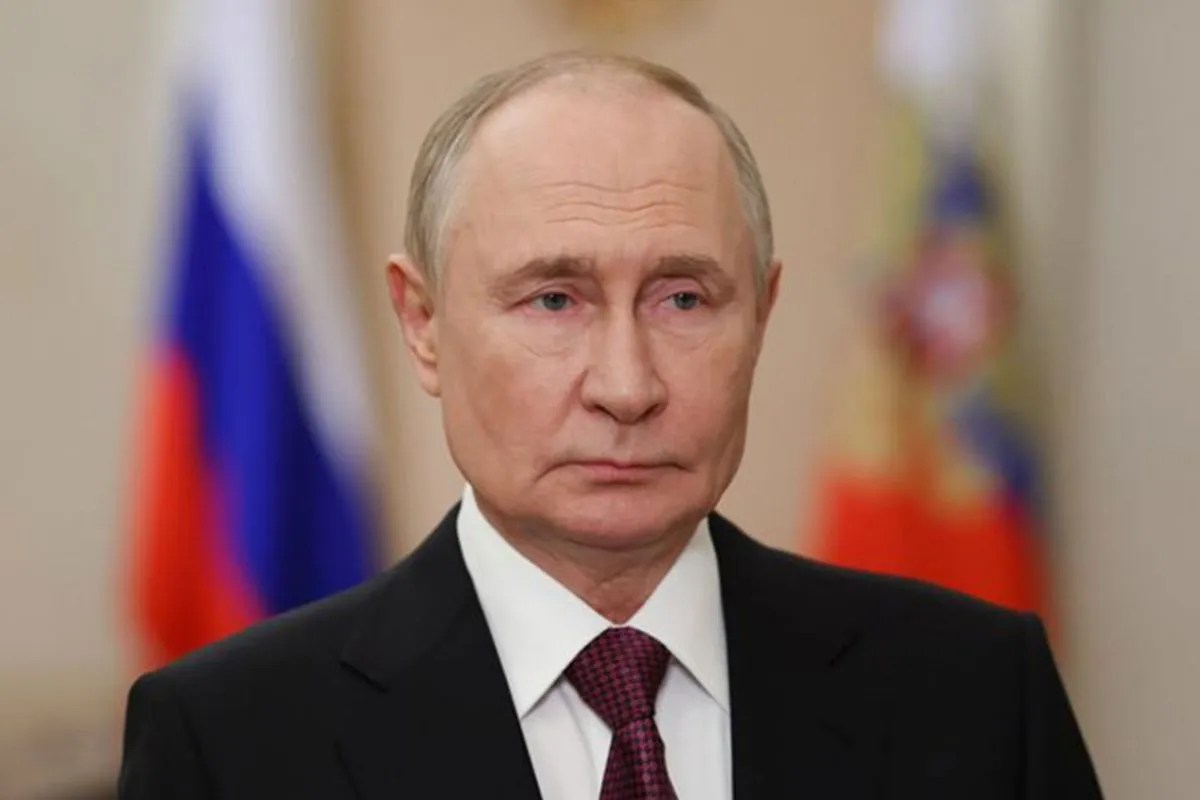
Dmitry Peskov, the Kremlin spokesperson whose words are parsed by analysts like ancient runes, recently stepped up to a microphone and offered a sentence that caught the breath of diplomats worldwide. Moscow is not turning its back on negotiations. The door to a Russia-Ukraine-America peace dialogue, he suggested, remains cracked open.
Not closed. Not barred with iron. Cracked.
To understand why this matters, you have to step away from the satellite maps and the casualty counts and look at the sheer human exhaustion underpinning the map rooms. Wars do not usually end because one side achieves absolute victory. They end when the cost of continuing exceeds the imagination of what comes next.
Consider a hypothetical father sitting in a dim kitchen in Kyiv, watching his phone screen flicker with intermittent power while the air raid siren wails its familiar, haunting lament. He is not calculating geopolitical spheres of influence. He is wondering if tomorrow will bring heat, or if his daughter will spend another birthday in a concrete subway station smelling of damp wool and fear. Across an invisible, deadly line, a mother in a provincial Russian town stares at a folded uniform on a spare chair, wondering how a conflict thousands of miles away managed to hollow out her entire living room.
These are the invisible stakeholders. They never sit at the negotiating table, yet their collective heartbeat is the only metric that truly matters.
When Peskov speaks of potential talks involving the United States alongside regional actors, it sounds bureaucratic. It sounds like the dry prose of state-run news wires. But translated into human terms, it is a hesitant hand reaching out across a chasm of broken glass.
Why now? Because the arithmetic of attrition is relentless. No economy can run on high gear forever. No stockpile of shells is bottomless. Beneath the defiant speeches and the unyielding public postures, channels of communication have always existed, flickering like pilot lights in a cellar. Intelligence chiefs meet in third-party capitals under assumed names. Diplomats whisper in back rooms in Geneva and Abu Dhabi. The grand theater of war requires public toughness, but the architecture of peace is always built in the dark.
The inclusion of Washington in any potential dialogue is the elephant that fills every room. Kyiv cannot fight without Western steel and treasury. Moscow cannot normalize its future while cut off from global financial arteries. The United States, whether it wishes to be cast in the role of protagonist or reluctant referee, is inextricably tethered to the outcome.
Negotiation does not equal surrender. It does not equal justice served hot and immediate. Historically, peace talks are messy, deeply unsatisfying transactions where both sides leave the table angry, which usually means the compromise is fair enough to hold. They are grueling marathons of semantic trench warfare where commas and semicolons replace bullets for weeks on end.
Think of it like a forest fire that has raged out of control for years, consuming everything in its path. At first, there is only panic and the roar of the flames. Then comes the smoke, thick and blinding, choking out the horizon. Eventually, the exhausted firefighters look at the charred acreage and realize that no one is winning; they are merely managing a catastrophe. Someone has to drop the hose, walk to the edge of the burnt timber, and ask if anyone is ready to talk about rain.
Peskov’s remarks do not mean the war is ending tomorrow. The artillery will still roar tonight. The sirens will still wail across the Dnipro. Young men will still huddle in freezing dugouts, waiting for dawn.
But the admission that the Kremlin is listening—that the word no has been replaced by a conditional maybe—changes the psychological weather. It introduces a dangerous, beautiful, fragile thing into the equation.
Hope.
It is the same hope that keeps refugees checking property listings in cities they had to flee, and soldiers carrying dog-eared photographs in their breast pockets. It is irrational, premature, and completely necessary.
As the diplomatic gears begin to grind, however slowly, the world watches with bated breath. The distance between a spokesperson's cautious soundbite and a signed treaty is measured in miles of blood and mountains of compromise. Yet every great thaw begins with a single drop of water breaking free from the ice.
The frost is thick, and the ground remains frozen solid. But somewhere underneath the heavy snow, the earth is waiting to remember what it feels like to grow.