The heat in the eastern Democratic Republic of Congo does not just sit on your skin. It weighs you down, thick with the scent of red dust, charcoal smoke, and the faint, metallic tang of fear. In August 2018, that fear acquired a name everyone whispered but no one wanted to speak aloud.
Ebola.
To understand what happened in the Kivu outbreak, you have to stop looking at the neat columns of spreadsheets generated by international relief agencies. You have to step past the sterile statistics of the World Health Organization. Instead, look at a woman named Marie.
Marie is hypothetical, but her reality is stitched together from the lived testimonies of dozens of survivors who walked out of the treatment centers in Beni and Butembo. She represents the precise moment a community realizes that the world they knew has cracked wide open. Marie did not know her uncle had Ebola when she washed his fever-soaked sheets. She only knew he was dying, and in her culture, you do not let family suffer alone.
Three days after his funeral, the ache started in her joints. It felt like malaria. She swallowed some pills. The fever laughed at them.
The Anatomy of an Invisible Threat
When Ebola enters a community, it does not arrive with a fanfare of sirens. It slips in through the front door of ordinary homes disguised as everyday ailments. The early symptoms—headache, muscle pain, intense fatigue—are identical to a dozen tropical bugs that people deal with every single year.
But this bug is different.
[Image of Ebola virus structure]
To visualize what the Ebola virus does inside the human body, discard the complex virology textbooks for a moment. Think of the body’s vascular system as a highly organized network of plumbing. The pipes are strong, flexible, and perfectly sealed. The Ebola virus acts like a corrosive acid poured directly into that plumbing. It attacks the endothelial cells that line the blood vessels, systematically dismantling the structural integrity of the walls. The pipes begin to sweat. Then they leak.
The true terror of the 2018 outbreak, however, was not just the biological warfare happening inside the patients. It was the psychological warfare happening in the streets.
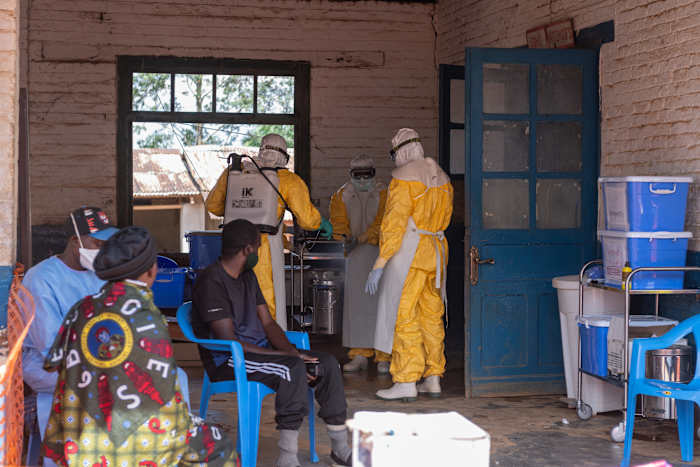
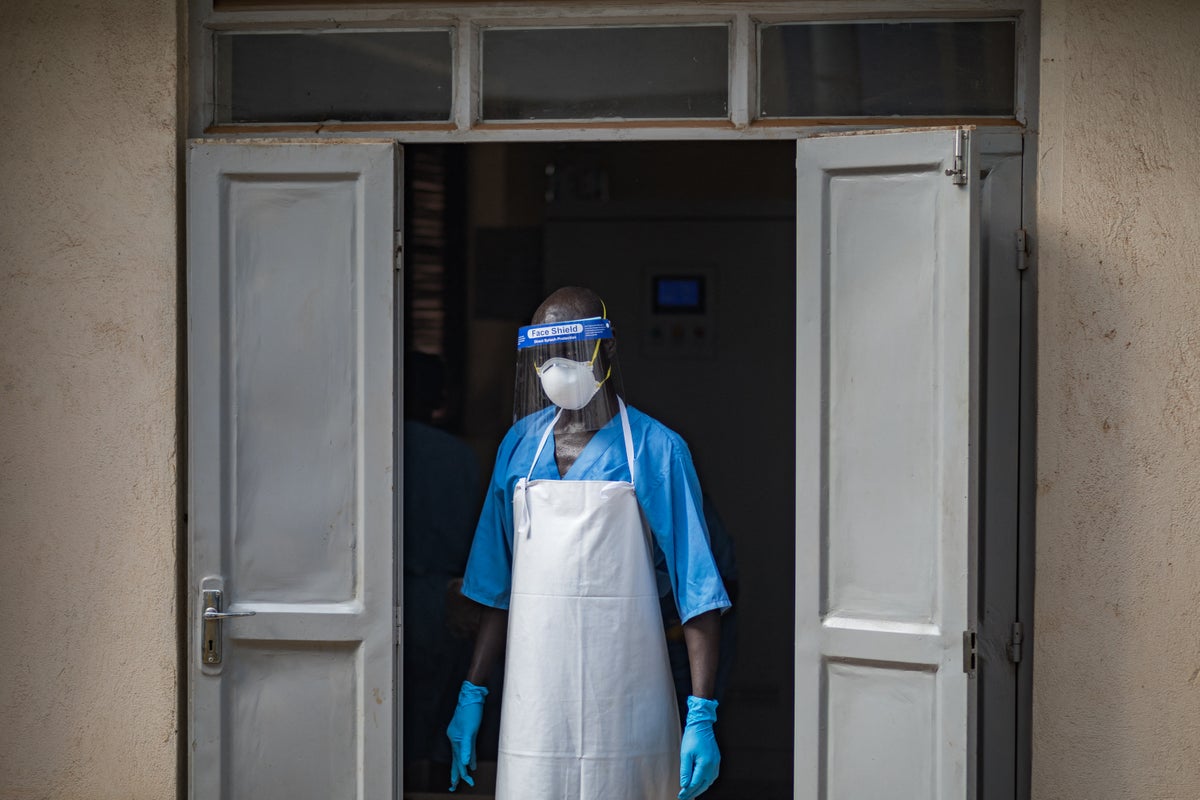
Eastern Congo was already an open wound. Decades of conflict, shifting rebel militias, and deep-seated political marginalization had left the population profoundly suspicious of anyone in a uniform. Suddenly, white trucks arrived. People wrapped in thick, ghostly layers of yellow protective gear descended on villages. They tore families apart, carrying loved ones away to isolated tents. They sprayed chlorine that smelled of poison. They told people they could no longer touch their dead.
Consider what happens next when fear meets historical trauma. Rumors spread faster than the virus itself. The white men brought the disease to steal our organs. The treatment centers are slaughterhouses. If you were Marie, watching your neighbors disappear into those tents never to return, would you walk toward them willingly? You would hide. Anyone would. And that hiding is exactly how a localized outbreak transforms into a wildfire.
The Turning Point in the Tents
The Kivu outbreak eventually became the second-largest Ebola epidemic in recorded history, recording over 3,400 cases and more than 2,200 deaths. It raged for nearly two years under the constant threat of gunfire from local rebel factions. Yet, the tide did not turn because of military intervention or massive financial influxes.
It turned because of a shift in human connection.
Inside the Ebola Treatment Centers (ETCs), medical teams realized that medicine alone was failing. The survival rate was abysmal, hovering around 33 percent early on. The missing ingredient was trust.
To bridge this chasm, health workers began installing large, transparent plexiglass walls in the treatment units. They called them "CUBEs" (Biosecure Emergency Care Units for Outbreaks). For the first time, a mother could sit outside the hot zone and look her infected child in the eye. She could see that the doctors were not harvesting organs; they were changing IV lines, wiping sweat from foreheads, and holding trembling hands.
Traditional Isolation Tent       The CUBE System
+------------------------+      +------------------------+
|  [ Opaque Canvas ]     |      |  [ Plexiglass Wall ]   |
|  Patient isolated from |  vs  |  Family can see inside |
|  the community entirely|      |  and witness the care  |
+------------------------+      +------------------------+
Simultaneously, a pharmaceutical breakthrough was quietly altering the math of survival. For decades, an Ebola diagnosis was treated as a functional death sentence. During the 2018 outbreak, randomized controlled trials evaluated four investigational therapeutics. Two monoclonal antibody treatments, mAb114 and REGN-EB3, showed jaw-dropping efficacy. If administered early in the course of the disease, the survival rate skyrocketed to nearly 90 percent.
Suddenly, the narrative shifted. The treatment center was no longer where you went to die. It was where you went to get cured.
The Weight of Survival
But surviving Ebola is not the end of the story. It is merely the beginning of a different, quieter battle.
When Marie walked out of the treatment center, the virus was gone from her blood, but her world was unrecognizable. Her uncle was gone. Two of her sisters were dead. Her belongings—her clothes, her mattress, her cooking pots—had been burned by the disinfection teams to prevent contamination.
Then came the silence.
When she walked down her street, neighbors crossed to the other side. Merchants refused her money, terrified that the curse still lingered on her skin. Even her extended family hesitated to invite her to the dinner table. This is the cruel irony of surviving a hemorrhagic fever: the very communities that you fought to return to often reject you out of a primal, desperate instinct for self-preservation.
Medical science calls this Post-Ebola Syndrome. The physical toll includes chronic joint pain, severe headaches, and debilitating vision problems that can lead to blindness if left untreated. But the social toll is far heavier.
To combat this, the survivors became the ultimate weapon against the epidemic. They formed associations. They walked back into the communities that had shunned them, holding up their certificates of recovery like shields. They became the primary caregivers inside the treatment centers because their blood now carried the priceless armor of immunity. They could soothe crying, infected toddlers without wearing the terrifying, alien-looking hazmat suits. They showed the skeptical townsfolk their living, breathing bodies as definitive proof that the medical response was real, that survival was possible.
Lessons Carried in the Red Dust
The 2018 Congolese outbreak officially ended in June 2020. The international cameras packed up. The white trucks drove away. The global health apparatus moved on to other crises, leaving behind a wealth of data on experimental vaccines and antibody cocktails.
But the real data isn't found in the medical journals. It is found in the communal memory of the people of Beni.
They learned that an epidemic cannot be managed like a military campaign. You cannot enforce health at the point of a bayonet, nor can you expect people to abandon centuries of burial traditions simply because a stranger in a plastic suit orders them to do so. The infrastructure that ultimately saved eastern Congo was built on humility—on doctors listening to village elders, on local youth leading contact-tracing teams, and on survivors volunteering to walk back into the jaws of the monster to pull others out.
The red dust of Beni has settled now, covering the graves of the thousands who didn't make it, but the ghost streets still hold a quiet warning for the rest of the world. The next pandemic will not be defeated by the sheer sophistication of our technology or the speed of our laboratories. It will be decided by whether we can look through the plexiglass of our shared fear, recognize the humanity on the other side, and find the courage to trust one another before the fever takes hold.