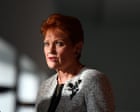
The room in the United Kingdom is small, insulated, and far from the blistering sun of Queensland. Across a microphone sits a man whose name is synonymous with the sharpest edges of British nationalist anger. Tommy Robinson speaks with the rapid, urgent cadence of a street fighter turned digital broadcaster. Across from him sits Pauline Hanson.
She is a long way from home. Traveling through the UK alongside her billionaire benefactor, Gina Rinehart, Hanson is on a journey that feels less like a simple holiday and more like a pilgrimage to the global altar of grievances. For thirty years, she has stood as Australia’s original lightning rod, a woman who built an entire political empire out of the fears, anxieties, and quiet resentments of a changing nation.
But she is seventy-two now. The red hair is still there, the voice still carries that flat, unmistakable Queensland drawl, but the horizon is closing in. Every political pioneer eventually has to look at the clock. Every movement built around a single, magnetic personality eventually faces the quiet horror of its own mortality.
So, she does what many people do when they feel the future slipping away.
She looks backward. And then, she looks to her own blood.
The Ghost of 1973
In the cramped warmth of that podcast studio, the conversation quickly drifts to the past. Robinson asks a loaded question about how Australia ended up with its modern, multicultural makeup, pointing his finger at specific immigrant groups. Hanson doesn't hesitate. She reaches back more than half a century, tracing the root of what she views as a national decline to a single, historic pivot point: the end of the White Australia policy.
To understand the weight of that statement, we have to look at what that policy actually was. It wasn't just a piece of legislation; it was a fortress. Established at the birth of the federation in 1901, it was designed to keep Australia white, British, and closed to the rest of the globe. For decades, it was the quiet, structural reality of the nation.
Then came the post-war era. The world changed. Under Harold Holt in the 1960s, the bricks began to crumble. By 1973, Gough Whitlam’s Labor government officially pulled down the remaining walls, declaring that race would no longer be a factor in who was allowed to call Australia home.
For Hanson, that moment was not a triumph of progress, but a tragedy.
"They opened up and got rid of the White Australian policy," she told Robinson, her voice carrying a weight of mourning for a vanished era. "Then they started bringing in the different migrants."
She draws a sharp, calculated line between the past and the present. She speaks warmly of the post-World War II European migrants—the Germans, the Italians, the Polish—who she claims integrated, learned the language, and worked hard. In her narrative, those migrants paid their dues. But the modern wave of migration? In her eyes, it is a different story altogether, one she links to exploitation of the welfare system and the National Disability Insurance Scheme.
Her claims are delivered without evidence, but in the theater of populist politics, evidence is rarely the point. The point is the feeling. The feeling of a cozy, predictable world being replaced by something unrecognizable, chaotic, and cold.
The Shadow on the Wall
But there is a deeper, more personal drama unfolding beneath the political rhetoric. Hanson is not just defending her old battles; she is actively planning for the day when she can no longer fight them.
Enter Lee Hanson.
For years, Pauline Hanson’s One Nation has been a party of one. Attempts to establish a clear successor have historically ended in bitter public splits, expulsions, and courtroom battles. Populist movements are notoriously difficult to hand down; they are fueled by the specific charisma of the founder, and charisma cannot be easily written into a will.
Yet, Lee Hanson is quietly being positioned as the heir to the kingdom.
Currently working as a taxpayer-funded senior adviser to a New South Wales senator—a role worth up to $180,000 a year—Lee has been the boots on the ground for One Nation’s expansion in Tasmania. She is also the party’s national executive manager. She ran for a Senate seat in the 2025 election, coming remarkably close to winning.
On the podcast, Hanson’s tone softens when she speaks of her daughter. She calls her "a cluey kid."
"She’s the future," Hanson says. "She’s got the softer approach."
It is a fascinating choice of words. "The softer approach." It is an admission, perhaps, that the raw, abrasive anger that defined Pauline’s entry into politics in 1996 might no longer work in the modern political arena. The world has grown weary of constant screaming. Perhaps the next generation of populism needs to wear a gentler mask, to speak in quieter tones, to present a face of reasonable concern rather than outright fury.
But the specter of nepotism hangs heavy over the arrangement. Hanson, who has spent her career railing against political elites, inner-city cliques, and backroom deals, now finds herself defending a taxpayer-funded political career for her own daughter.
"I don't believe in nepotism," Hanson insists to Robinson, almost defensively. "And she has to prove herself. Not only to me but also to the other members and to the public... That’s something she has to earn."
Earned or not, the machinery is in place. The transition is being prepared.
A Nation Moved On
Back home, the reaction to Hanson's European media tour is swift and predictable. Greens Senator Sarah Hanson-Young brands the interview "appalling" and "un-Australian."
But the real story isn't the outrage of her political opponents. The real story is the silence of the country she left behind.
While Hanson sits in a cold UK studio dreaming of 1973, the actual Australia of 2026 is busy living its life. It is an Australia where the suburbs are filled with the smells of spices from all over the globe, where children of every background play cricket together on sun-baked parks, and where the old definitions of what it means to be Australian have long since dissolved into something far richer, more complex, and more resilient than a policy document from the federation era.
Hanson’s lament for the White Australia policy is a voice crying out from a museum. It is a reminder of how deep the roots of exclusion run, but also of how far the tree has grown since those roots were severed.
Politics will continue. Lee Hanson may very well take the reins of One Nation, bringing her "softer approach" to the airwaves. But the past she and her mother long for is gone. It is a ghost that cannot be summoned back to life, no matter how loudly they call its name across the sea.