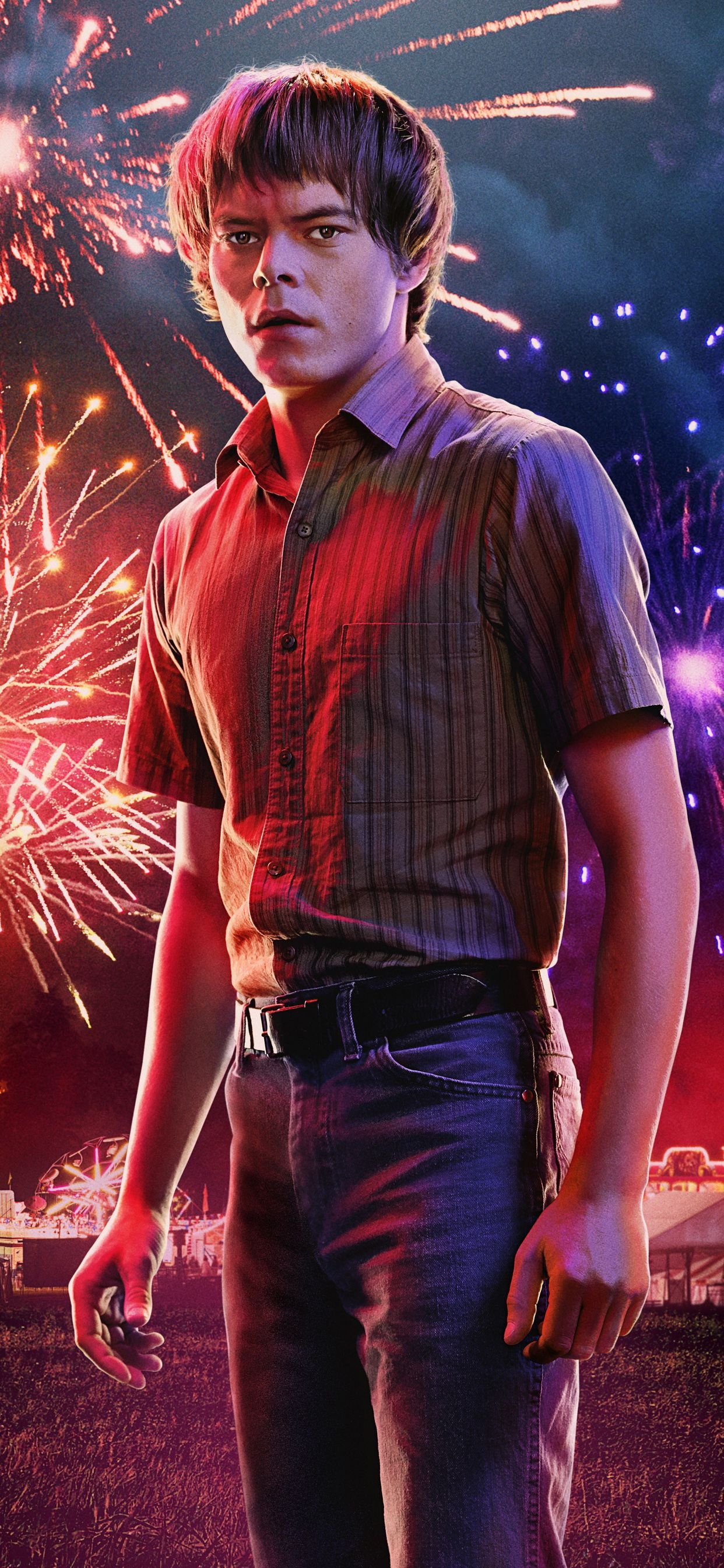
He’s the guy with the camera and the weirdly specific taste in music. You know the one. While Steve Harrington was out there winning the "Best Character Arc" trophy and Mike Wheeler was busy being the de facto leader of the party, Jonathan Byers from Stranger Things kind of drifted into the background. It’s actually a bit of a tragedy if you think about it. Honestly, Jonathan started as the most grounded, gritty heart of the entire show. He was the kid from the "wrong side of the tracks" who didn't care about the tracks in the first place. He was just trying to keep his family together.
People forget how dark things were for him in 1983.
Most viewers look back at Season 1 and remember the Christmas lights or the Demogorgon in the school. But for Jonathan, it was about poverty, a missing brother, and a mother who everyone thought was losing her mind. He was the one buying the groceries. He was the one dealing with Lonnie. He was the one who had to grow up before he even hit puberty. Charlie Heaton plays him with this specific kind of slumped-shoulder exhaustion that feels incredibly real to anyone who grew up in a household where the kids had to be the adults.
The Problem With the "Jonathan Byers" Narrative Shift
Let's be real for a second. The writers kinda did him dirty after Season 2.
Early on, Jonathan Byers was a catalyst. He wasn't just a love interest; he was a detective in his own right. His obsession with photography wasn't just a "creepy" trope—though, yeah, that scene in the woods was definitely a lapse in judgment—it was his way of seeing the world through a lens that didn't lie to him. He saw things other people missed because he was used to being the observer, the outsider looking in.
Then came the relationship with Nancy Wheeler.
Don't get me wrong, "Jancy" was the endgame for a lot of fans. There was that undeniable chemistry in the motel room in Season 2 when Murray Bauman called them out on their "shared trauma." But once they became a solidified unit, Jonathan's individual goals seemed to evaporate. He became "Nancy’s backup." He was the driver. He was the guy who followed her into dangerous situations because he loved her, which is sweet, but it sucked the complexity out of his character. By Season 4, when the Byers family moved to Lenora Hills, California, Jonathan was reduced to a stoner cliché. The long-distance tension was there, sure, but he felt untethered from the main plot. He was basically just waiting for the phone to ring.
Why the Lonnie Factor Matters More Than You Think
To understand why Jonathan is the way he is, you have to look at Lonnie Byers. He’s the ghost that haunts Jonathan’s personality. While Will was the "sensitive" one who Lonnie targeted with slurs and vitriol, Jonathan was the one who had to stand in the gap.
There’s this specific scene where Jonathan tells Will that he doesn't have to like things just because people tell him he should. That "Should I Stay or Should I Go" moment isn't just about a song. It’s Jonathan’s entire philosophy. He spent his life trying to be the anti-Lonnie. That’s why he’s so protective of Joyce. It’s why he works extra shifts at the photo lab. He’s terrified of being the selfish, deadbeat man his father was, so he swings too far the other way and forgets to have a life of his own.
It’s a classic eldest-child-of-an-addict/unstable-home dynamic. He’s the "fixer." And the problem with being a fixer is that once things are fixed—or once you’re away from the mess—you don't know who you are.
The Photography and the Outcast Identity
What most people get wrong about Jonathan is thinking he’s just a "quiet kid." He’s actually quite opinionated and judgmental. Think back to his early conversations with Nancy. He was pretty harsh about her "suburban" life. He had this elitist indie-kid vibe that felt very authentic to the 80s. He listened to The Clash, Joy Division, and The Smiths. He wasn't trying to fit in; he was actively rejecting a society that he felt had already rejected his family.
His camera was his shield.
- Season 1: Used the camera to find Will (and accidentally caught Barb).
- Season 2: Used his skills at the Hawkins Post (well, that was Season 3, but you get the point).
- Season 3: Fought a literal melted flesh monster in a hospital hallway.
- Season 4: Used his "new" hobby (weed) to numb the anxiety of his failing relationship.
The shift from the camera to the joint in Season 4 was a visual representation of his stagnation. He stopped looking at the world and started trying to escape it. A lot of fans hated "Stoner Jonathan," but it actually makes total sense for a guy who has been under extreme pressure for three years straight. He finally cracked. He didn't have to be the hero anymore, so he just... stopped.
The Rivalry With Steve Harrington
You can't talk about Jonathan without talking about the "King of Hawkins." The internet basically decided that Steve is the better man because he’s a great babysitter and has great hair. But Jonathan and Steve represent two different types of growth. Steve is the "Redemption Arc." He went from a jerk to a hero. Jonathan is a "Maintenance Arc." He’s a guy trying to stay good while the world tries to break him.
It’s much harder to stay consistently decent than it is to have one big change of heart.
Jonathan didn't need a redemption arc because he was already a good person. He was the one who stayed up with his mom when she was talking to the wall. He was the one who went into the Upside Down without a second thought to save his brother. Comparing him to Steve is like comparing a marathon runner to a sprinter. Steve had a burst of growth, but Jonathan has been running the race since he was ten years old.
What’s Next for Jonathan in the Final Season?
With Season 5 on the horizon, the Duffer Brothers have a lot of work to do to bring Jonathan back to the forefront. The story started with a boy going missing, and it needs to end with the family that lost him finding their footing again.
We need to see Jonathan and Will have a real conversation. Not just about Eleven, and not just about Mike, but about them. Will is growing up, and Jonathan needs to realize he doesn't have to be Will’s "father figure" anymore. He can just be his brother.
There’s also the Nancy problem. Honestly? They might not belong together. Nancy is a high-achiever, a go-getter, a woman who wants to conquer the world. Jonathan is someone who just wants peace. He wants a quiet life. That’s a fundamental 18-year-old conflict that the show needs to address realistically instead of just giving them a "happily ever after" kiss.
Specific Facts You Might Have Forgotten
- Jonathan’s birthday is never explicitly confirmed in the show, though Will’s is March 22nd.
- He drives a 1971 Ford LTD, which is a total boat of a car and perfect for his "blue-collar hero" vibe.
- Charlie Heaton and Natalia Dyer (Nancy) are actually a couple in real life, which is why their Season 1 and 2 chemistry felt so electric.
- He was the first person to actually see the Demogorgon’s face through a lens and live to tell about it.
The Verdict on the Byers Legacy
Jonathan is the unsung hero of the series. He’s the bridge between the kids and the adults. Without him, Joyce would have been institutionalized in Season 1, and Will would likely have never been found. He’s the glue. Glue isn't flashy. It isn't exciting. You don't usually notice it until it’s gone.
If you're looking to revisit his journey before the final episodes drop, pay attention to his hands. He’s always fiddling with something—a camera, a cassette, a joint, a steering wheel. He’s a character defined by action, not just words. He’s the guy who does the work while everyone else gets the credit.
How to Appreciate Jonathan Byers More on Your Next Rewatch:
- Watch Season 1, Episode 2 again. Look at the way he interacts with his mom versus how he interacts with the kids at school. It’s two different people.
- Listen to the lyrics. The songs Jonathan shares with Will aren't random. They are messages. "Should I Stay or Should I Go" is about the indecision of their home life.
- Notice the silence. Jonathan says less than almost any other main character. His story is told in his expressions and his willingness to put himself in harm's way for people who often ignore him.
- Stop comparing him to Steve. They offer different things to the narrative. One is about becoming a better person; the other is about the cost of being a good person too early.
The finale needs to give Jonathan a moment of personal victory that has nothing to do with Nancy Wheeler or his brother. He needs to figure out who Jonathan is when he’s not "The Provider." Until then, he remains the most misunderstood character in Hawkins.