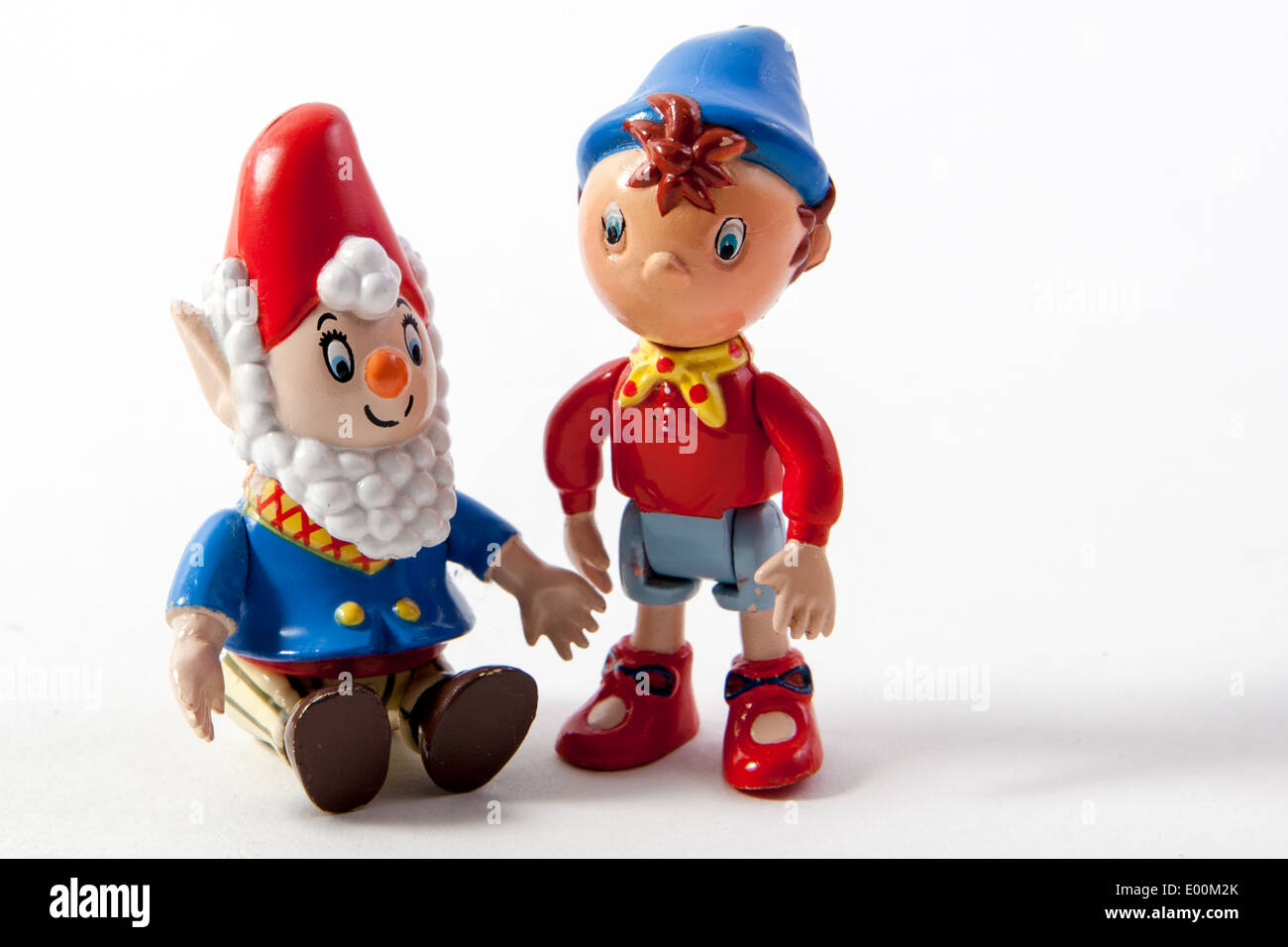
Enid Blyton was a powerhouse. Honestly, she churned out books like a factory, but nothing stuck quite like the little wooden man with the blue hat and the ringing bell. If you grew up in the UK, Australia, or pretty much anywhere the BBC reached, Noddy and Big Ears aren't just characters. They’re a childhood foundation. But looking back now, the relationship between these two is weirder and more interesting than the primary colors and catchy songs suggest.
Noddy first rolled into Toyland in 1949. He was the creation of Blyton and Dutch illustrator Harmsen van der Beek. It was a simple premise: a wooden boy carved by Old Man Carver who runs away and finds a home in a land populated by toys. But he’s a bit of a mess. He’s naive, he cries a lot, and he’s constantly getting swindled by Goblins. That’s where Big Ears comes in.
The Dynamics of Toyland’s Power Couple
Big Ears isn't a toy. He’s a brownie. That’s a specific distinction in Blyton’s lore that most people miss. He lives in a toadstool house outside of Toytown, and basically, he’s the only reason Noddy isn't currently a pile of kindling.
Their friendship is the anchor of the series. While Noddy is the protagonist, Big Ears is the catalyst. He’s the one who vouches for Noddy in the very first book, Noddy Goes to Toyland, when the toys are deciding if Noddy is actually a toy or a dangerous "not-toy." Think about that. The stakes in these books were weirdly high for toddlers. If Big Ears hadn't stepped up, Noddy would have been exiled.
Why the Goblins Always Win (Initially)
Sly and Gobbo are the recurring villains, and they’re surprisingly effective. Most children's media today has villains who are just misunderstood or slightly rude. The Goblins in Toyland? They are straight-up criminals. They steal Noddy’s car. They strip him of his clothes. They leave him stranded in the Dark Wood.
It’s brutal.
- Noddy’s car is more than a vehicle; it’s his livelihood.
- The Goblins represent the "outside" threat to the domestic safety Big Ears provides.
- Justice in Toyland is handled by Mr. Plod, who is—let's be real—frequently incompetent until Big Ears points him in the right direction.
Big Ears acts as a mentor, but it’s a paternalistic, sometimes slightly overbearing relationship. He’s the one who tells Noddy how to spend his money and when to go to bed. For a wooden man who owns his own house and runs a taxi business, Noddy has surprisingly little agency.
The Evolution of Toyland Across Eras
The Noddy we see today on Netflix or the BBC isn't the Noddy of the 1950s. The world has changed, and Toyland had to change with it. In the original books, there were characters called Golliwogs. By the late 20th century, these were recognized as offensive racial caricatures. Modern editions and TV shows swapped them out for other creatures, like Mr. Sparks or more Goblins.
Then there was the "Noddy in Toyland" CGI era. It made everything shiny and safe. But the core remained: Noddy makes a mistake, Big Ears gives him a lecture, and they save the day with a picnic. The sheer longevity of this cycle is staggering. We are talking about over 70 years of the same basic plot structure.
The Controversy of Blyton’s Prose
Critics have been dunking on Enid Blyton for decades. They called her vocabulary limited. They said her stories were simplistic. Even the BBC banned her stories from the airwaves for a time in the mid-20th century because they weren't "literary" enough.
They were wrong about the impact, though.
Blyton knew how children think. She understood the fear of being lost and the joy of a shiny red car. When Big Ears tells Noddy, "You’re a clever little Noddy," it’s a validation that resonates with a four-year-old. It doesn't need to be Shakespeare. It’s emotional security in book form.
Psychological Layers You Might Have Missed
If you look at the series through a modern lens, Big Ears is essentially a "Life Coach" for a character with zero impulse control. Noddy is the personification of the "Id"—he wants things now, he reacts with pure emotion, and he’s easily led astray. Big Ears is the "Superego." He provides the rules and the moral compass.
Without Big Ears, Noddy is just a wooden doll bouncing around a garage. With Big Ears, he’s a member of a community.
Real-World Impact and Legacy
The commercial success of the brand is massive. We’re talking over 250 million books sold worldwide. Toyland has been translated into over 40 languages. It’s a juggernaut.
- The 1950s: The "Golden Age" of the books and the van der Beek illustrations.
- The 1990s: The stop-motion series that many Millennials consider the definitive version.
- The 2010s: Noddy, Toyland Detective. This was a massive shift. Noddy stopped being a taxi driver and started solving mysteries. Big Ears became more of a tech-savvy mentor.
It’s rare for a duo to survive this many reboots. Usually, one character gets sidelined. But Big Ears is too essential. You can't have Noddy without his beard-wearing, toadstool-dwelling best friend. It’s the Sherlock and Watson of the nursery.
How to Revisit the Series Today
If you’re looking to introduce a new generation to these characters, don't just grab the first thing you see on a streaming service. The vintage appeal of the original illustrations is where the real magic is.
- Check out the original "Little Noddy" library. The 24 original books are short, punchy, and perfect for bedtime.
- Look for the 1990s Cosgrove Hall stop-motion series. It captures the "Britishness" of the world better than the high-def CGI versions.
- Discuss the "lesson." The stories are inherently moralistic. After reading, ask "What did Noddy do wrong?" and "How did Big Ears help?"
The world of Noddy and Big Ears is one of the few places where the stakes are small, the milk is always cold, and the bad guys always get caught. It’s a comfort. In a world that feels increasingly complex, there is something deeply grounding about a little wooden man who just wants to drive his car and a brownie who makes sure he gets home for tea.
Actions You Can Take
To truly appreciate the history of these characters, look for the 1949 edition of Noddy Goes to Toyland. Comparing it to a 2026 digital version reveals a fascinating history of how we’ve changed what we think is "appropriate" for children. Also, visit the Enid Blyton Society website; they have incredible archives of the original letters between Blyton and her illustrators that show how much work went into making Big Ears look exactly right. He wasn't just a sidekick; he was designed to be the guardian of Toyland's heart.