Everything is bigger. That’s basically the mantra for 2026. If you thought the previous format was chaotic, wait until you see what FIFA has cooked up for North America. We are moving from 32 teams to a massive 48-team field. It’s huge. It’s a logistical nightmare for organizers but a dream for countries that usually spend the summer watching from the couch. Honestly, the fifa world cup 2026 groups table is going to be the most refreshed and scrutinized document in sports history because the math has changed completely.
The tournament is being hosted across the United States, Mexico, and Canada. 16 host cities. 104 matches. It's an endurance test. Originally, FIFA toyed with the idea of three-team groups. Fans hated it. The "Disgrace of Gijón" vibes were too high—too much room for collusion. So, they pivoted back to four-team groups. This means we’ll have 12 groups in total.
How the FIFA World Cup 2026 groups table actually works
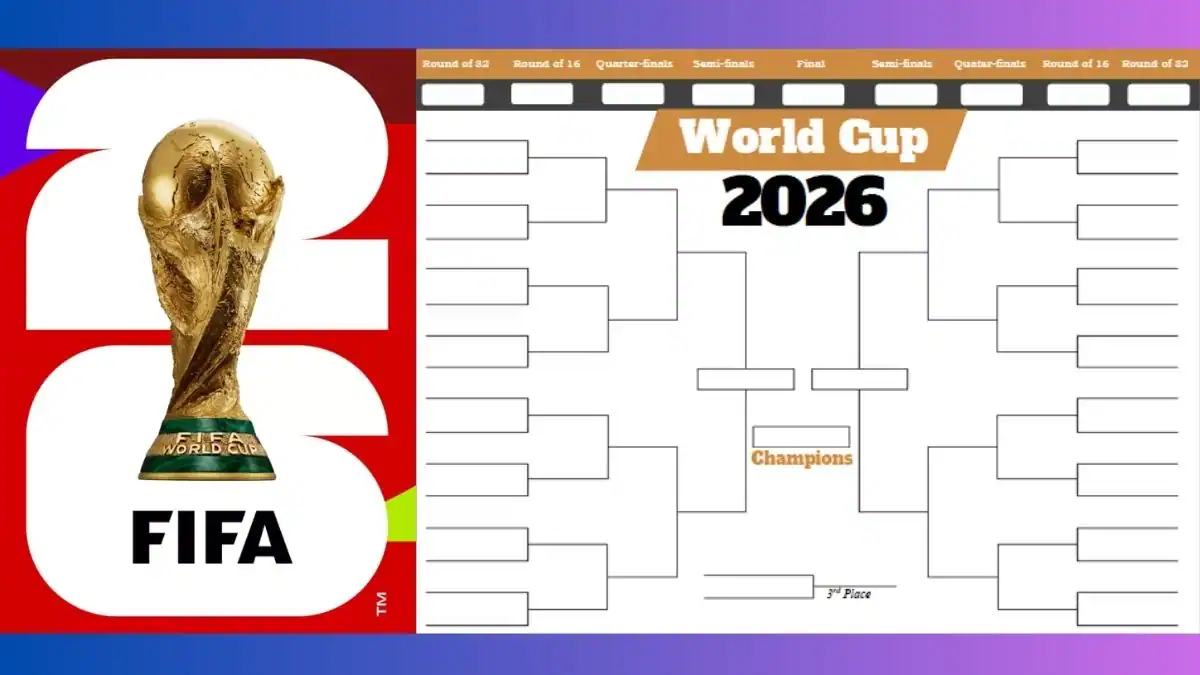
The top two teams from each group go through. Standard, right? But with 12 groups, the math doesn't quite get us to a clean knockout bracket. To fix this, the eight best third-place teams will also advance to a new Round of 32. This changes the strategy for every single coach. Suddenly, a 0-0 draw in your final game isn't just about survival; it's about goal difference math that spans across 11 other groups. You've gotta be checking the live tables constantly.
Gianni Infantino and the FIFA Council confirmed this "12 groups of four" structure in Rwanda back in 2023. They realized that the "winner takes all" drama of the final group stage day is the best marketing they have. By keeping four teams together, you prevent that awkward situation where one team has already gone home while the other two play a dead rubber. It keeps the integrity of the fifa world cup 2026 groups table intact while bloating the schedule to nearly six weeks of football.
The sheer scale of the travel
Imagine playing your first game in Mexico City at high altitude and then having to fly to Vancouver for your second. The groups will likely be clustered geographically to prevent players from spending half the tournament in a pressurized metal tube. FIFA has divided the host cities into three regions: West, Central, and East.
- West Region: Vancouver, Seattle, San Francisco, Los Angeles.
- Central Region: Guadalajara, Mexico City, Monterrey, Houston, Dallas, Kansas City.
- East Region: Atlanta, Miami, Toronto, Boston, Philadelphia, New York/New Jersey.
If you’re a fan trying to follow your team, your wallet is going to feel this. Predicting the group standings isn't just about who has the best striker; it’s about who recovers from a six-hour flight and a three-hour time zone shift the fastest.
Why the rankings might be deceptive
We often look at the FIFA World Rankings and assume the groups will play out accordingly. That’s a mistake. The 2026 edition will feature more "debutant" or lower-ranked nations because of the expanded slots for AFC (Asia), CAF (Africa), and CONCACAF (North/Central America).
Asia is getting eight direct spots. Africa is getting nine. This means the variety of playing styles is going to be wild. You might have a group with a disciplined European side, a high-pressing South American team, a lightning-fast African squad, and an underdog from Oceania. The fifa world cup 2026 groups table will be a melting pot of tactical clashes that we rarely see in the more "exclusive" 32-team era.
The Round of 32 factor
The introduction of the Round of 32 is the biggest competitive shift. In previous years, getting three points in your first game almost guaranteed you a spot in the knockouts. In 2026, it might not be enough. If you’re in a group where everyone beats the "weak" team, those three points are just the baseline. You’ll need a positive goal difference to ensure you aren't one of the four "unlucky" third-place teams who get sent packing.
It makes the middle of the table a war zone. Expect teams to keep attacking even when they are 2-0 up in the 80th minute. Every goal is a lifeline.
Host nation advantages and expectations
Mexico is making history as the first country to host or co-host three times. The Azteca is a fortress. The US is hosting the lion's share of the games, including everything from the quarterfinals onward. Canada is getting its first taste of the men's senior tournament on home soil.
Historically, hosts overperform. Think South Korea in 2002 or Russia in 2018. The fifa world cup 2026 groups table will likely see the US, Mexico, and Canada as seeded teams (Pot 1), which gives them a massive head start. They avoid the giants like Argentina or France in the early stages. This path is designed to keep the home crowds engaged for as long as possible. If one of the hosts fails to exit the group, it’s a disaster for the local "soccer" fever.
Realities of the 48-team expansion
Some purists argue this dilutes the quality. They aren't entirely wrong. You’re going to have some lopsided scores. When the 80th-ranked team in the world faces the 1st-ranked, it can get ugly. But the flip side is the "Iceland effect." Small nations bring a level of passion and tactical eccentricity that makes the group stages feel like a festival rather than a corporate seminar.
- More matches: 104 games compared to 64.
- Longer duration: The tournament will span roughly 39 days.
- Bigger squads: Coaches will likely have 26-man rosters again to cope with the fatigue.
The 2026 group stage is basically a "sorting hat" for the real tournament that starts in the knockouts. It’s about weeding out the bottom 16 and then letting the carnage begin.
Planning for the 2026 schedule
If you're looking at the fifa world cup 2026 groups table to plan a trip, pay attention to the venue clusters. FIFA is expected to release the specific team assignments after the final draw in late 2025. Until then, we know the opener is at the Estadio Azteca on June 11, 2026, and the final is at MetLife Stadium in New Jersey on July 19.
The sheer volume of tickets—around 6 million—means more people can attend, but the demand will still be astronomical. The "Group of Death" will likely be located in a high-capacity NFL stadium like AT&T Stadium in Dallas, which is rumored to host a massive number of matches.
Actionable insights for fans and bettors
- Watch the third-place tiebreakers: Don't just look at wins and losses. Yellow cards (fair play points) and total goals scored will be the deciding factors for those eight lucky spots.
- Factor in the travel: Teams playing in the "West" cluster will face significant travel if they qualify as a lower seed and get moved to the "East" for the knockouts.
- Altitude matters: Mexico City and Guadalajara are high. Teams that haven't spent time at altitude will gas out by the 70th minute. Look for late goals in those tables.
- Roster depth is king: With an extra knockout round, the teams with the best bench, not just the best starting XI, will climb the table.
The 2026 World Cup is an experiment in scale. It's going to be loud, messy, and incredibly long. But when that first whistle blows in Mexico City, the math of the groups will be the only thing that matters. Keep an eye on the qualifying cycles in CONMEBOL and UEFA over the next year; that’s where the seeds of the 2026 tables are being sown right now.