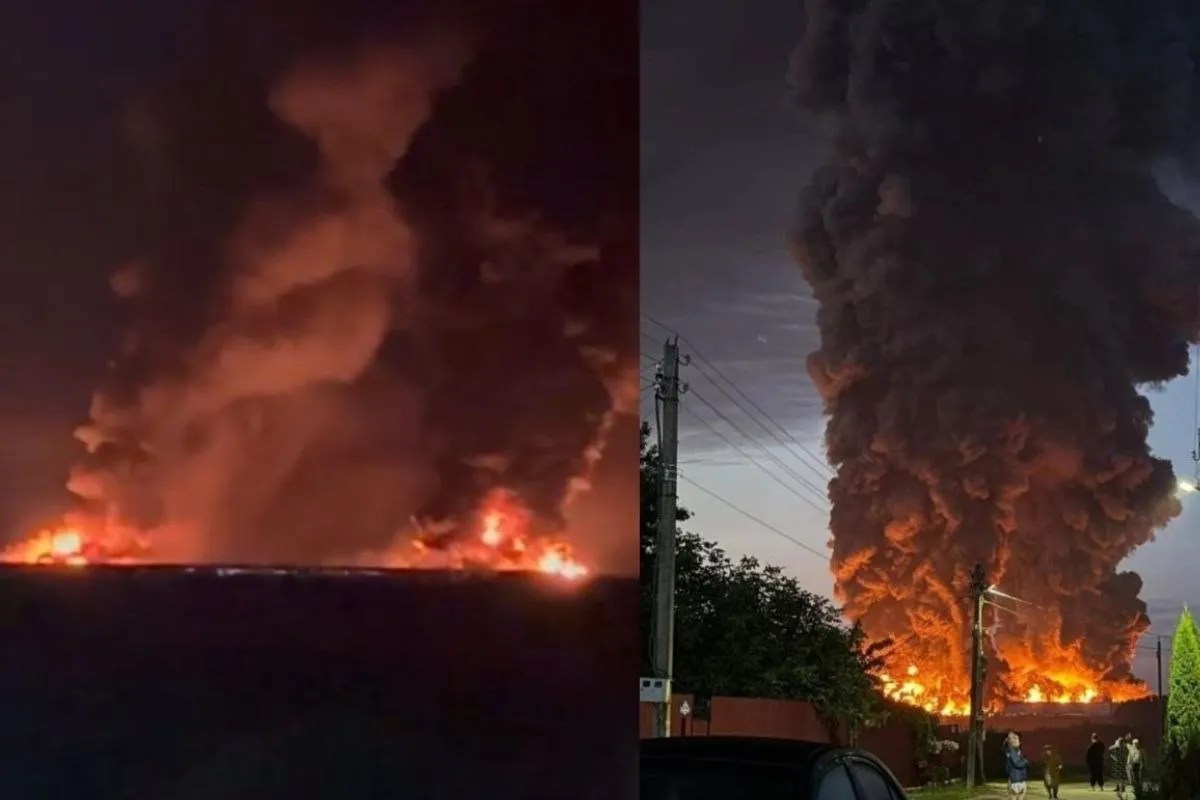
Supply chains are fragile. One explosion changes a nation's retail landscape overnight. A massive fire broke out at the Wildberries logistics hub in Russia following a Ukrainian drone attack, leaving at least one person injured. Smoke filled the sky. Panic spread through local distribution networks.
You might wonder why a single warehouse fire matters. Wildberries isn't just an ordinary online shop. It is the absolute giant of Russian e-commerce. When its infrastructure takes a direct hit, millions of buyers and thousands of sellers feel the immediate shockwaves.
Let us look at what actually happened, why this attack marks a turning point, and what the future holds for modern logistics under wartime conditions.
The Strike on Wildberries
The attack hit hard. Drones targeted critical infrastructure, bypassing standard regional defenses. The logistics hub in question served as a primary fulfillment engine for a massive geographic sector. Flames engulfed thousands of square meters of storage space.
Emergency services rushed to the scene. Firefighters battled intense heat and toxic smoke for hours. One worker sustained injuries and required immediate hospitalization. Operations at the facility ground to a complete halt.
Logistics hubs are the invisible backbone of modern convenience. When you click buy, you expect fast delivery. You don't think about the steel beams, sorting belts, and thousands of workers moving boxes at midnight. When a drone strikes that physical reality, the digital promise breaks instantly.
Why Wildberries Matters So Much
Wildberries dominates the Russian retail market. Think of it as the local equivalent of Amazon, but deeply integrated into neighborhood pickup points across hundreds of cities. Small entrepreneurs, local manufacturers, and massive international brands rely entirely on this network to reach consumers.
Security experts have warned about the vulnerability of civilian supply chains for months. E-commerce warehouses are massive, centralized, and impossible to hide. They require huge open spaces near major transport arteries. That exact design makes them prime targets.
When inventory burns, everyone loses. Sellers lose their stock. Buyers face endless delays and canceled orders. The platform takes a massive financial hit.
"Centralized logistics efficiency is a superpower in peacetime. In wartime, it becomes a single point of failure."
The Ripple Effects Across Russian Retail
You cannot just rebuild a multi-thousand-square-meter fulfillment center in a week. The immediate aftermath brings chaos.
- Delivery times will stretch across affected regions.
- Sellers must scramble to find alternative storage options.
- Insurance claims will take months to process.
- Security protocols across all major retail hubs are changing right now.
Competitors like Ozon are watching closely. They know their own facilities could be next. Companies are rapidly decentralizing inventory. Instead of keeping everything in one giant warehouse, smart operators are splitting stock across smaller, hidden regional depots.
Consumers are already noticing the shift. Delivery slots are filling up faster. Prices on certain goods are creeping upward as supply tightens.
The Human Cost Behind the Screens
We talk a lot about supply chains, algorithms, and stock numbers. We forget the people on the floor. Warehouse workers face immense danger. They clock in to sort packages and end up dodging debris or running from fire.
The injured worker from this strike represents a grim reality. E-commerce employees are now on the front lines of an economic and physical conflict. Companies are facing tough questions about worker safety. Do you keep a massive warehouse running near a border region or high-risk zone? How do you protect night-shift workers when air raid sirens sound too late?
Adapting to a New Reality
Retailers can no longer ignore geopolitical risk. For years, business strategy focused purely on speed, scale, and cost reduction. Those metrics ruled the boardroom.
Now, resilience matters more than cheap square footage. Building blast-resistant storage is economically unfeasible. Instead, the industry is pivoting toward hyper-redundancy. If one hub burns, three smaller ones pick up the slack instantly.
You will see fewer massive mega-warehouses and more distributed micro-fulfillment centers. It costs more. It slows down logistics slightly. But it keeps the system alive when the next drone crosses the border.
Keep an eye on regional shipping costs over the next few months. They are going up. The true cost of modern convenience is finally catching up with the reality on the ground.