Dusk does not fall in the Malaysian rainforest; it seeps. It rises from the wet red clay, coils around the buttress roots of ancient dipterocarp trees, and turns every familiar shape into a rumor.
At 6:30 in the evening, a palm oil plantation or a secondary forest edge loses its geometry. Ferns blur into fur. Shadows lengthen, twitch, and breathe. For anyone who has ever walked a jungle track as the equatorial sun drops below the canopy, the sensation is unmistakable: your eyes stop gathering light and start inventing shapes.
Now, put a loaded homemade shotgun in your hands. Put an empty stomach behind your ribs, or the quiet pride of providing meat for a family table. Hear a rustle in the undergrowth—a low, quick disturbance right at knee height.
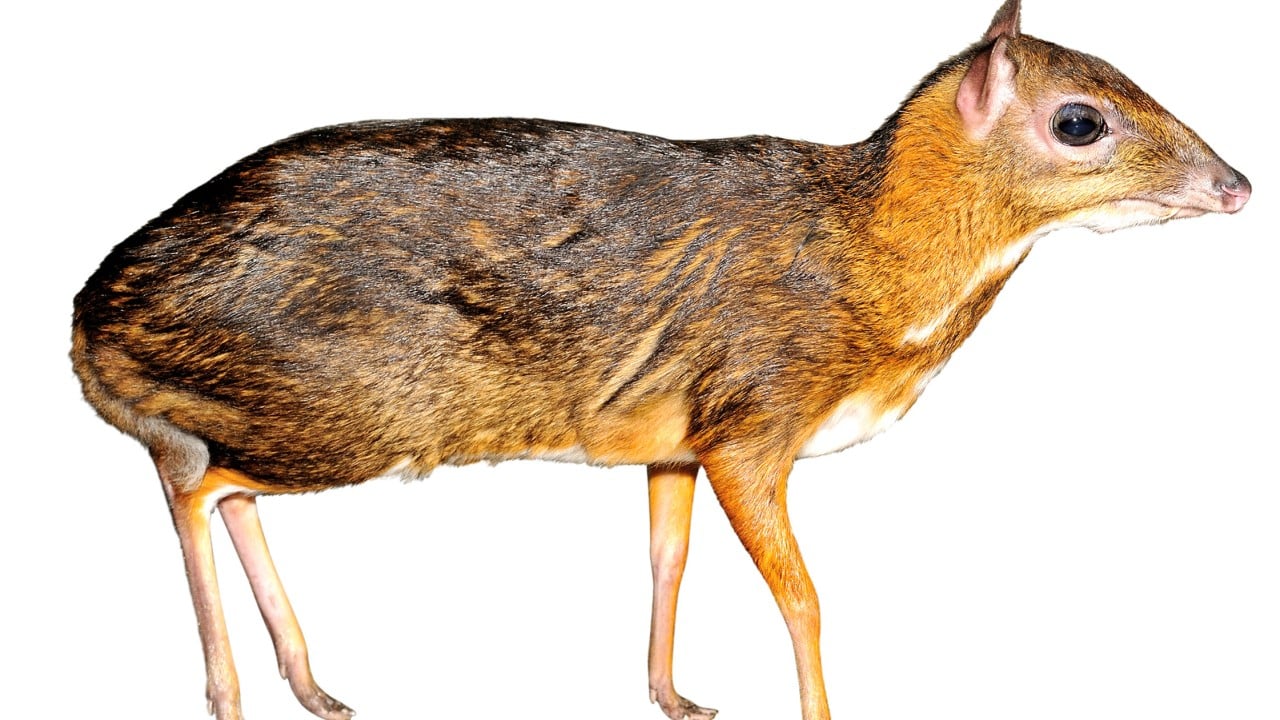
You raise the barrel. You do not see a neighbor’s daughter. You see a pelanduk—a lesser mouse deer, scarcely larger than a domestic cat, prized across rural Malaysia for its tender meat and famous in local folklore as the clever trickster of the forest.
Then you pull the trigger.
The crack of black powder splits the humid air. Smoke hangs thick over the ferns. And when you walk forward through the brush to claim your catch, the folklore dies in the mud. A teenage girl is bleeding on the forest floor.
The Anatomy of a Split-Second Tragedy
When news broke out of Malaysia that police had arrested a man after he mistook a teenage girl for a mouse deer and shot her, the headlines treated it like a bizarre rural anomaly. A tragic clerical error in the woods. A man arrested, a weapon seized, an investigation opened under laws governing negligent discharge of a firearm and possession of illegal arms.
That clinical framing misses the entire human catastrophe.
To understand how a grown man fires buckshot or slugs at a human being believing she is a three-pound chevrotain, you have to understand the psychology of the twilight hunt—and the silent, widespread reality of improvised weapons in rural borderlands.
Consider a hypothetical scenario that plays out thousands of times a year across Southeast Asia’s forest fringes, though mercifully few end in bloodshed. Imagine a rubber tapper or smallholder—let us call him Pak Din—finishing his afternoon labor near the edge of an estate in Perak or Pahang or Sarawak. He carries a bakakuk, an illicit, locally forged shotgun assembled from seamless steel pipe, carved hardwood, and a rudimentary firing pin. To him, the weapon is not an instrument of crime; it is an heirloom tool, no different from a machete or a tapping knife.
As the light fades, Pak Din spots movement near a thicket where wild tapioca grows. His brain, primed by hours of scanning for game, locks onto an expectation. Neuroscientists call this top-down processing: when sensory data is poor, the brain fills in the blanks using what it hopes or expects to see. In the dim green half-light, a crouching teenager—perhaps foraging for wild shoots, taking a shortcut home, or simply sitting low among the ferns—presents the exact silhouette and height profile of a foraging animal.
One squeeze of a poorly machined trigger.
There is no safety catch on most homemade firearms. There is no second chance once the hammer falls. In less than a tenth of a second, a piece of lead travels at over a thousand feet per second through space that was never verified, into a target that was never positively identified.
Why the Forest Keeps Claiming Its Own
If this were an isolated failure of one man’s eyesight, it would be a private grief. It is not. Across Malaysia’s rural interiors—from the dense timber concessions of Sabah and Sarawak to the agricultural fringes of Peninsular states—accidental shootings during night and twilight hunts recur with grim regularity.
Every few months, a local police chief holds a press conference beside a folding table laid out with confiscated single-barrel rifles, spent brass casings, and plastic bags of homemade pellets. The script rarely changes. A villager went out hunting wild boar, barking deer, or mouse deer. Something moved in the dark. A friend, a cousin, a child, or a neighboring farmer took the blast.
Why does this keep happening? Because three lethal ingredients routinely collide at the edge of the treeline:
- The Illusion of the Pelanduk: The mouse deer is tiny, nocturnal or crepuscular, and notoriously skittish. Hunters train themselves to react instantaneously to the slightest low-level tremor in the brush before the animal bolts. Speed replaces verification.
- Unregulated Iron: Malaysia enforces some of the strictest gun control laws in the world under the Arms Act 1960, carrying severe prison sentences and even capital penalties for unlawful possession. Yet in remote settlements where licensed firearms are expensive and bureaucratic permits are out of reach, underground blacksmiths continue to weld bakakuk and senapang patah out of hydraulic tubing. These weapons lack proper sights, balanced triggers, and basic mechanical safeties.
- Shared Footpaths: The modern Malaysian forest is rarely empty wilderness. Indigenous communities, plantation workers, schoolchildren walking rural shortcuts, and recreational hikers share the exact same trails where subsistence hunters set up ambushes at dusk.
The Invisible Stigma of the Survivor and the Shooter
I have spent enough time listening to rural families talk about land, livelihood, and loss to know that police blotters capture only the first ten minutes of the ruin.
For the teenage girl—surviving a gunshot wound in a rural district often means a harrowing race over rutted estate roads to a clinic, followed by a transfer to a state hospital hours away. Even when surgeons extract the pellets and close the tissue, the damage radiates outward. A young woman whose daily life depends on walking to school, helping with harvests, or navigating steep village terrain suddenly inhabits a body punctuated by scar tissue, nerve pain, and the sudden terror of loud noises.
And what of the man in handcuffs?
In small communities where everyone knows everyone’s lineage, a hunting accident does not just land a man in a lockup cell; it fractures an entire village. The shooter is rarely a hardened criminal acting out of malice. More often, he is a neighbor, an uncle, or a family acquaintance who walked into the woods to bring home dinner and walked out carrying a lifetime of blood guilt. Under Malaysian law, unlawful possession of a firearm alone carries heavy imprisonment, layered atop charges for causing grievous hurt by an act so rash or negligent as to endanger human life. His family loses its breadwinner overnight while simultaneously bearing the crushing shame of having harmed a neighbor’s child.
Breaking the Spell of "I Thought It Was Game"
People often ask how anyone could confuse a human being with an animal the size of a rabbit. The question assumes we see with our eyes. We do not. We see with our minds, and the mind is an aggressive editor.
Think of the last time you walked down an unlit hallway at night and flinched at a coat hanging on a peg, convinced for half a heartbeat that an intruder stood in the dark. Your visual cortex received a vague vertical shadow; your survival instinct painted a face and shoulders onto it before the light switch ever clicked on.
Now reverse that instinct. Instead of fear painting a monster, hunger and habit paint a prize. When a hunter stares into twilight brush for forty minutes waiting for a mouse deer, every neural pathway in his brain is rehearsing the silhouette of a mouse deer. When a teenager bends down to tie a sandal or gather wild pucuk paku ferns, the hunter’s brain does not ask, Could that be a person? It shouts, There it is!
The antidote to this biological trap cannot be better eyesight. Human eyes will always fail in the equatorial dusk. The antidote is an ironclad cultural and legal boundary that separates human spaces from hunting grounds—and strips unverified shooting of any cultural excuse.
Real hunting ethics, practiced by disciplined trackers worldwide, rest on one non-negotiable commandment: never raise a barrel at movement; raise it only at anatomy. If you cannot see the head, the shoulder, and the clear ground behind the target, you do not have a shot. You have a gamble. And when the stakes of a gamble are a teenager’s life, pulling the trigger is not an accident. It is a choice.
The Silence After the Smoke Clears
Authorities in Malaysia continue to run amnesty drives and crackdowns to sweep homemade shotguns out of rural longhouses and village sheds, reminding communities that a piece of welded pipe can neither distinguish a child from a deer nor shield its owner from prison.
Yet laws are written on paper in air-conditioned offices, while decisions are made in the mud at twilight.
Somewhere tonight, as the sun drops behind the oil palms and the cicadas begin their deafening evening chorus, the shadows will start to move again along a jungle track. Ferns will rustle at knee height. A shape will shift in the gloom.
The only thing standing between another family’s child and a cold police report is whether the person holding the gun has the discipline to lower the barrel, hold their breath, and wait for the dark to tell the truth.