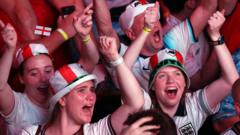
Politicians think you are simple. They look at a nation gripped by tournament fever and see an opportunity to trade a cheap headline for a massive drop in economic output. Keir Starmer hinting at a celebratory bank holiday if England wins the World Cup is not a benevolent gift to a hard-working public. It is a cynical, economically illiterate stunt designed to buy short-term popularity at the expense of businesses already suffocating under high costs.
The lazy consensus across the media is always the same whenever a national sports team gets close to a trophy. Commentators opine about national morale. Columnists write glowing pieces about the collective psyche. Pundits claim that a day off will pay for itself through a sudden surge in pub sales and supermarket runs.
It is a lie. The math does not work, the economic reality is brutal, and the psychological premise is insulting. We need to stop treating national holidays as free rewards dropped from the government sky.
The Multi-Billion Pound Myth of the Hospitality Boom
The most frequent defense of the sports-induced bank holiday is that it supercharges the high street. Proponents point to packed beer gardens and spiked grocery sales. They look at the immediate cash register receipts and declare victory.
This is classic unseen economic fallacy. It ignores where that money comes from and where it goes.
When people spend an extra fifty pounds at a pub on a Monday afternoon, they are not creating new wealth. They are shifting existing discretionary spend. That money is dragged directly out of other sectors. The dry cleaner, the local mechanic, the independent clothing boutique, and the subscription service all lose out.
More importantly, the hospitality sector itself suffers from a severe case of double-edged sword syndrome during unexpected holidays.
- Surging Labor Costs: Bank holidays mean bank holiday pay rates. Small pubs and family-run restaurants are forced to pay time-and-a-half or double-time to their staff just to keep the doors open.
- Supply Chain Whiplash: A sudden, politically mandated day off disrupts delivery schedules. Fresh food suppliers face cancelled orders from corporate catering and city center lunch spots, leading to massive inventory spoilage.
- The Localization Trap: While a few high-profile city center pubs or seaside resorts might see a rush, suburban and industrial-zone businesses completely dry up. The net gain is frequently a mirage.
I have spent years looking at the operational data of retail and hospitality groups during unexpected national events. The narrative that a bank holiday lifts all boats is a fantasy sold by people who have never had to run a payroll. For every packed pub in London, there are ten small businesses elsewhere watching their weekly revenue evaporate while their fixed overheads remain identical.
The Brutal Math of Lost Productivity
Let us look at what a bank holiday actually costs. The Centre for Economics and Business Research (CEBR) has repeatedly analyzed the impact of statutory holidays on the British economy. Each individual bank holiday costs the UK between £2 billion and £3 billion in lost macroeconomic output.
Imagine a scenario where an economy already struggling with sluggish productivity growth is suddenly put on ice for 24 hours.
$$Cost = \frac{Annual\ GDP}{365} \times Productivity\ Reduction\ Factor$$
When you close the offices, freeze the factories, delay the court hearings, and pause the logistics networks, you create a massive backlog.
- Manufacturing Stagnation: Heavy industries cannot simply accelerate production the next day to make up for lost time. A day of idle machinery is a day of unrecoverable volume.
- Service Sector Paralysis: In a modern service-dominant economy, billable hours are the primary metric of value. A consultant, lawyer, or software engineer who is forced to take a day off cannot magically bill twice as many hours on Tuesday.
- Financial Market Desynchronization: When the London markets close while European and American markets remain open, international trade execution slows down. Capital sits idle. Opportunities vanish in the gaps.
To suggest that a nation can wipe billions off its economic ledger because eleven players managed to kick a ball into a net more times than eleven other players is the height of fiscal irresponsibility. It treats the national economy like a schoolyard game where the headteacher can award a free recess for good behavior.
The Populist Insult of Top-Down Morale
There is a deeper, more insidious issue at play here. The argument for a World Cup bank holiday relies on the idea that the public requires government permission to feel good. It assumes that national happiness must be institutionalized and regulated by the state.
If England wins a major tournament, people will celebrate. They will stay up late, they will call in sick, they will use their existing annual leave, and they will adjust their schedules. They do not need a prime minister to issue a decree allowing them to do so.
By stepping in to offer a bank holiday, politicians are engaging in classic bread-and-circuses governance. It is a distraction technique. When a government cannot fix structurally broken public services, cannot resolve systemic housing shortages, and cannot spark genuine, long-term productivity growth, it offers a shiny token instead. "Look over here," the gesture says. "Forget your falling real wages—have a free Monday on us."
It infantilizes the workforce. A mature, dynamic society does not shut down its commercial engines because of a sporting triumph. It celebrates the victory and carries on with the business of building a prosperous nation. The true way to honor a national achievement is to use that momentum to drive forward, not to turn off the lights and go to sleep.
The Logistics Nightmare for Working Parents
Let us talk about the practical, unglamorous reality that the political class entirely ignores when they dream up these spontaneous holidays. What happens to the people who cannot afford to take a day off, or those whose employers demand they show up regardless?
When the government declares a bank holiday, schools and nurseries close. Suddenly, millions of working parents are thrown into a logistical crisis with only a few days' notice.
Consider the low-income healthcare assistant, the delivery driver, or the supermarket shelf-stacker. They do not get a paid day off. Their employers stay open because their services are essential or because the demand is too high to ignore. These workers are faced with an impossible choice: pay extortionate emergency childcare rates, find a relative willing to step in last-minute, or take an unpaid day off and lose the income they need to pay their rent.
The World Cup bank holiday is fundamentally a middle-class luxury. It benefits the salaried office worker who can sit in a pub garden without worrying about their monthly paycheck. For the gig economy, the hourly workers, and the frontline staff, it is an operational headache and a financial penalty. It exacerbates the exact societal divides that politicians claim they want to heal.
Flipping the Script on National Celebration
If a government genuinely wants to capitalize on the immense goodwill and euphoria of a major sporting victory, a mandatory shutdown is the absolute worst way to do it.
Instead of freezing the economy, policy should look at maximizing the specific sectors that actually drive cultural and community value.
- Targeted Licensing Relaxation: Instead of shutting down the country on Monday, extend licensing hours for community venues, amateur sports clubs, and hospitality spots over the weekend. Allow businesses to capture the enthusiasm naturally without imposing mandatory premium labor costs on Monday.
- Grassroots Sports Investment: Take the equivalent financial windfall that the government expects to generate via taxes from the tournament weekend and ring-fence it entirely for public sports infrastructure. Fix the muddy, unusable local pitches. Fund coaching badges for volunteers. Turn temporary euphoria into permanent physical assets.
- Corporate Flexibility Frameworks: Encourage businesses to offer localized, flexible starting times on the Monday morning after a final. Let teams manage their own recovery and celebration cycles without the heavy hand of state intervention.
We have to reject the lazy notion that the only way to celebrate an extraordinary achievement is to stop working. True national pride is built on resilience, ambition, and the desire to excel in all arenas—including the global economic stage.
The next time a politician smiles for the cameras and hints at a free day off if a ball crosses a line, do not cheer. Look at your bills, look at your local businesses, and ask yourself why they think your national pride can be bought so cheaply.