The standard guide to watching a World Cup final is a insult to your intelligence. You know the formula. Some generic media outlet publishes a checklist telling you to buy a bloated cable bundle, upgrade to a flashy 4K television, download three different statistical tracking apps, and invite twenty casual fans over for a loud, chaotic viewing party.
It is a setup for failure. If you liked this piece, you might want to look at: this related article.
If you follow that generic blueprint, you will experience the biggest sporting event on earth through a screen that is thirty seconds behind real-world events, surrounded by people asking you to explain the offside rule, while your eyes dart between a bloated broadcast feed and a smartphone screen. You will miss the actual tactical battle happening on the pitch.
Stop prepping for a party. Start preparing for a masterclass. For another angle on this event, check out the recent coverage from CBS Sports.
The 4K HDR Streaming Lie
Every major tournament, broadcast networks and streaming platforms promise a revolution in picture quality. They tell you that to truly experience the final, you need to shell out a premium subscription fee for an ultra-high-definition, high-dynamic-range stream.
Here is what they hide in the fine print: your pristine 4K stream is a tactical disadvantage.
Live streaming infrastructure cannot handle the sheer, unyielding volume of global traffic during a World Cup final without sacrificing speed. To deliver that ultra-crisp image to millions of homes simultaneously, streaming architecture requires heavy data encoding and buffering. The result? A massive latency penalty.
During the last major tournament cycle, premium digital streams lagged anywhere from twenty to forty-five seconds behind traditional over-the-air (OTA) terrestrial broadcasts.
Imagine sitting on your couch, watching a critical buildup play in the 89th minute. Suddenly, your phone explodes with text messages from your friends. Your neighborhood bar down the street erupts in screams. You already know the outcome before the striker even strikes the ball. The tension is dead. The purity of live sports is entirely wiped out by a thirty-second delay.
If you want to actually watch the game live, ditch the high-bandwidth streaming apps. Buy a cheap, old-school digital antenna. Terrestrial over-the-air signals deliver uncompressed 1080i or 720p video feeds directly from local broadcast towers to your television with near-zero latency. You will see the goal happen before the rest of the internet even knows a shot was taken. The image might not have the artificial hyper-saturation of an upscaled HDR stream, but it possesses something far more valuable: immediacy.
The Myth of the Statistical Second Screen
The modern sports fan has been conditioned to believe that more data equals a better experience. We are told to keep a tablet or phone open to track live expected goals (xG), heat maps, pass completion percentages, and live player ratings.
This is cognitive overload disguised as sophistication.
When you split your attention between the main broadcast and a data dashboard, you miss the subtle structural shifts that define a world-class football match. You do not need a live updated heat map to tell you that a left-winger is pinning back the opposition’s right-back. You can see it with your own eyes—if you actually look at the pitch instead of a spreadsheet.
Relying heavily on live data feeds turns you into a passive consumer of post-hoc validation rather than an active analyst of the game. Football is a continuous, fluid sport. It is not baseball, where discrete events allow for mid-inning data consumption. A shift in a team's defensive block from a 4-4-2 to a 5-3-2 happens in seconds, triggered by a verbal cue from a central midfielder or a specific trigger on a turnover. If your nose is buried in an app checking who has completed the most progressive passes, you miss the structural trigger entirely.
Turn off the notifications. Close the data apps. If a statistic is truly definitive, a competent commentary team will mention it during a natural break in play. If they do not, it probably did not matter anyway.
Your Viewing Party Is Killing the Match
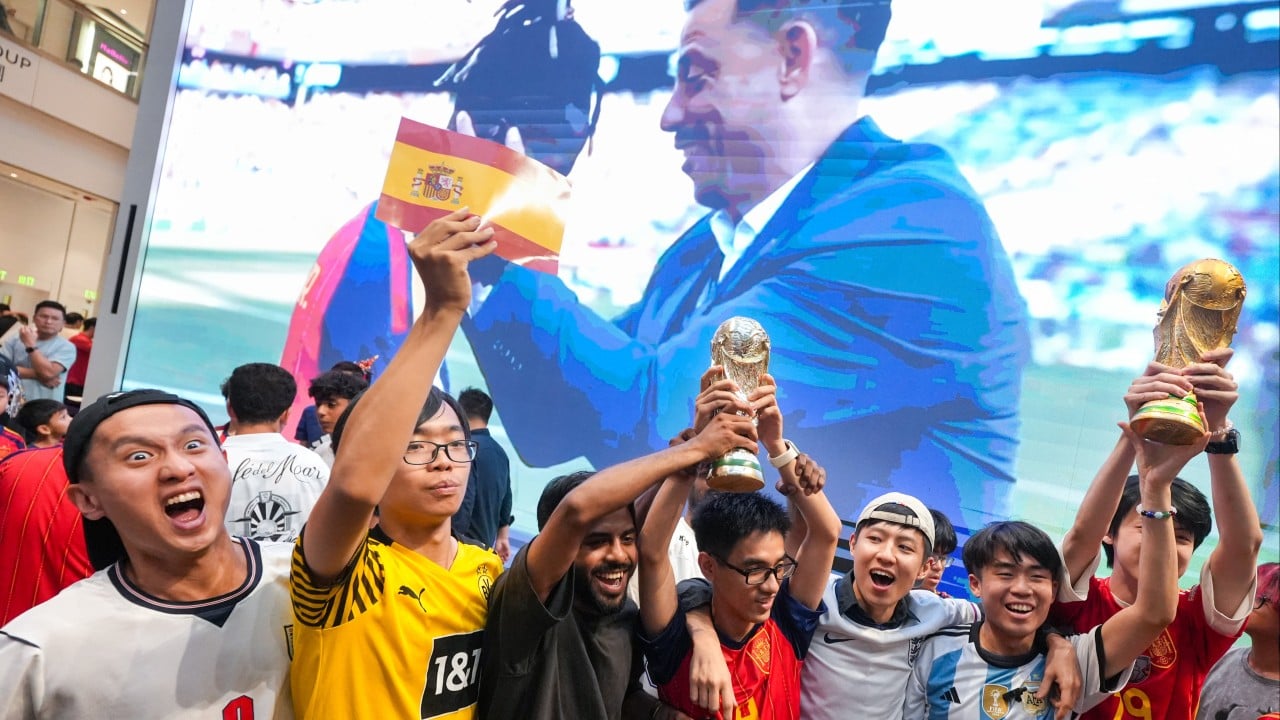
We need to talk about the social expectation of the World Cup final. The prevailing cultural narrative insists that sports must be consumed in large, raucous groups filled with casual observers, themed snacks, and constant chatter.
If your goal is to socialize, call it a party and turn the game off. If your goal is to witness history, slash the guest list.
A World Cup final is a pressure cooker. The tactical tension is suffocating. Elite managers spend weeks designing specific pressing traps and transitional triggers designed to exploit inches of space. To appreciate this, you need focus. You cannot track the defensive recovery runs of a holding midfielder when three people in your living room are loudly debating whether a clear-cut yellow card was actually a foul, or worse, asking who the guy in the yellow shirt is.
Limiting your viewing circle to people who actually understand the sport isn't elitism; it's preservation. If you must host, establish ground rules. The television room is for watching. The kitchen is for talking.
Dismantling the Pre-Game Hype Engine
The official broadcast schedule will tell you that coverage begins three hours before kickoff. They promise expert panels, deep feature profiles, and historical retrospectives.
It is ninety percent commercial filler and narrative padding.
Modern sports broadcasting networks do not design pre-game shows for tactical junkies. They design them to capture the casual, fleeting interest of the general public. You will get montages set to dramatic orchestral music. You will get superficial talking points repeated by former players who haven't looked at a tactical chalkboard in a decade. You will get corporate sponsor activations disguised as segment insights.
Do not let the broadcast engine drain your emotional energy before the whistle even blows. The real tactical narrative is decided on the team sheets, which are released exactly sixty minutes before kickoff.
That is when your viewing experience should actually begin. Ignore the three hours of pre-game fluff. When the official lineups drop an hour before the match, look at the personnel selections. Look at who is starting at fullback. Look at whether a manager opted for a dynamic box-to-box midfielder or a rigid defensive anchor. Spend that hour visualizing how those specific profiles will clash on the field. That mental preparation will give you more insight into the opening fifteen minutes of the match than any televised corporate pre-game show ever could.
Expect a Chess Match, Not a Carnival
The casual consensus always expects a high-scoring, chaotic spectacle. The media hypes up the star forwards, framing the final as a direct, cinematic shootout between two global icons.
The reality of international football finals is starkly different, and often brutally pragmatic.
Since the turn of the century, World Cup finals have overwhelmingly been cagey, low-scoring, risk-averse affairs. Managers do not play to win beautifully in a final; they play to avoid making the catastrophic error that defines a generation. They employ low blocks, emphasize defensive transitions, and rely on set-piece variance or individual moments of isolation to break the deadlock.
World Cup Final Goals (Regular Time, Recent History)
2010: 0-0 (Spain won 1-0 in Extra Time)
2014: 0-0 (Germany won 1-0 in Extra Time)
2018: 4-2 (France vs Croatia - The historical outlier)
2022: 3-3 (Argentina vs France - A chaotic anomaly)
If you head into the final expecting a relentless, end-to-end goal fest, you will likely find yourself frustrated by the forty-fifth minute. You will misinterpret tactical discipline as boring play.
Instead, look for the quiet battles. Watch how the central defenders communicate to pass off a shifting central forward. Watch the structural integrity of the mid-block. Notice how teams use tactical fouls in the middle third to completely halt counter-attacks before they can materialize. When you stop looking for cheap thrills, the immense psychological tension of a 0-0 deadlock becomes the most riveting thing on earth.
Get your digital antenna ready. Clear the room of distractions. Turn off the statistical dashboards. Watch the pitch, read the space, and let the pure reality of the game unfold in true real-time.