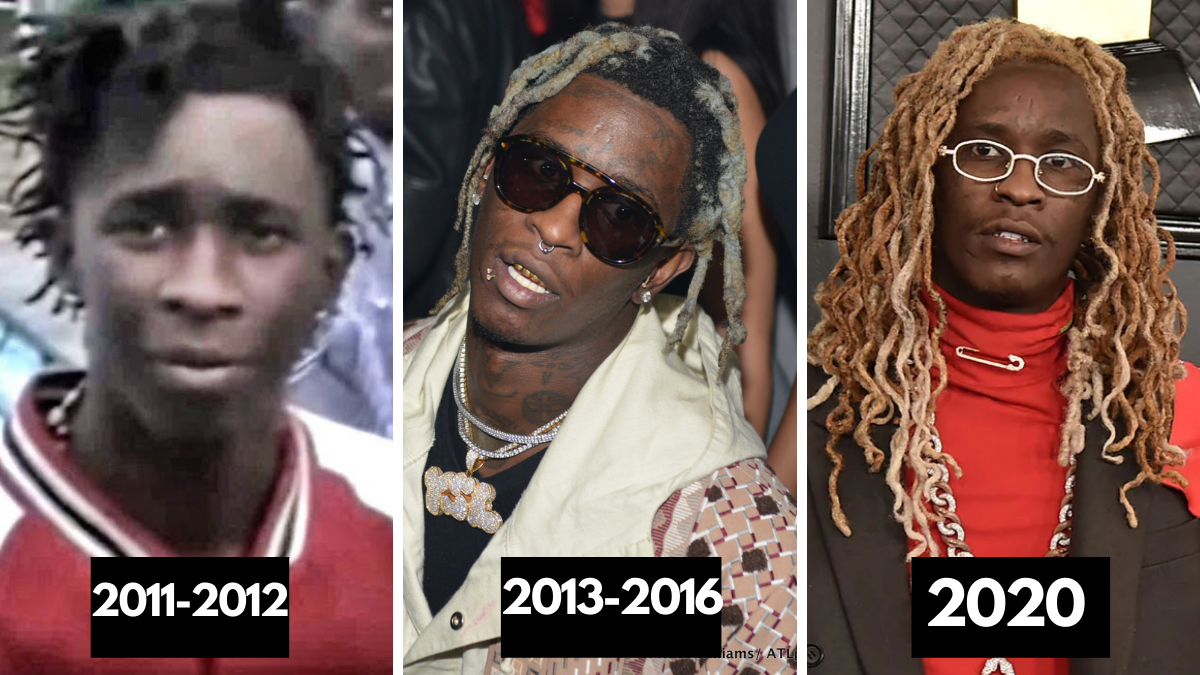
Jeffery Lamar Williams, the man the world knows as Young Thug, has never been one for boundaries. He breaks them. He ignores them. Sometimes, he just pretends they don't exist. This isn't just about the music or the high-pitched "skrrt" ad-libs that changed the DNA of Atlanta trap. It’s about the visual. Specifically, it’s about the young thug blonde hair era—a period that fundamentally shifted how we view masculinity in hip-hop.
People were confused at first. It was 2013, maybe early 2014, and suddenly this skinny kid from Cleveland Avenue was popping up with bleached-out locs. It looked raw. It looked punk. It didn't look like what a "trapper" was supposed to look like in the mid-2010s. But that was the point.
The Evolution of the Bleached Locs
When Thug first hit the scene with 1017 Thug, his hair was shorter, darker, more conventional. But as the stardom grew, the pigment left. He didn't just go for a subtle highlight; he went for that striking, peroxide-heavy gold that contrasted sharply against his skin. It wasn't just a style choice. Honestly, it was a flag in the ground.
Think back to the Barter 6 cover. It’s iconic now. The red background, the nudity, and those blonde-tipped locs framing his face. That image is burned into the collective memory of the "SoundCloud rap" generation. It signaled a move away from the gritty, hyper-masculine aesthetics of the early 2000s into something more fluid, more experimental.
Fashion experts like Law Roach have often pointed out how Thug uses his body as a canvas. The hair was the centerpiece. It allowed him to play with colors—sometimes adding pink or neon green—but he always seemed to return to that signature blonde base. It made him look like a rockstar in a genre that was still figuring out if it wanted to be "rock" or not.
Why Young Thug Blonde Hair Sparked Such a Huge Debate
Hip-hop culture has a complicated history with aesthetics. For a long time, there was a rigid "uniform." If you weren't wearing baggy jeans or looking "tough," your credibility was questioned. Then Thug happened. He wore dresses. He wore tight clothes. And he bleached his hair.
Social media went into a frenzy every time he updated his look. Critics called it "weird." Fans called it "GOAT behavior." The blonde hair specifically became a symbol of his refusal to conform. You have to remember, this was before Lil Uzi Vert or Playboi Carti were household names. Thug was the lightning rod for all the "old head" frustration with the new generation.
The irony? Almost everyone followed him.
Look at the rap landscape today. Bleached hair is basically a requirement for a New York or Atlanta artist looking to break out. From Lil Durk to the late Juice WRLD, the blonde-tinted loc look became a standard. Thug wasn't just following a trend; he was the trend's architect. He proved that you could be from the "trenches" and still have a sense of avant-garde style that would make a Parisian runway model jealous.
The Maintenance of the Look
Keeping locs that light isn't easy. Ask any stylist. Bleaching hair that is already prone to dryness—like 4C texture hair—is a recipe for breakage if you aren't careful. Thug’s hair went through phases. Sometimes it looked healthy and vibrant; other times, you could see the toll the chemicals took.
He worked with various stylists in Atlanta, often spending hours in the chair to get the tone just right. It wasn't just "blonde." It was honey, it was platinum, it was "dirty blonde." It shifted with the seasons and the albums. When he released Jeffrey, the hair was tucked under that famous tiered blue dress, but the blonde peeked through, grounding the high-fashion moment in his established rap persona.
Impact on the "Slime" Culture
The "Slime" aesthetic isn't just about the word or the snake emojis. It’s a vibe. It’s colorful, it’s dangerous, and it’s unapologetically expressive. The young thug blonde hair was the visual shorthand for this movement. It represented the "punk" side of trap music.
- It challenged gender norms.
- It influenced a decade of "mumble rap" visuals.
- It bridged the gap between streetwear and high fashion.
Honestly, without Thug’s experimentation, we probably don't get the current era of fashion-forward rap. He made it okay to be "different." He made it cool to care about how your hair looked under a stadium spotlight.
The Technical Side: How to Get the Look Safely
If you’re looking to emulate the Jeffery look, don’t just buy a box of 40-volume developer at the drugstore and go to town. That’s how you lose your hair. Thug likely used a professional lifting process involving bond builders like Olaplex.
- The Lift: You have to lift the dark pigment slowly. If you try to go from black to platinum in one sitting, your locs will feel like straw.
- The Toning: This is where the "Thug blonde" happens. You need a toner to remove the brassy orange hues.
- Moisture: Bleached hair is thirsty. You need oils. You need deep conditioners. You need to treat it like a fragile silk garment.
Thug’s hair often looked best when it had a bit of root regrowth—that "high contrast" look. It gave it a grittier, more authentic feel than a perfect, scalp-to-tip bleach job.
Why It Still Matters in 2026
Even with Thug’s current legal battles and the YSL RICO case dominating the news, his stylistic influence remains untouched. We see it in every new artist who chooses self-expression over traditional "toughness." The blonde hair was a signal of freedom. It was a guy from the South saying, "I can be whoever I want to be."
It’s easy to forget how radical it was at the time. We’re used to it now. We see rappers in skirts and with rainbow hair every day on TikTok. But in 2013? It was a revolution. Thug was the one who took the arrows so the kids coming up now could just be themselves.
Actionable Takeaways for Modern Style
If you are inspired by the Thug era and want to experiment with your own look, keep these specific points in mind:
- Consult a professional colorist who specializes in textured hair. Bleaching locs is significantly more difficult than bleaching straight hair because the product has to penetrate the core of the loc.
- Prioritize hair health over color. If your hair starts to feel gummy or overly stretchy, stop. No color is worth losing your locs.
- Own the look. Part of why Thug pulled it off wasn't just the technique; it was the confidence. He wore the hair; the hair didn't wear him.
- Experiment with "zoning." You don't have to do the whole head. Many of Thug's most iconic looks featured "frosted tips" or a gradient effect that was less damaging to the roots.
The legacy of the blonde hair isn't just about a color. It's about the courage to change your narrative through your appearance. Whether you love his music or not, you can't deny that Young Thug changed the way the world looks at a rap star. He turned a simple bottle of bleach into a tool for cultural disruption.



