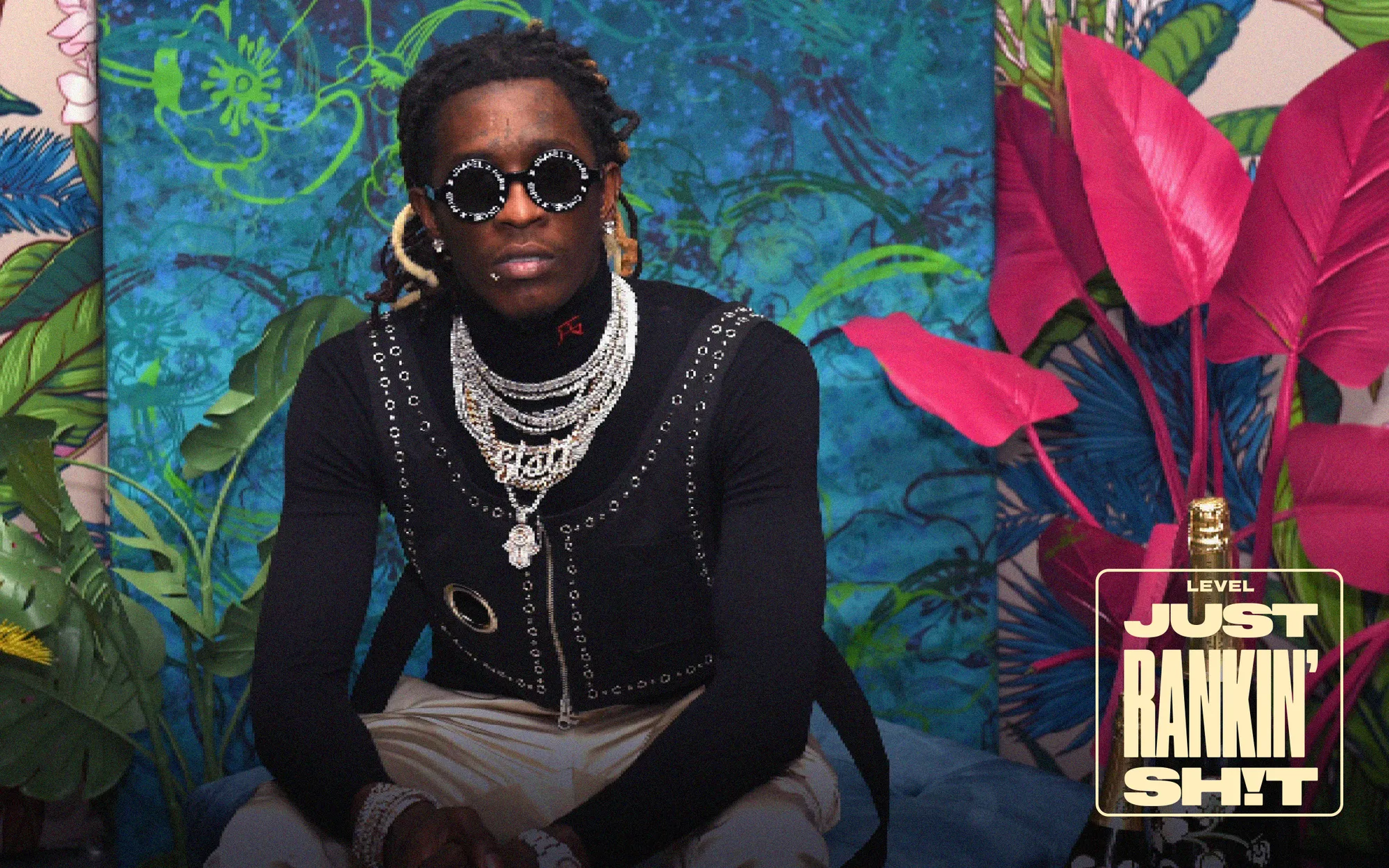
Jeffrey Williams, the man the world knows as Young Thug, isn't exactly a typical "every man" in the literal sense. He wears gowns on album covers. He mumbles in a way that redefined the phonetics of modern trap. He built an empire, YSL, that became the center of the most sprawling RICO trial in Georgia's history. But when we talk about Young Thug every man, we're diving into a specific, gritty reality that emerged during his years behind bars and his eventual 2024 release. It's the idea that despite the diamond-encrusted watches and the chart-topping hits, Thugger’s legal battle became a proxy for the struggles of every man caught in the cogs of a complex, often confusing judicial system. He became a symbol. Not of perfection, but of the messy intersection between art, street life, and the law.
The trial lasted forever. Or it felt like it. For another perspective, check out: this related article.
Fans watched through grainy livestreams as the prosecution tried to use lyrics as evidence. It was a polarizing moment. If Thug is an "every man," he’s the one representing the creative who finds himself judged not for his actions, but for the metaphors he uses to escape his environment.
The Reality Behind the Young Thug Every Man Persona
When people search for "every man" in relation to Thug, they’re often looking for that connection between the superstar and the human being who sat in a courtroom for nearly two years. It wasn't glamorous. He looked tired. He wore sweaters. He looked like a guy who just wanted to go home to his kids. Related insight regarding this has been shared by BBC.
The YSL trial was a marathon. It started in 2022 and stretched into late 2024, becoming the longest trial in Georgia history. Judge Ural Glanville was eventually replaced. There were secret meetings—ex parte communications that sounded like something out of a legal thriller. Thug stayed quiet. That silence spoke volumes to his fans. To them, he was the Young Thug every man figure—someone being squeezed by a system that seemed more interested in the spectacle than the specific facts of the case.
Honestly, the "every man" tag fits because of the vulnerability. We usually see rappers in a state of invincibility. Not here. We saw him praying. We saw him whispering to his lawyers, Brian Steel and Keith Adams. We saw a man who realized that all the money in the world couldn't buy back the time spent in a 6x9 cell while the world moved on without him.
What Really Happened with the Plea Deal?
The end came suddenly. October 31, 2024. Halloween.
While most people were picking out costumes, Jeffrey Williams was entering a non-negotiated "blind plea." This is a risky move. Usually, a plea deal is a contract—you know exactly what you’re getting. A blind plea leaves your fate entirely in the hands of the judge.
- He pleaded guilty to one gang-related charge.
- He pleaded guilty to three drug charges.
- He pleaded guilty to two gun charges.
- He pleaded nolo contendere (no contest) to the heavy hitters: conspiracy to violate the RICO Act and a lead gang charge.
Judge Paige Reese Whitaker didn't send him back to prison for the 45 years the prosecution wanted. She gave him time served and 15 years of probation. But the conditions? They are intense. He can’t go to Atlanta for the first ten years, except for very specific reasons like weddings or funerals. He has to do community service. He has to stay away from gang members, except his brother and Gunna.
This is where the Young Thug every man narrative hits the hardest. It’s the story of a man who traded his total freedom for a strictly monitored version of it just to breathe fresh air. It’s a compromise. Most people think celebrities get off easy, but Thug’s banishment from his home city—the place he built, the place he rapped about, the place he fed—is a heavy price.
The Gunna Factor and the "Snitching" Narrative
You can't talk about Thug without talking about Gunna. When Gunna took an Alford plea early on, the internet exploded. People called him a rat. They said he "sold out" the boss.
But when Thug finally took his plea, the energy shifted. It became clear that the legal strategy was about survival, not some "street code" that exists only in movies. Thug’s plea actually helped protect his legacy because he didn't have to testify against anyone. He took the hit, accepted the probation, and walked out. It was a tactical move. It showed a level of maturity that the "Every Man" can respect—knowing when to fold a hand to save your life.
Why the Lyrics-as-Evidence Debate Still Matters
This case was a lightning rod for the "Protect Black Art" movement. Prosecutors used lines from songs like "Slatty" and "Ski" to argue that YSL was a criminal street gang, not just a record label.
This is why Young Thug every man resonates with creators. If you can be prosecuted for what you say in a song, are you really free? The ACLU and various legal experts argued that this sets a dangerous precedent. It treats fiction as a confession. Imagine if Johnny Cash was arrested because he "shot a man in Reno just to watch him die."
Thug’s struggle highlighted the double standard. It showed that for a certain demographic, the "every man" experience involves having your creativity weaponized against you.
The Banishment: A Modern Exile
The most fascinating part of Thug's current life is the "stay away" order. He’s basically exiled from Metro Atlanta.
Think about that.
The guy who is the literal face of Atlanta trap music can’t step foot in the city limits. He’s living in a weird limbo. He can record music. He can tour. But he can't go home. This "every man" struggle is about the loss of roots. It’s a cautionary tale about how your past can eventually make your present uninhabitable.
His probation terms require him to return to Atlanta four times a year to give anti-gang presentations. It’s a bit ironic. The state is using his influence—the very thing they claimed was dangerous—to try and fix the problems they blamed him for.
Is YSL Still a Label or a Memory?
The brand is fractured. Some members are in prison. Some took deals. Some are still fighting.
The Young Thug every man we see now is a CEO without an office. He’s a leader without a home base. But the influence hasn't faded. You hear his "voice" in every new rapper coming out of the South. His "DNA" is in the flows, the fashion, and the sheer audacity of the modern hip-hop scene.
Actionable Insights for Fans and Observers
If you've been following the Young Thug saga, it’s easy to get lost in the memes and the court clips. But there are real-world takeaways from how his case unfolded:
1. Understand the Power of the RICO Act The Racketeer Influenced and Corrupt Organizations Act was designed for the Mafia, but it's increasingly used against rap collectives. It allows the state to link individuals to crimes they didn't personally commit, simply by being part of the "enterprise." If you're building a brand or a group, legal separation is your best friend.
2. The Importance of Professional Representation Brian Steel’s performance in this trial was legendary. He was held in contempt of court at one point for refusing to divulge a source. The lesson? Your choice of counsel is the single most important factor in navigating the justice system. Thug’s "every man" survival was largely due to having a lawyer who was willing to go to jail for the ethics of the case.
3. Lyrics Are No Longer Just Art In the eyes of the law, your social media posts and your creative output are fair game. Until laws like the "RAP Act" (Restoring Artistic Protection) are passed federally, artists have to be aware that their "persona" can be used as a character profile in court.
4. The Reality of Probation Walking out of jail isn't "winning" if the conditions are a trap. Thug's 15-year probation is a minefield. One wrong association, one positive test, or one unapproved trip to Atlanta could result in him serving the full 20-year back-end sentence.
Young Thug’s journey from the King of Atlanta to a man in exile is a reminder that the "Every Man" isn't always someone who follows the rules—sometimes, it's someone who has to learn the rules the hard way, in front of the whole world. He’s back, he’s making music, and he’s navigating a new life. But the scars of the trial aren't going anywhere. They’re part of the music now. They’re part of the man.