You ever hear a song and just know the artist was in a completely different dimension? That’s Young Thug on Halftime. Released back in 2015 on the seminal Barter 6 mixtape, this track didn't just cement Thugger’s place in the Atlanta hierarchy; it basically rewrote the rulebook for what a rap song could sound like. People were confused. Critics were arguing. Fans were obsessed. Honestly, looking back a decade later, it's clear that Halftime was the moment Jeffrey Williams stopped being a "Lil Wayne clone" and became the eccentric, screeching, fashion-forward alien we know today.
It’s weird. It's erratic. It’s perfect.
Why Young Thug Halftime Still Sounds Like the Future
There is a specific kind of magic in the production by Kip Hilson. It’s sparse. It’s eerie. It feels like walking through a haunted house where the ghosts are wearing Balenciaga. When you listen to Halftime, you aren't just hearing a beat; you’re hearing a canvas that Thug treats like a finger painting. He doesn't stay in the lines. He yells. He whispers. He makes those bird sounds that became his trademark.
Back in 2015, the rap scene was still caught between the tail end of the "lyrical miracle" era and the rise of the "mumble rap" wave. Thug didn't fit either. On Halftime, he proved that his voice was a literal instrument. Think about the way he stretches the word "halftime" itself. It’s not just a word; it’s a melodic anchor. He’s playing with phonetics in a way that most rappers were too scared to try at the time.
Most people forget how much heat he was taking back then. The beef with Lil Wayne was at an all-time high. Barter 6 was originally supposed to be Carter 6, a direct jab at Weezy's legal troubles with Cash Money. Amidst all that chaotic energy, Halftime stood out because it felt effortless. It wasn't a diss track in the traditional sense, but it was a statement of independence.
The Viral Video and the Skateboard That Changed Everything
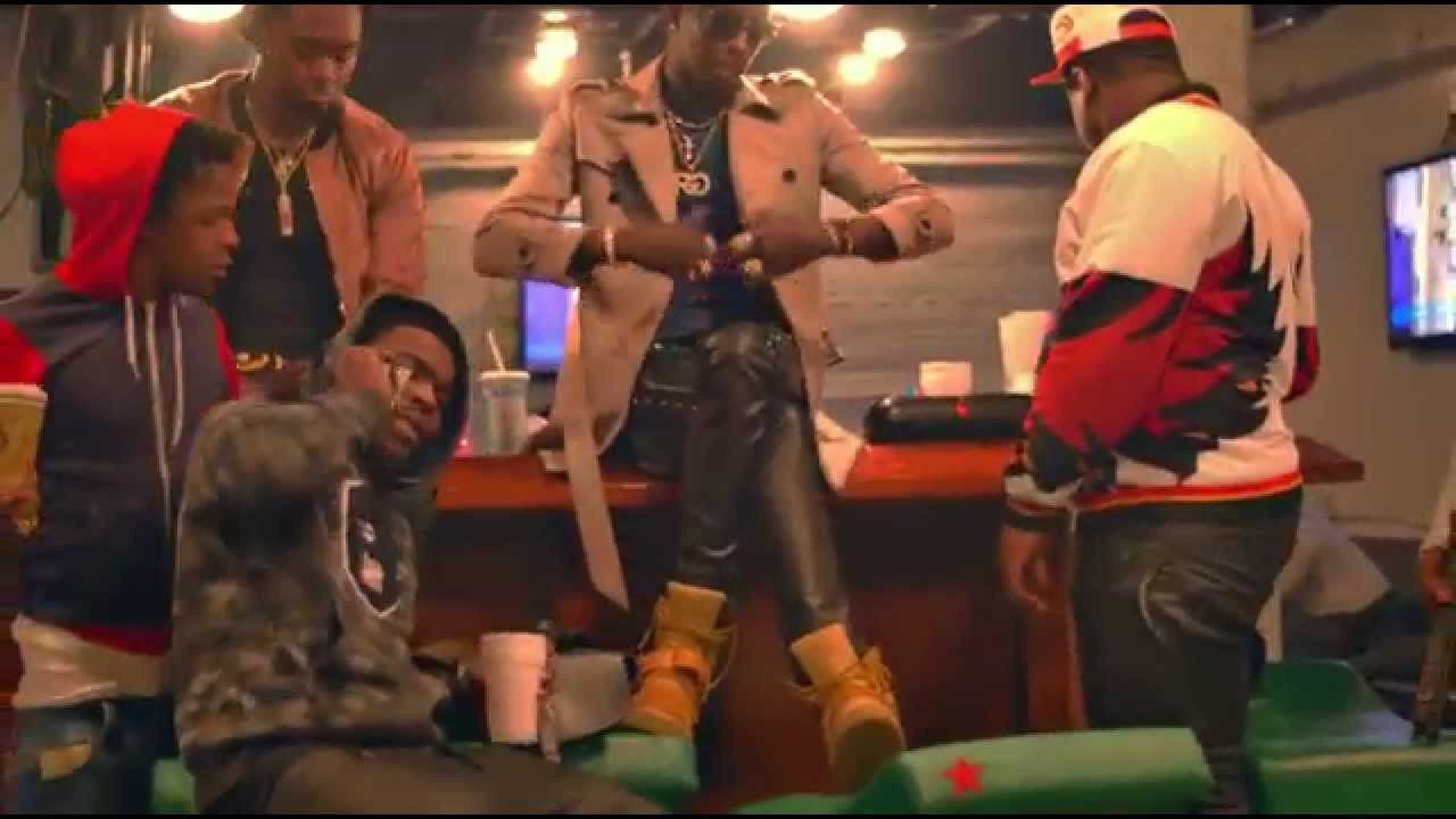
If you haven't seen the music video for Halftime, you’re missing half the story. Directed by Be El Be, it’s basically a fever dream in an Atlanta neighborhood. There’s no high-concept plot. It’s just Thug and his crew, but the energy is electric.
There's this one specific shot where Thug is on a Hoverboard—remember those? This was right when they were becoming a thing. He’s gliding around, wearing a dress-like long shirt, looking completely unbothered by the controversy surrounding him. It was a visual manifesto. It said: "I am going to do whatever I want, and you're going to watch."
Be El Be has talked about this era in interviews, mentioning how Thug would record these tracks in one take, often without writing a single word down. That "punch-in" style is all over Halftime. You can hear the shifts in his vocal tone between lines. It gives the song a jagged, raw feeling that polished studio albums usually lack. That raw edge is exactly what Google Discover looks for today—authenticity that resonates with a specific subculture.
Key Elements of the Track's Success
- The Ad-libs: "Skrt!" and "Eee-hee!" weren't just background noise; they were hooks.
- The Flow: It’s unpredictable. He speeds up, slows down, and then stops entirely.
- The Fashion: The video helped pioneer the "gender-fluid" aesthetic in hip-hop long before it was mainstream.
Breaking Down the Lyrics (If You Can Call Them That)
Look, nobody listens to Halftime for a narrative story. If you're looking for a beginning, middle, and end, go listen to J. Cole. Young Thug is about vibes and texture. When he says, "I'm a beast, I'm a dog, I'm a pit," he isn't trying to be Shakespeare. He's using the rhythm of the words to build momentum.
The song is packed with references to his lifestyle at the time—the drugs, the women, the newfound wealth. But there's a vulnerability in the high-pitched "woo!" sounds he makes. It’s like he’s celebrating his survival. You have to remember, Thug came from the Jonesboro South projects. For him, a song like Halftime was a victory lap.
The line about the "double cup" and the "Bape" hoodies—it's 2015 in a nutshell. It’s a time capsule. Yet, somehow, it doesn't feel dated. That’s the hallmark of a classic.
The Technical Brilliance of Kip Hilson’s Production
We need to talk about the bass. The low end on Halftime is tuned in a way that hits your chest without drowning out the melody. Kip Hilson used these staccato synth stabs that create a sense of urgency. It’s "anxious" music.
In the music industry, there’s a lot of talk about "pocket." Most rappers find the pocket of a beat and stay there. Thug jumps in and out of the pocket like he’s playing tag with the drums. On Halftime, he specifically waits for the snare to hit before dropping some of his most iconic lines. It’s a rhythmic sophistication that people often overlook because they’re too distracted by his voice.
Misconceptions About the Barter 6 Era
A lot of people think Barter 6 was a failure because it didn't sell 500k copies in its first week. That’s a fundamentally flawed way to look at it. This album, and Halftime specifically, shifted the DNA of the genre.
You don't get Gunna without this song. You don't get Lil Baby. You certainly don't get the melodic trap wave that dominated the late 2010s. Halftime was the blueprint. It showed that you could be "weird" and still be the hardest guy in the room. It proved that melody was more important than traditional bar-for-bar lyricism in the new digital age.
The legal troubles Thug is currently facing (the YSL RICO case) often overshadow his musical contributions. But when you strip away the headlines and the courtroom drama, you’re left with the art. And the art on this track is undeniable. It represents a time when Thug was at his most creatively free—before the massive fame, before the heavy industry pressure.
How to Truly Appreciate the Song Today
To get the full effect of Halftime in 2026, you need to listen to it on a high-quality system. Don't use your phone speakers. You’ll miss the subtle vocal layers. Thug often records 3 or 4 different vocal tracks and stacks them, but he pans them differently. One voice is whispering in your left ear while another is screaming in your right.
It’s an immersive experience.
It’s also worth comparing it to his later work like So Much Fun. You can hear the evolution. While So Much Fun is more polished and "radio-ready," Halftime is the sound of a man discovering his powers in real-time. It’s chaotic because growth is chaotic.
Actionable Takeaways for Fans and Collectors
- Revisit the Video: Watch the official video on YouTube to see the 2015 Atlanta "slime" aesthetic in its purest form. Pay attention to the transitions.
- Check the Credits: Look into Kip Hilson’s other work with Thug. They had a chemistry that was unique even for the YSL camp.
- Vinyl Search: If you can find an original Barter 6 vinyl pressing, grab it. They are becoming increasingly rare and are considered "holy grails" for modern rap collectors.
- Listen for the Influence: Play a modern Lil Keed or Lil Gotit track right after. You’ll hear the "Halftime DNA" almost immediately.
Young Thug’s legacy is complicated, but his impact on the sound of the streets is simple: he changed everything. Halftime remains the definitive proof that being yourself—no matter how strange that self might be—is the ultimate power move in music.



