If you were outside in 2015, you remember the tension. It was thick. Young Thug was essentially playing a high-stakes game of chicken with Lil Wayne, naming his project Barter 6 because of legal threats over the original "Carter" title. Amidst that chaotic rollout, Young Thug Halftime emerged not just as a standout track, but as a definitive manifesto of what the "new" Atlanta was going to sound like. It’s weird. It’s elastic. Honestly, it’s one of the most important songs in his entire discography.
People still argue about what makes Thugger great. Is it the fashion? The legal drama? No. It’s the vocal gymnastics. On "Halftime," he isn't just rapping; he’s stretching syllables until they almost snap.
The Sound of 2015: Kip Hilson’s Production Meets Thug’s Ad-libs
Most people forget that Kip Hilson produced this. The beat is deceptively simple. It has this eerie, minimalist chime that loops over a heavy, distorted 808. It’s sparse. This gives Thug all the room in the world to be a weirdo.
The track starts with that iconic, high-pitched "Skrrt!" and then he just... goes. There isn't a traditional hook that feels like a pop song. Instead, the whole track feels like one long, continuous flow state. He’s talking about everything from his affinity for expensive jewelry to his distrust of the police, but he says it in a way that sounds like a secret language.
You’ve got to appreciate the audacity. At the time, critics were still calling him "mumble rap." They were wrong. If you actually listen to the bars on Young Thug Halftime, the wordplay is incredibly dense. He’s just delivering it at a frequency that older ears weren't tuned to yet. He says, "I'm a beast, I'm a dog, I'm a pit," and he literally sounds like he’s transforming mid-verse.
That Music Video: A Time Capsule of the Rich Gang Era
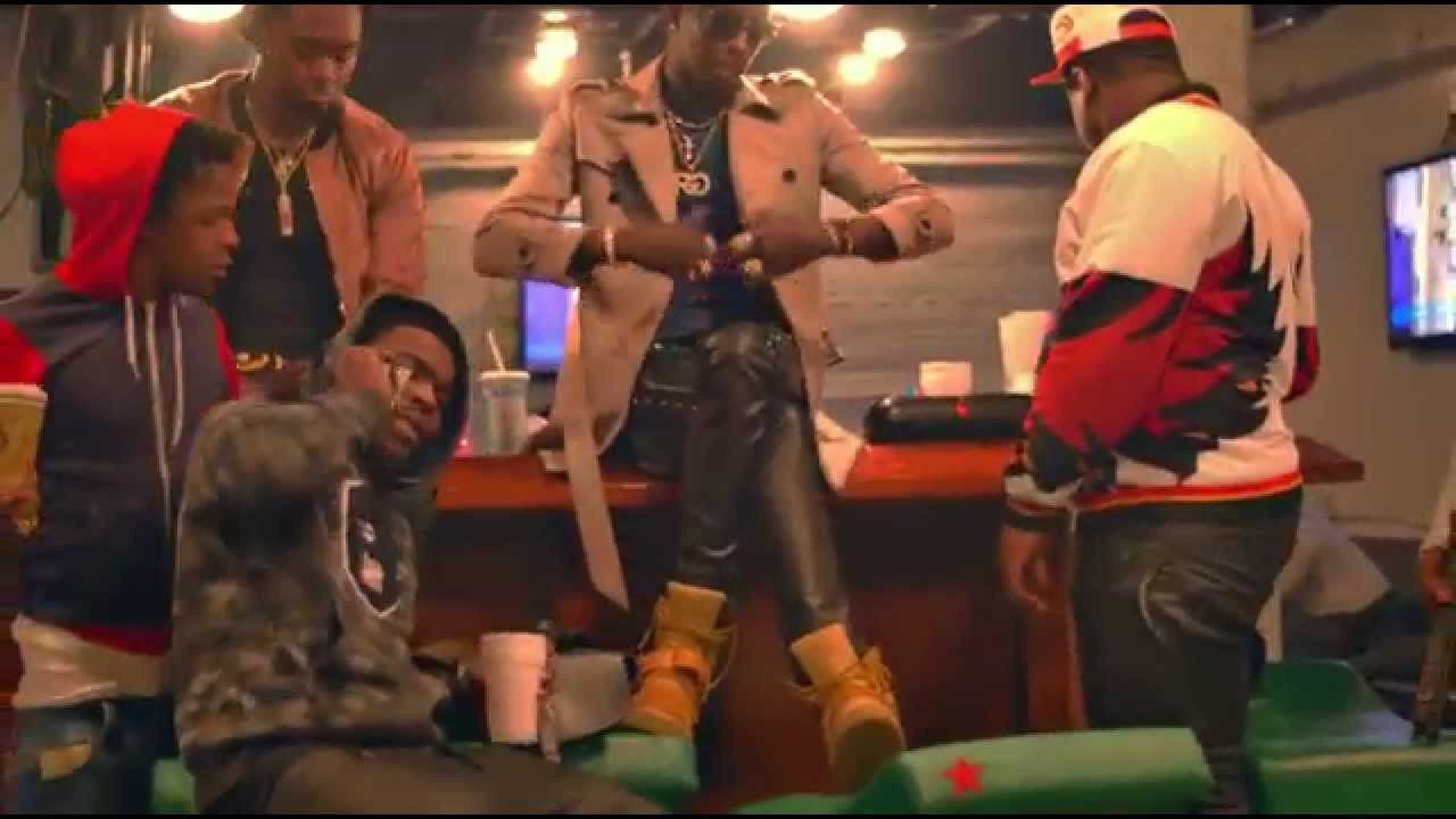
We have to talk about the video. Directed by Be El Be, the "Halftime" visual is legendary. It’s got everything: the hoverboards (remember when those were everywhere?), the Styrofoam cups, and Thug wearing a dress or a long tunic, defying every trope in hip-hop at the time.
It was filmed in various locations, including a tour bus and backstage areas. There’s a specific energy to it. It feels DIY but expensive. It captures a moment when Thug was the most polarizing figure in music. You either loved him or you thought he was ruining the genre. There was no middle ground.
- The visual effects were trippy but subtle.
- The cameos featured his literal inner circle, not hired models.
- It showed the world that Atlanta wasn't just about the "trap" anymore; it was about the avant-garde.
The sheer confidence required to release a video like that while the Lil Wayne beef was peaking is honestly staggering. He wasn't scared. He was having fun. That’s the core of Young Thug Halftime—it’s the sound of a man who knows he’s winning even if half the world doesn't understand why yet.
Why the "Halftime" Flow Changed Everything
Before this era, rap was largely about being "on the beat." Thug treated the beat like a suggestion. On "Halftime," he speeds up, slows down, whispers, and then shouts. This "slime" aesthetic paved the way for guys like Gunna, Lil Keed, and even influenced the melodic shifts in artists like Lil Uzi Vert.
He raps: "I just bought a Bentley and a chain, I'm a winner."
Simple? Sure. But the way he drags out the word "winner" into about five different syllables is where the magic happens. It’s vocal jazz.
Breaking Down the Complexity
Critics often overlook the technicality here. To rap like this, you need incredible breath control. You also need an innate sense of rhythm that allows you to fall off the beat and land perfectly back on the snare. When he says "I'm a boss, I'm a leader," he’s not just bragging; he’s stating a fact that would become more evident as YSL (Young Stoner Life) grew into a powerhouse label.
The song doesn't have a "halftime" in the literal sense of a sports game. There’s no break. The title is likely a reference to his lifestyle—always moving, never stopping, even when the clock says it's time to rest. Or, perhaps, it’s a nod to the fact that he was only halfway to his peak.
The Barter 6 Context
You can't separate Young Thug Halftime from the album it lives on. Barter 6 is widely considered a trap masterpiece. While Jeffery was more experimental and So Much Fun was more commercial, Barter 6 was the raw, unfiltered essence of Thug.
It was a transitional period. Gucci Mane was in prison. Future was just starting his legendary run of mixtapes. Thug stepped into the vacuum and created a sound that was darker and more melodic than what came before. "Halftime" acts as the emotional anchor of the project’s middle section. It’s the "vibe check."
Impact on the Atlanta Scene
Atlanta has always been a hub for innovation, but "Halftime" pushed the boundaries of what was acceptable in the mainstream. It proved that you didn't need a radio-friendly chorus to have a hit. You just needed a feeling.
Even today, in 2026, you hear echoes of this track in every "type beat" on YouTube. The sliding 808s, the erratic ad-libs, the high-pitched inflections—it all traces back to this specific window of time. Young Thug didn't just join the conversation; he changed the language entirely.
Common Misconceptions About the Song
A lot of people think Thug is just saying whatever comes to mind. That’s a myth. If you watch behind-the-scenes footage of him in the studio, he’s meticulous. He records in layers. He might spend an hour just perfecting the "ay" or "yeah" in the background. "Halftime" sounds effortless, but it’s the result of a very specific, albeit unorthodox, craft.
Another misconception is that the song is purely about drugs or wealth. While those themes are present, there’s an undercurrent of paranoia. He talks about "keeping a tool" and watching his back. This was a man who was literally at war with the status quo of hip-hop. The music reflects that tension.
How to Listen to "Halftime" Today
If you’re revisiting the track, don't just play it through phone speakers. You’ll miss the low-end frequencies. Use a decent pair of headphones or a car system.
- Listen for the "pockets"—those moments where he finds a rhythm that shouldn't work but does.
- Pay attention to the ad-libs. They aren't just background noise; they’re counter-melodies.
- Note the lack of a bridge. The song is a sprint.
Moving Forward With Thug's Legacy
Young Thug’s current legal situation has cast a long shadow over his music, but it hasn't erased the brilliance of his early work. "Halftime" remains a testament to his era-defining creativity. It’s a reminder of why he’s called an "alien." He took the familiar elements of Southern rap and rearranged them into something unrecognizable and beautiful.
To truly understand the trajectory of modern rap, you have to sit with this song. It’s not just a track; it’s a blueprint.
Next Steps for the Listener:
- Compare and Contrast: Listen to "Halftime" immediately followed by a track from Lil Wayne’s Tha Carter IV. You’ll hear exactly where Thug drew inspiration and exactly where he broke away to create his own lane.
- Analyze the Lyrics: Use a lyrics site to read along. Seeing the words on paper helps you appreciate the internal rhymes that get lost in his melodic delivery.
- Explore the Production: Check out other Kip Hilson tracks from the 2014-2016 era to see how he helped shape the "YSL sound."
- Watch the Video: Re-watch the official music video with an eye for the fashion. Notice how many of those "wild" styles have now become standard in the streetwear world.
Young Thug's "Halftime" isn't just a nostalgia trip. It’s a masterclass in style over structure, proving that in music, sometimes the most important thing you can be is yourself—even if people think you’re from another planet.



