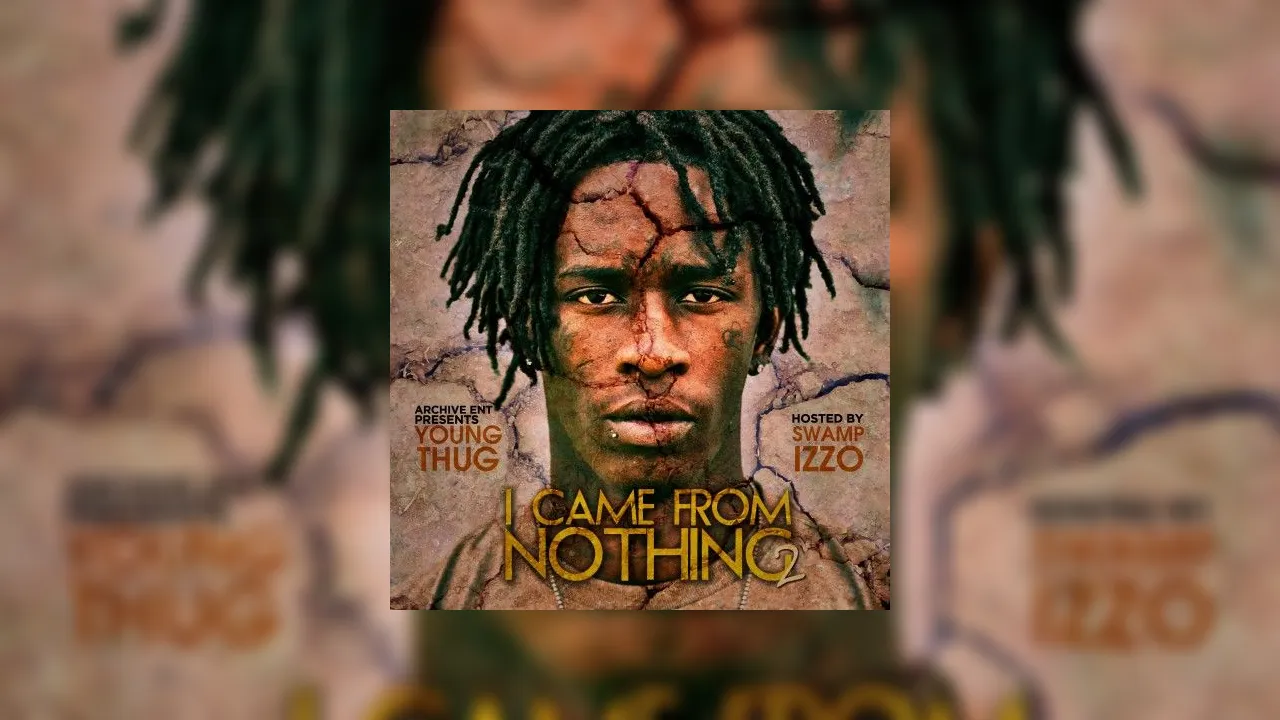
Before the dress on the Jeffery cover, before the "Best Friend" viral dances, and way before the Rico trial that has dominated headlines for years, there was just a skinny kid from the Jonesboro South projects with a voice that didn't make sense to anyone. Honestly, if you go back to December 2011, the Atlanta rap scene was in a weird transition. Gucci Mane was the sun everyone orbited around, but a new frequency was starting to hum. That frequency was Young Thug I Came From Nothing 2.
It’s raw.
If you listen to it now, it sounds like a blueprint. You can hear the gears turning in Thug’s head as he realizes he doesn’t have to rap like T.I. or Jeezy. He could screech. He could mumble. He could stretch syllables until they snapped. Most people don't realize that this specific mixtape was the catalyst for the entire "mumble rap" era, even if that term is kinda reductive and annoying.
Why Young Thug I Came From Nothing 2 is the "Lost" Classic
A lot of fans started their journey with 1017 Thug or Barter 6. Those are great, obviously. But Young Thug I Came From Nothing 2 is where the experimentation actually started to pay off. It wasn't polished. The mixing is sometimes questionable, and the beats sound like 2011—heavy on the Lex Luger-style snares and eerie synths.
But Thug was different.
He was already working with guys like London on da Track, though their legendary chemistry was still in its infancy. On tracks like "Keep In Touch," you hear a melodic sensibility that shouldn't have worked in the trap houses of Atlanta. It was too soft, too weird, too... Jeffery. He was essentially a punk rocker using a rap medium. While his peers were focused on sounding tough or literal, Thug was focused on the vibe.
The Breakout Tracks You Forgot About
"Everyday" is probably the heart of this tape. It’s got that repetitive, hypnotic hook that would become his trademark. He wasn't just saying words; he was using his voice as an instrument. Critics at the time didn't know what to do with it. Was he off-beat? Was he crazy?
Maybe both.
Then there’s "My Everything." It’s a love song, or at least the trap version of one. It showed a vulnerability that was largely absent from the "tough guy" persona most rappers were clinging to back then. He talked about his kids, his struggles, and his aspirations without the layer of irony he sometimes uses now. It felt urgent. It felt like someone who really did come from nothing and was terrified of going back.
The Gucci Mane Connection
You can't talk about this era without talking about 1017. Gucci Mane has a legendary ear for talent, and while Thug wasn't officially signed to the 1017 label at the exact moment Young Thug I Came From Nothing 2 dropped, the influence was everywhere. The mixtape was hosted by DJ Holiday, a power player who basically controlled the streets of Atlanta at the time.
Getting a Holiday co-sign in 2011 was like getting a Harvard degree for rappers.
It meant the streets were listening. Thug was taking the "workhorse" mentality of Gucci—recording ten songs a night, never sleeping, flooding the streets—and applying it to a sound that was significantly more avant-garde. This tape is the bridge between the old Atlanta and the weird, wonderful, melodic Atlanta we have today. Without "ICFN2," there is no Lil Keed. There is no Gunna. There is no SahBabii.
Style Over Substance? Not Quite.
A big misconception about this project is that it's all "vibes" and no lyricism. If you actually sit with the lyrics on "Condition," you see a guy who understands internal rhyme schemes better than most of the "real hip-hop" heads gave him credit for.
"I’m a king, I’m a lion, I’m a tiger, I’m a bear / I’m a beast, I’m a dog, I’m a god, I’m a prayer."
It’s simple on paper. But the delivery? It’s frantic. It’s breathless. He was pushing the boundaries of what a flow could be. He would speed up for three bars, then suddenly slow down to a crawl, dragging the last word across the beat. It was erratic. It was brilliant.
The Technical Evolution of the ICFN Series
The first I Came From Nothing was basically a rough draft. It was Thug trying on different outfits to see what fit. By the time he got to Young Thug I Came From Nothing 2, he had found his voice—literally. He started using that high-pitched yelp that would eventually define hits like "Lifestyle."
- Vocal Elasticity: He stopped trying to sound like a baritone. He embraced the squeaks.
- Ad-lib Innovation: The ad-libs on this tape aren't just background noise; they are part of the melody.
- Structure: He began moving away from the "verse-chorus-verse" format, opting for a more fluid, stream-of-consciousness style.
It’s fascinating to look back at the tracklist. 22 songs. In 2026, a 22-song project feels like an "album" designed to game the streaming charts. In 2011, it was just a mixtape. It was a dump of everything he had because he didn't know if he'd get another chance. He was hungry, and you can hear the starvation in the booth.
Why You Should Go Back and Listen in 2026
With the legal drama surrounding YSL, it’s easy to forget why we cared about Young Thug in the first place. We cared because he was an alien. We cared because he was the most exciting thing to happen to music in a decade.
Young Thug I Came From Nothing 2 is the purest version of that excitement. It’s before the fame, before the money, and before the industry tried to figure out how to market him. It’s just a kid from Atlanta with a microphone and a vision that nobody else could see yet.
If you want to understand the DNA of modern rap, you have to go back to this tape. You have to hear "Who's On First" and "Non-Stop." You have to hear the raw, unedited passion of a creator who knew he was about to change the world, even if the world wasn't ready for him.
How to Properly Experience the ICFN Era
If you're looking to dive back into this pivotal moment in hip-hop history, don't just put it on as background music. You need to hear the progression.
- Start with the original 'I Came From Nothing' to hear the starting point of his raw talent.
- Listen to 'I Came From Nothing 2' start to finish. Notice how he gains confidence in his vocal range between the first and tenth tracks.
- Compare it to '1017 Thug'. You’ll see how the street-centric sound of ICFN2 evolved into the more "star-ready" polished weirdness that caught the national spotlight.
- Look for the YouTube videos from this era. Seeing a young Thug in the studio or in his neighborhood during 2011 provides the visual context for the gritty, low-budget energy of the mixtape.
The best way to appreciate Young Thug I Came From Nothing 2 is to treat it like a historical document. It isn't just a collection of songs; it is the birth of a subculture. Go find a high-quality rip of the original DatPiff release—the "pree-mi-um" tags and all—and listen to the sound of a revolution.



