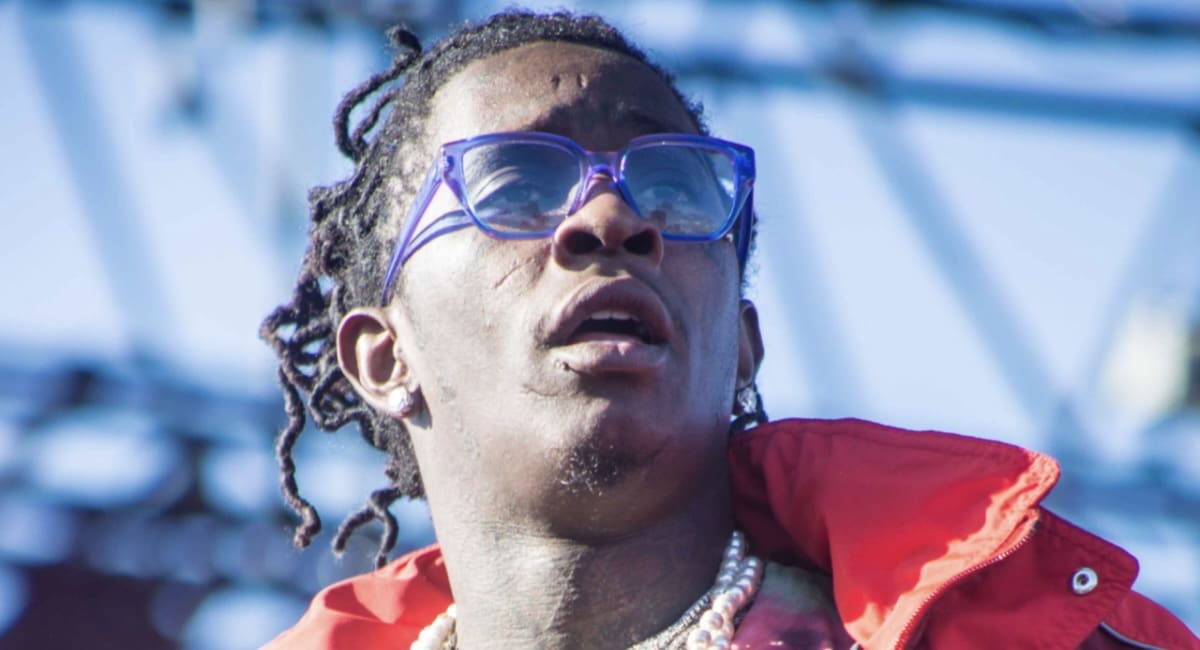
It has been a weird, exhausting, and frankly historic couple of years for Jeffery Williams. You probably know him as Young Thug, the guy who basically reshaped how modern rap sounds with his elastic voice and "I don't care" fashion sense. But since May 2022, the Atlanta icon hasn't been in a recording studio or on a festival stage. He’s been sitting in a cell. The saga of Young Thug in prison isn't just a tabloid story; it is a massive legal quagmire that has fundamentally changed how the justice system looks at hip-hop lyrics and gang culture.
People keep asking when he’s getting out. The short answer? It’s complicated.
This isn't your standard "celebrity gets in trouble" story. We are talking about a RICO (Racketeer Influenced and Corrupt Organizations) case that involves dozens of defendants and a witness list that feels like it’s a thousand miles long. It is the longest-running trial in the history of the state of Georgia. Think about that for a second. The jury selection alone took nearly a year. A whole year just to pick people to sit in the box.
The RICO Charge and Why It Stuck
The Fulton County District Attorney, Fani Willis, isn't playing around. The core of the state's argument is that Young Slime Life (YSL) isn't just a record label. They claim it’s a violent street gang. Thug is being painted as the "Kingpin" of this operation.
Is he?
That is the multi-million dollar question. The prosecution has been trying to link him to specific acts of violence, including the 2015 murder of Donovan "Big Nut" Thomas. They aren't just looking for a smoking gun; they are trying to build a web. They want to show that Thug used his money and influence to fund a lifestyle of crime.
The defense is hitting back hard. Brian Steel, Thug’s lawyer—who has become a bit of a legend himself for his relentless courtroom energy—argues that YSL is just a group of kids from the same neighborhood who made it big. It's a brand. It's music. It's family. To Steel, the prosecution is trying to criminalize a lifestyle they simply don't understand.
The Lyric Controversy
This is where things get controversial. The judge, Ural Glanville (and later Judge Paige Reese Whitaker), allowed the prosecution to use Young Thug’s lyrics as evidence. This sparked a national debate. Critics say it’s a violation of the First Amendment. If a director makes a movie about a heist, we don't arrest them for robbery. But when a rapper talks about "slimming" someone, the state takes it literally.
It feels personal.
Lyrics from songs like "Slatty" and "Anybody" were read aloud in court. It’s surreal to hear a middle-aged prosecutor recite lines about "wiping noses" while Thug sits there in a sweater, looking tired. For the fans, it's a terrifying precedent. If your art can be used to put you in a cage, where does the creative freedom end?
Life Behind Bars: The Toll of Isolation
Prison isn't a vacation, obviously, but for a superstar, the shift is jarring. Reports from inside the Cobb County Jail and later the Fulton County facilities have been grim. Thug’s health has been a recurring concern. We’ve heard reports of him being "sleep-deprived" and eating nothing but junk food because that’s what’s available in the commissary.
His legal team has repeatedly filed for bond. They’ve been denied every single time.
The judge’s reasoning? They think he’s a flight risk or a danger to the community. They worry he could intimidate witnesses if he’s out on the street. So, he stays. He spends hours every day in a courtroom, usually looking drained, watching a slow-moving legal machine grind away at his prime years.
The Mental Strain
Imagine being one of the most influential artists on the planet and suddenly having zero control over your schedule. No phone. No studio. Limited contact with your kids. It’s a mental battle. There was that one viral moment where a co-defendant allegedly handed him a Percocet in the middle of a court session. It was caught on camera. It just showed how desperate and messy the situation had become.
Then there’s the loss of peers. Gunna, Thug’s protégé and closest collaborator, took an Alford plea and went home early in the case. The internet exploded. "Snitch" was the word of the month. While Gunna’s team maintains he didn't "tell" on anyone, the optics were bad. It left Thug looking lonely at the defense table.
A Trial That Won't End
If you think this trial is moving fast, you haven't been paying attention. It has been a comedy of errors at times. We’ve seen:
- A defense attorney arrested in the courtroom.
- A witness falling asleep on the stand.
- Accusations of "ex parte" meetings between the judge and the prosecution.
- The original judge, Ural Glanville, being removed from the case entirely after a massive dispute over how he handled a secret witness meeting.
It’s a circus. Honestly, it’s hard to believe this is how the legal system functions in 2026. Every time it seems like the trial is reaching a climax, another procedural hurdle pops up.
The Cultural Impact of Young Thug in Prison
While Thug is physically away, his influence hasn't faded. "Free Thug" isn't just a hashtag; it’s a movement in Atlanta. You see it on t-shirts, billboards, and hear it in every new rap song coming out of the South. The industry is watching this case because it sets the rules for the next decade.
If the state wins, any rapper who mentions a "set" or a "crew" in their songs might be looking over their shoulder for a RICO charge. It turns the music industry into a potential crime scene.
But if Thug beats it? It’ll be the biggest comeback in the history of the genre.
The prosecution has a mountain of evidence—thousands of hours of wiretaps, social media posts, and testimony from former associates who flipped. But "mountains of evidence" don't always lead to a conviction. The burden of proof is on the state. They have to prove that Thug specifically ordered crimes, not just that he hung out with people who committed them.
What Happens Next?
The trial is still chugging along. The defense is finally getting their turn to tell the story of Jeffery Williams, the philanthropist and businessman, rather than Young Thug, the gang leader.
There is a real possibility of a mistrial. With the change in judges and the messiness of the early proceedings, the defense has plenty of ammunition for an appeal even if a "guilty" verdict comes down. But "mistrial" doesn't mean "go home." It often means "do it all over again."
That’s the nightmare scenario for Thug. More years in a cell, waiting for a jury to decide if his lyrics were truth or fiction.
Actionable Reality for Fans and Observers
If you are following this case, you need to look past the headlines. Most news outlets focus on the "shock" factor, but the real story is in the court transcripts. Here is how to stay informed and understand the implications:
- Monitor the "Protect Black Art" Legislation: This case directly inspired bills in several states (and at the federal level) to limit the use of lyrics in court. Support for these bills is the most direct way to impact how cases like Thug's are handled in the future.
- Watch the Live Streams: Don't rely on 30-second clips on TikTok. Outlets like Law&Crime often stream the full day. You’ll see the nuances of how the prosecution struggles to connect specific phone calls to specific crimes.
- Understand the RICO Statute: Read up on how Georgia's RICO laws differ from federal ones. Georgia's version is much broader, making it easier for prosecutors to rope in people who weren't directly involved in a crime.
- Follow Independent Journalists: Reporters like Meghann Cuniff have provided some of the most detailed, unbiased coverage of the daily grind in that courtroom. They catch the details the big networks miss.
The saga of Young Thug in prison is a reminder that the line between persona and person is dangerously thin in the eyes of the law. Whether he is a victim of a system that doesn't understand rap or a man who took his "street cred" too far is a decision that 12 ordinary citizens in Fulton County will eventually have to make. Until then, the music world waits.
The trial continues. The cell door remains locked. And the influence of Jeffery Williams continues to haunt the very culture that is currently judging him.