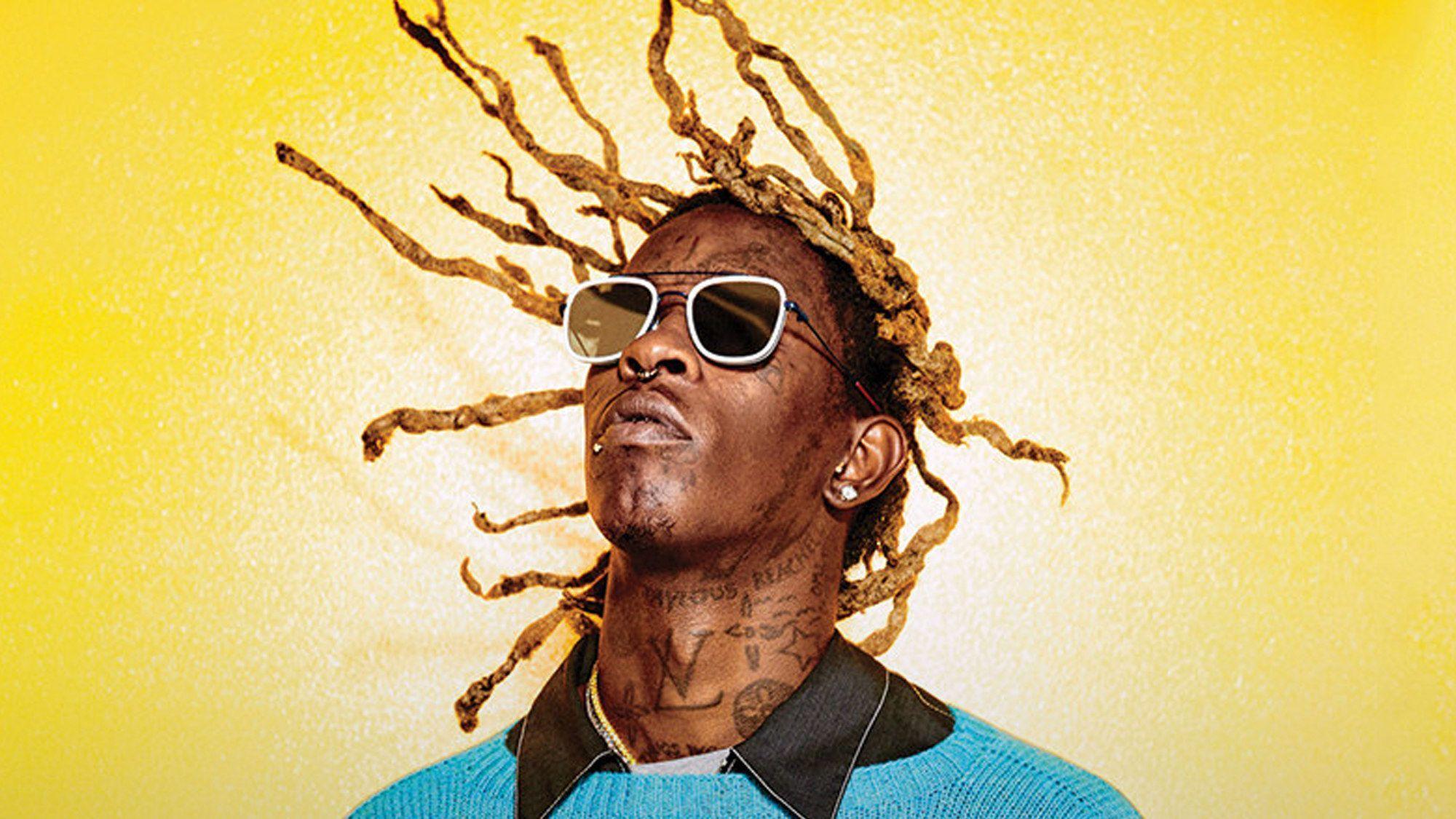
If you’ve ever watched a video of Young Thug in studio sessions, you know it looks less like a recording appointment and more like a high-stakes science experiment. He isn't sitting there with a notebook. There are no crumpled papers on the floor. Most of the time, he isn't even writing words down. He's standing at the mic, draped in something probably too expensive for a room full of spilled soda, making sounds that don't quite make sense until the beat drops.
It’s chaotic. It’s loud. It's brilliant.
Jeffery Williams—the man the world knows as Young Thug—doesn't approach music the way your favorite "lyricist" does. He doesn't sit in a corner brooding over metaphors. Instead, he treats his voice like a physical instrument, a piece of clay he can stretch and pull until it fits the pockets of a Wheezy or London on da Track production. If you want to understand why hip-hop sounds the way it does in 2026, you have to look at those legendary, marathon sessions at places like Tree Sound Studios in Atlanta.
The "Geometric" Method of Young Thug in Studio
Most rappers think in bars. Thug thinks in shapes.
During an interview with Rolling Stone, it was revealed that Thug actually draws his lyrics. Yes, draws them. He uses a series of shapes, lines, and squiggles to represent the flow and "vibe" of a verse. He once explained that he doesn't see words; he sees the movement of the sound. This isn't just some eccentric flex for the cameras. It’s a literal roadmap for his vocal performance. He might draw a jagged line to remind himself to use a sharp, staccato delivery, or a swirling circle for those melodic, warbling runs that became his signature on Barter 6.
He works fast.
Engineers who have survived a session with him often talk about the "Thug Speed." He can finish a whole song in ten to fifteen minutes. He goes into the booth, catches a vibe, mumbles through a melody to find the pocket, and then fills in the blanks with actual words—or sometimes, just better mumbles. Alex Tumay, the engineer who arguably understands Thug’s frequencies better than anyone, has spent years capturing these lightning-in-a-bottle moments. Tumay has often noted that if an engineer isn't fast enough to keep up with Thug, they won't last an hour in the room. You have to be ready to record the second he makes a noise. If you miss that one weird yelp or that specific ad-lib, it’s gone forever. He doesn't like doing "takes" in the traditional sense. He likes capturing the moment.
How the Studio Environment Shapes the YSL Sound
The vibe of Young Thug in studio isn't just about the man himself; it's about the ecosystem he built around him. Before the legal complexities of the YSL RICO trial slowed things down, a Thug session was a community event. You’d have Gunna, Lil Keed (rest in peace), and a dozen other YSL affiliates just... being there. It wasn't just partying, though. It was a factory.
Thug acts as a sort of creative director. He isn't just recording his own verses; he’s often telling other artists how to pitch their voices or where to place an ad-lib. He’s been known to snatch a mic from a collaborator to show them exactly how a line should "swing." This hands-on approach is why the "Atlanta sound" shifted from the gritty trap of the 2000s to the fluid, "mumble rap" (a term Thug hates, by the way) of the 2010s and 2020s. He pushed everyone to experiment with their vocal ranges. He made it okay for rappers to scream, whisper, and whine.
The Tools of the Trade
While he’s a wizard with melody, the technical side is surprisingly streamlined.
- Microphone choice: He often favors the Sony C800G. It’s a staple in high-end hip-hop studios because it captures that crisp, high-end "sheen" that makes Thug’s squeaks and trills pop out of the speakers.
- The Engineer's Role: It’s all about the "punch-in." Thug rarely records a verse from start to finish in one go. He does two bars, stops, listens, and then "punches in" for the next two. This allows him to maintain an incredible amount of energy and breath control.
- Vocal Processing: Contrary to popular belief, he doesn't use Auto-Tune to fix a bad voice. He uses it as a texture. He knows exactly how to trigger the pitch correction to create those robotic glitched-out sounds.
Why the "Mumble" Label is Completely Wrong
People who don't get it love to use the word "mumble." It's lazy. When you're watching Young Thug in studio, you realize every single sound is intentional. He’s doing things with his throat and vocal cords that classically trained singers would find terrifying. He’s a percussionist who happens to use his mouth.
He once told V Magazine that he could write a "perfect" radio song in his sleep, but he finds it boring. He’d rather experiment with a sound that people hate initially but eventually grow to love. That's the hallmark of a true disruptor. Look at Jeffery. When that album cover dropped with him in the dress, people lost their minds. But the music inside was some of the most technically proficient vocal work of his career. He was naming songs after his idols—Wyclef Jean, Floyd Mayweather, Kanye West—and matching their energy with his own chaotic flair.
The studio is his sanctuary. It's where the "gangster" persona melts away and the "artist" takes over. Honestly, if you stripped away the jewelry and the fame, Thug would probably still be in a basement somewhere in Jonesboro South, humming melodies into a cheap headset. The obsession with the craft is real.
The Work Ethic Most People Miss
There’s a myth that Thug is just a "natural" who lucks into hits. That’s total nonsense. You don't get a discography that deep by being lucky. You get it by living in the booth.
There are rumors of Thug staying in the studio for 24, 48, even 72 hours straight. He sleeps on the couches. He eats there. He creates thousands of songs that will likely never see the light of day. This "vault" is legendary in the industry. For every "Lifestyle" or "Best Friend," there are probably 200 tracks that are just as good, sitting on a hard drive because Thug already moved on to a new sound. He evolves faster than his audience can keep up.
This is why he’s your favorite rapper's favorite rapper. Drake, Kanye, and Travis Scott don't just collaborate with him for the clout; they do it to study him. They want to see how he finds those weird melodies. They want to see how he manages to be "off-beat" but perfectly in time.
Actionable Insights for Aspiring Artists
If you’re a creator looking at Thug’s process, don’t try to mimic his squeak. You’ll just sound like a budget version of a YSL clone. Instead, take the "core" lessons from his studio habits:
- Ditch the Notebook: Try "punching in." Record a line, listen back, and react to your own energy. It makes your delivery feel more immediate and less rehearsed.
- Treat Your Voice Like a Synth: Don't just think about words. Think about textures. Use your voice to mimic a guitar or a drum.
- Speed is Your Friend: Don't overthink. Sometimes your first instinct is the most "honest" version of the song. The more you polish, the more soul you might accidentally scrape off.
- Find Your "Alex Tumay": You need an engineer who understands your vision. If you have to explain your "vibe" for twenty minutes, you're with the wrong person.
- Quantity Leads to Quality: Thug’s "vault" is deep because he doesn't treat every song like a precious heirloom. He makes music constantly. The more you create, the higher the chance you’ll stumble onto something revolutionary.
Young Thug’s impact on the studio landscape is undeniable. He broke the "rules" of what a rapper is supposed to be. He turned the recording booth into a laboratory for vocal surrealism. Whether he’s in a multimillion-dollar facility in Los Angeles or a cramped room in Atlanta, the goal is always the same: find a sound that hasn't been heard before.
The next time you hear a weird vocal inflection on the radio or a rapper using a "strange" melody, just know that it probably started with Young Thug standing at a mic, drawing squiggles on a piece of paper, and making sounds that no one else had the guts to try.
Next Steps for Deepening Your Understanding of Rap Production: To truly grasp the technical side of this, study the "punch-in" technique used by Atlanta engineers. Specifically, look into the workflow of Alex Tumay and how he uses delay and reverb throws to accent Thug's ad-libs. Additionally, explore the history of the "Sony C800G" microphone to understand why it’s the industry standard for modern vocal clarity. Understanding the signal chain—from the mic to the preamp to the final mix—is essential for anyone trying to capture that professional "YSL" sheen in their own recordings.



