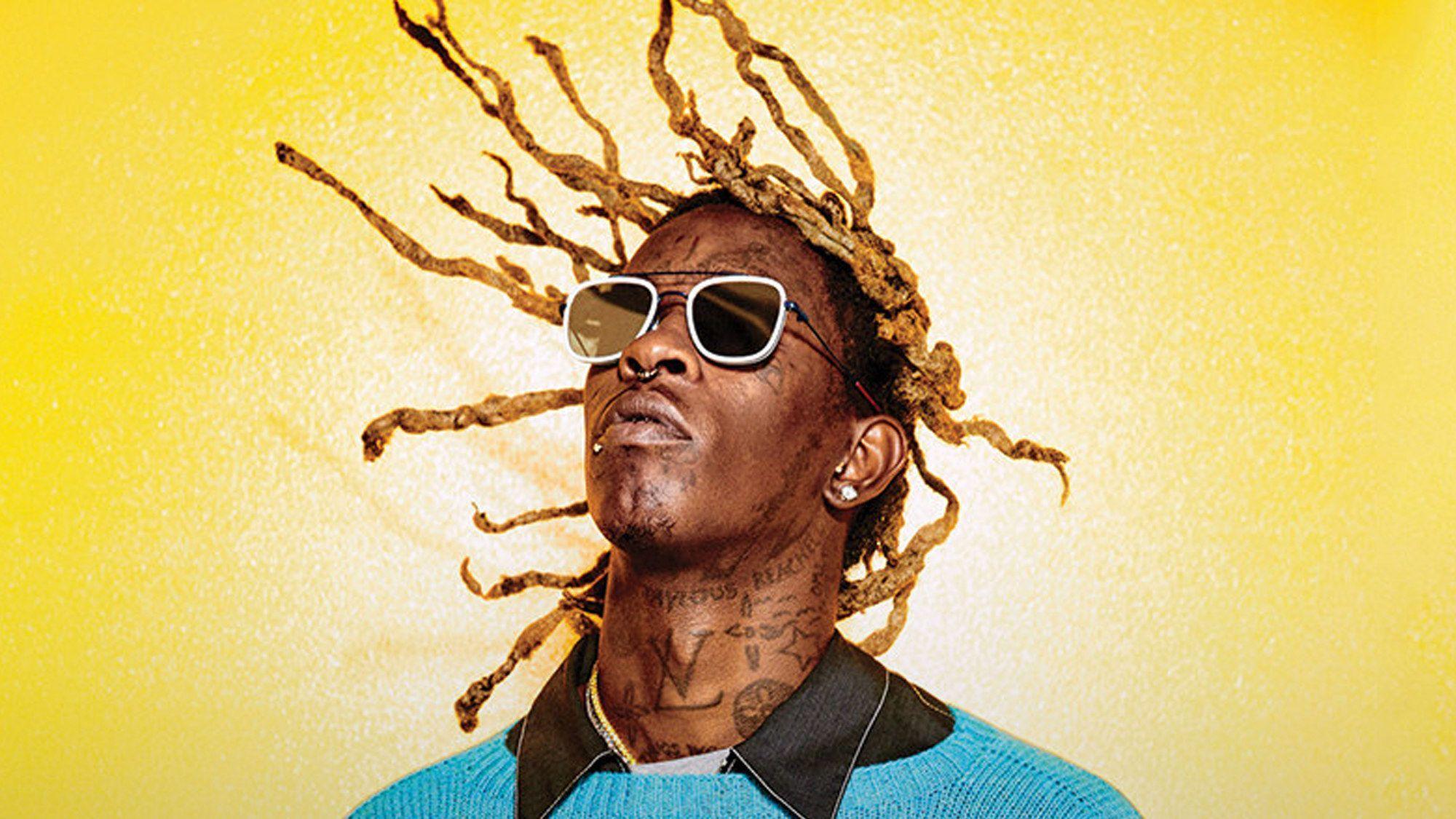
Jeffery Williams doesn't use a pen. He doesn't even use a Notes app. If you ever see Young Thug in the studio, you aren't seeing a writer at work; you're seeing a painter who uses vocal cords instead of a brush. It's chaotic. It’s loud. It’s expensive. To the uninitiated, it looks like a million-dollar disaster, but to the engineers who have survived his sessions, it’s the most sophisticated operation in music.
He walks in, hears a beat for three seconds, and starts humming. That’s it. That’s the "writing" phase.
The weird physics of Young Thug in the studio
Most rappers follow a standard blueprint. You get the beat, you sit on the couch, you mumble some bars, you write them down, and then you punch in. Thug destroyed that. When people talk about Young Thug in the studio, they’re usually talking about the "vibe" or the fashion, but the real magic is the speed. He records at a pace that breaks most Pro Tools engineers.
Alex Tumay, the engineer most closely associated with Thug’s legendary run from Barter 6 to Jeffery, has spoken at length about the sheer anxiety of keeping up with him. Thug doesn't want to wait for you to create a new track or tweak the EQ. If the engineer isn't ready to record the second Thug has an idea, that idea is gone forever. It's a high-stakes game of catch.
He uses "mumble takes" to map out the melody first. It’s a phonetic exercise. He’ll hop in the booth and just make sounds—weird chirps, high-pitched squeaks, and rhythmic grunts—to see how they sit in the frequency pocket of the snare or the 808. Once he finds the "shape" of the sound, he goes back and fits the words into that shape. This is why his flow feels so elastic. He isn't fitting a rhyme scheme into a beat; he’s building a vocal instrument that lives inside the production.
Why he draws his lyrics instead of writing them
There is a famous photo of a legal pad belonging to Thug. It doesn't have words. It has shapes. Swirls. Arrows pointing up. Jagged lines that look like a heart rate monitor.
This is how he visualizes his delivery. If he wants his voice to crack or go into a "Stoner"-era falsetto, he draws a visual cue for it. It's essentially his own shorthand notation system. When you're watching Young Thug in the studio, you’re watching someone translate visual art into audio. He’s looking at a beat as a physical space and deciding where to hang the decorations.
Honestly, it’s why so many people struggled to understand him early on. They were looking for traditional lyricism. They wanted "bars" in the New York sense. But Thug was giving them textures. He’s more like a jazz saxophonist than a traditional emcee. He’ll do ten takes of the same line, each with a different "voice"—the raspy monster, the melodic crooner, the hyper-active kid—and then tell the engineer to blend them.
The 10-minute rule
If a song takes longer than 15 minutes to record, Thug often loses interest. This isn't laziness. It’s a commitment to spontaneity. He believes the first impulse is the truest one. This "first thought, best thought" philosophy is why his discography feels so raw. It hasn't been polished until the soul is gone. It's just pure, unfiltered dopamine.
The studio as a fashion show and a trap house
The environment is just as important as the gear. It’s rarely just Thug and an engineer. It’s a revolving door of stylists, childhood friends, and other artists like Gunna or Lil Keed. There’s a constant stream of high-end jewelry being looked at and piles of designer clothes being tried on.
But don't get it twisted. Even in the middle of a party, Thug is locked in.
He’s been known to record standing up, sitting down, or even hunched over in a corner if that’s where the "energy" is. He treats the microphone like a confidant. He gets uncomfortably close to it. He whispers. He screams. He treats the proximity effect of the mic as a creative tool, moving his head back and forth to create a natural phasing effect that most people would try to do with a plugin later. He does it live.
Technical specs and the "Thug Sound"
If you're trying to recreate the feel of Young Thug in the studio, you have to understand the chain. While it varies depending on which room he's in (often Hit Factory or some high-end rental in Beverly Hills), the core stays consistent:
- The Mic: Usually a Sony C800G. It’s the industry standard for rap because it has a cooling system that keeps the tube at a consistent temp, providing that bright, "expensive" top end that makes Thug's whispers cut through a heavy beat.
- The Preamp: Neve 1073. Always. It adds that weight and grit to the low-mids so his voice doesn't sound too thin when he goes into his higher registers.
- The Compression: Usually a Tube-Tech CL 1B. This is the "secret sauce." It levels out his wild volume swings without making the vocal feel "squashed" or lifeless.
He wants to hear himself with a lot of Auto-Tune in his headphones while he records. He doesn't use it to fix his pitch; he uses it as an instrument to play off of. He knows exactly how the software will react when he flips his voice into a yodel. He’s "playing" the Auto-Tune.
Lessons from the Slime Season approach
What can we actually learn from the way he works? It isn't just about being "weird."
First, perfection is the enemy of greatness. Thug leaves "mistakes" in his tracks all the time. If his voice cracks but the feeling is right, the crack stays. In an era of perfectly tuned, perfectly timed music, that human element is what makes people obsessed with him.
Second, the importance of the engineer-artist bond. Without someone like Tumay or Bainz who understands the "language" of Thug, the music wouldn't exist. The engineer in a Young Thug session isn't just a technician; they are a co-pilot. They have to anticipate his next move before he even makes it.
How to apply the Young Thug studio mentality
To get results that mirror that level of creativity, you have to break your own rules.
- Stop writing, start feeling. Next time you're working on a creative project, try to capture the "shape" of the idea before you fill in the details. Use voice memos to capture melodies or rhythms the second they pop into your head.
- Limit your time. Give yourself a 20-minute window to finish a draft or a sketch. The pressure forces you to rely on instinct rather than over-thinking.
- Invest in your "chain." Whether it's your physical workspace or the tools you use, make sure they can keep up with your speed of thought. If your computer is lagging while you're trying to create, you've already lost the spark.
- Embrace the "mumble." Don't be afraid to produce "garbage" takes. Thug’s most brilliant lines often started as nonsense syllables that eventually evolved into slang that changed the entire culture.
The legacy of Young Thug in the studio isn't just a list of hits. It's a blueprint for a new kind of modernism—one where the technical and the primal collide. It's about being brave enough to sound "wrong" until the rest of the world catches up and realizes you were right all along.
If you want to create like him, you have to be willing to fail loudly, record it, and then turn the volume up.



