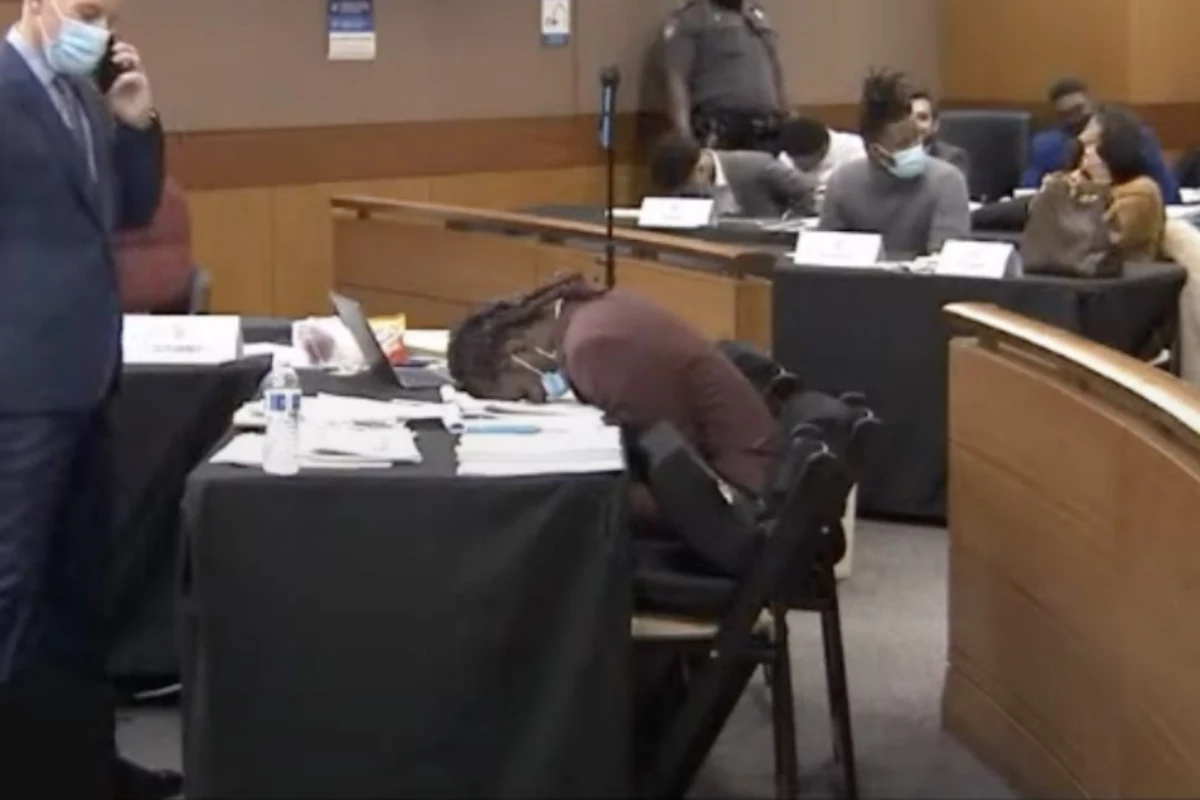
People have been obsessing over the young thug interrogation video for what feels like forever now. Honestly, it’s one of those rare moments where the curtain of a high-profile RICO case gets pulled back just enough to show us how the system actually grinds away. You’ve probably seen the grainy clips on TikTok or Twitter. Maybe you saw the one where he’s just sitting there, seemingly unbothered, while detectives try to poke holes in the YSL collective's facade.
It’s messy. It’s loud. It’s deeply uncomfortable.
The footage isn't just "content" for true crime junkies; it's a piece of a much larger, incredibly complex legal puzzle that has kept the Atlanta music scene in a chokehold since 2022. When we talk about these videos, we aren't just talking about a rapper in a room. We're talking about the intersection of street culture, the First Amendment, and the aggressive tactics used by the Fulton County District Attorney’s office.
Why the Young Thug Interrogation Video Went Viral
Let’s be real. Most police interrogations are boring as hell. They involve hours of silence, bad coffee, and people staring at walls. But the young thug interrogation video stands out because of the stakes involved. This isn't a petty theft case. We are looking at a man, born Jeffery Williams, who essentially redefined modern melodic rap, now facing life behind bars.
The fascination usually stems from his demeanor. In many of the clips that have surfaced—including those involving other YSL members like Gunna or Slimelife Shawty—the tension is thick enough to cut with a dull knife. People analyze every twitch. Every sigh. Every time he asks for a water or looks at the door. It’s a masterclass in human psychology under extreme duress.
There’s also the "snitching" narrative that has plagued this trial from day one. When videos leak, the internet immediately goes into a frenzy trying to figure out who "told" and who stayed "solid." It’s a toxic cycle of speculation that often ignores the actual legal reality: most of these videos are released as part of the discovery process or through open records requests, not because someone is necessarily "ratting."
The Legal Chaos of the YSL Trial
The trial has been a circus. That’s not an opinion; it’s a fact reflected in the record-breaking length of jury selection and the constant friction between Judge Ural Glanville (and later Judge Paige Reese Whitaker) and the defense teams.
Brian Steel, Thug’s lead attorney, has been a literal shield for his client. You might remember the viral moment where Steel was actually held in contempt and ordered to jail because he refused to disclose how he found out about an ex parte meeting between the judge, the prosecutors, and a key witness. That moment alone shifted the public perception of the case. It made people realize that the young thug interrogation video leaks might be the least of the defense's worries when compared to the procedural drama happening inside the courtroom.
The core of the prosecution's argument rests on the idea that YSL (Young Slime Life) is a criminal street gang responsible for a string of violence in Atlanta. The defense argues that YSL is simply a record label—Young Stoner Life—and that the lyrics and imagery are just art.
It’s the "Rap on Trial" debate.
- Is a lyric a confession?
- Is a hand sign a threat?
- Is a video of an interrogation evidence of a conspiracy, or just a man being pressured by the state?
Breaking Down the Specific Footage
When you actually sit down and watch a full young thug interrogation video, you notice things the 15-second clips miss. You see the fatigue. You see the way detectives use "The Reid Technique" or variations of it—building a rapport, offering "outs," and trying to get the subject to admit to smaller crimes to trap them into larger ones.
In some of the leaked footage involving YSL associates, you see the exact moment the pressure breaks them. It’s often not some grand cinematic confession. It’s a slow erosion of will. They might mention a name they shouldn't have, or clarify a timeline that contradicts a previous statement. For Thug himself, the footage often shows a man who knows exactly how the game is played. He remains largely stoic. He knows that in a RICO case, anything you say can be woven into a narrative of "overlapping conspiracies."
It's also worth noting the ethical quagmire of these leaks. Some of the videos weren't supposed to be public. When the interrogation of a co-defendant or a witness leaks, it puts lives at risk. In the Atlanta gang landscape, being labeled a "cooperator" is a death sentence. The court has had to issue several warnings about the dissemination of this discovery material, yet it continues to find its way onto YouTube channels hungry for clicks.
What the Public Gets Wrong About These Videos
Most people watching the young thug interrogation video think they’re seeing a smoking gun. They aren't. In the world of high-stakes criminal law, an interrogation is rarely about a "gotcha" moment. It’s about building a database of speech patterns, associations, and inconsistencies.
One major misconception is that if someone talks to the police at all, they’ve "flipped." That’s not how it works. Sometimes, talking is a strategy to see what the police actually know. However, as any lawyer will tell you (and as Thug’s team surely did), the best move is almost always to say absolutely nothing.
Another huge point of confusion is the timeline. Many of the videos circulating are years old, taken during different arrests or "check-ins" that the state later bundled into the 2022 indictment. People see a clip and think it happened yesterday, when in reality, it might be from 2015 or 2018, used now to show a "pattern of racketeering activity."
The Role of Social Media in the YSL Case
We’ve never seen a trial quite like this in the age of the "influencer reporter." You have people like Lou_Young or various legal streamers who have made a living out of live-tweeting and analyzing every second of the trial and the young thug interrogation video archives.
This has created a weird feedback loop. The lawyers know the world is watching. The witnesses know the world is watching. Even the judge knows that his every ruling will be dissected by millions of people who have never stepped foot in a law school. It changes the energy of the room. It makes the interrogation footage feel more like a reality show than a capital case with human lives on the line.
Key Players Often Seen or Mentioned
To understand the context of the footage, you have to know the players.
- Jeffery Williams (Young Thug): The focal point. The alleged "Kingpin."
- Brian Steel: The relentless defense attorney who has become a cult hero for his "never back down" attitude.
- Fani Willis: The Fulton County DA who has staked a lot of her reputation on this RICO case (alongside the Trump election interference case).
- The "YSL Associates": This includes everyone from Gunna (who took an Alford plea and went home) to the various co-defendants who are still sitting in the courtroom every day.
When you watch the young thug interrogation video, you're seeing the prelude to this massive collision. You’re seeing the quiet moments before the storm of the century hit the Atlanta court system.
Actionable Insights for Following the Case
If you're trying to keep up with the YSL saga without getting lost in the noise, here's how to actually digest the information.
- Look for full transcripts: Don't rely on a 30-second clip on social media. Context is everything. If a video shows a co-defendant talking, find out if that statement was later suppressed by the judge. Often, "leaked" videos are ruled inadmissible because the police violated the person's rights.
- Follow credible legal analysts: Look for people like Ethon or local Atlanta reporters who have been in the courtroom every single day. They can tell you if the "shocking" video you just saw actually mattered to the jury.
- Understand the "Alford Plea": Many people saw the videos of Gunna in court and thought he admitted Thug was a gang leader. In an Alford plea, the defendant maintains their innocence but acknowledges that the state has enough evidence to likely convict them. It’s a nuance that 90% of the internet misses.
- Watch the courtroom behavior: Sometimes the interaction between the lawyers and the judge tells you more about the strength of the young thug interrogation video than the video itself. If the defense is fighting tooth and nail to keep a video out, it’s probably because it’s damaging. If they don't care, it's likely fluff.
The YSL trial is a marathon, not a sprint. We are looking at months, potentially even more time, before a verdict is reached. The young thug interrogation video is just one chapter in a very long, very dark book about the cost of fame, the reach of the law, and the culture of a city that transformed the world's music.
Pay attention to the procedural rulings. Keep an eye on the witness testimony. Most importantly, remember that behind the viral clips is a legal battle that will set precedents for how rap music is treated in American courts for decades to come.
The most important thing to do now is track the current witness testimony from former YSL members. Their statements in court often directly contradict what they said in those initial interrogation videos, and those "impeachment" moments are where the trial is won or lost. Watch the Law&Crime Network or Atlanta News First for the unedited daily feeds to see how these videos are actually used as evidence in real-time.



