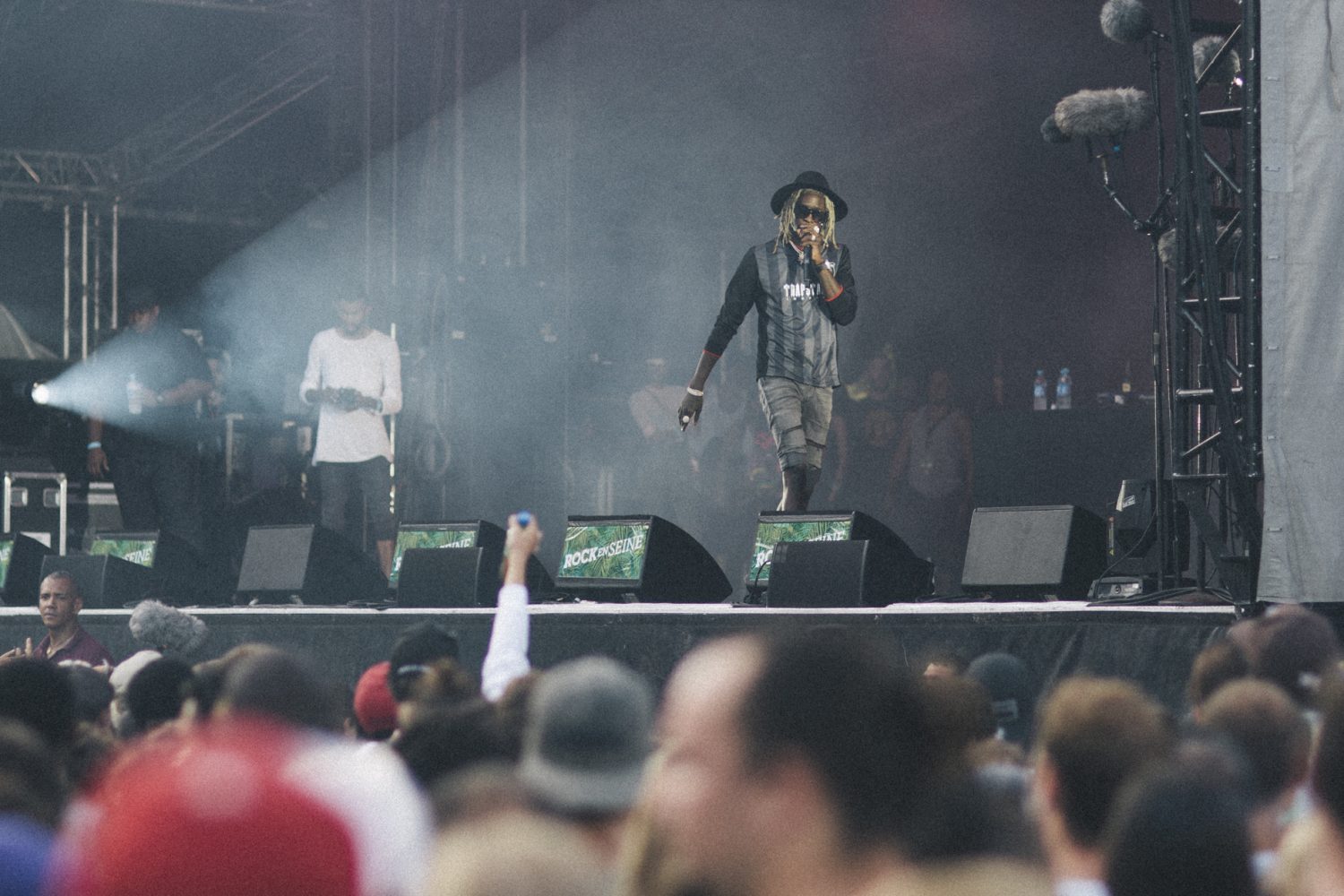
He sat there. Quiet. For a guy who basically redefined how the English language sounds over a trap beat, Jeffery Williams—better known as Young Thug—has spent the last few years in a forced silence that’s been deafening for the music industry. If you've been looking for a fresh Young Thug interview, you already know the vibe has shifted. It’s no longer about the dress on the Jeffery cover or which high-fashion house he’s raiding. It’s about the Fulton County courtroom. It’s about the RICO Act. It’s about a man fighting for his life while his lyrics are being used as evidence against him.
The game is different now.
Remember the 2019-2021 era? Thug was everywhere. He was the elder statesman of Atlanta, the guy who birthed a thousand "babies" (Lil Baby, Gunna, the list goes on). But any Young Thug interview from that period feels like it’s from a different lifetime. Back then, he talked about "Slime" as a brotherhood. Now, prosecutors call it a criminal enterprise. That disconnect is exactly where the modern conversation around Thug lives. You can't talk about his music without talking about the law, and you can't talk about the law without realizing how much he's already lost just by being away from the booth.
The Interview That Foreshadowed the Storm
Before the handcuffs clicked, there was a specific energy in the way Thug spoke. He was often erratic, brilliant, and deeply protective of his circle. If you go back to his conversations with Rolling Stone or his legendary Breakfast Club appearance, you see a man who thought he was untouchable because he had transformed his environment. He wasn't just a rapper; he was an economy.
One of the most telling moments in any Young Thug interview happened when he was asked about his influence. He didn't just say he changed music. He basically implied he created a new lane of survival for kids in Cleveland (the Atlanta neighborhood, not the Ohio city). He saw himself as a savior. The state of Georgia saw a kingpin. That’s the tension.
What He Says When the Cameras Aren't Rolling
Legal restrictions mean we don't get the raw, unfiltered Thugger these days. Everything is filtered through lawyers like Brian Steel. But snippets emerge. In short clips or messages relayed through his sister or his partner, Mariah the Scientist, the bravado is replaced by something else. Resilience? Maybe. But also a deep sense of frustration.
He’s spent over 600 days in a cell. Think about that.
For a creative who records at a pace most people can’t even fathom—sometimes finishing multiple songs in a single night—that kind of stagnation is a different type of torture. When we look at a Young Thug interview from jail, or the "interviews" conducted via his lyrics played in court, we see the system trying to deconstruct his myth. The prosecution spends hours analyzing lines from "Slatty" or "Ski." They want to turn his metaphors into confessions. Thug’s defense is simple: it’s art. It’s entertainment. It’s a character.
The Gunna Factor and the "Snitching" Narrative
You can't discuss a Young Thug interview without the elephant in the room: Gunna. When Gunna took an Alford plea and walked free, the internet exploded. The dynamic between the two, once the most potent duo in rap, shattered. Thug hasn't given a formal sit-down interview to address it—he can't—but his silence speaks volumes.
While the world argues over "P's and Q's" and who told what to whom, Thug is the one sitting in the courtroom every day, often looking exhausted. He’s wearing sweaters that look like they cost more than a Honda Civic, trying to maintain that "Spider" persona while surrounded by bailiffs. It’s surreal. It’s heartbreaking for his fans. It’s a cautionary tale for the entire genre.
Why the World is Still Obsessed
Why do we keep searching for a new Young Thug interview? Because he represents the ultimate "what if?" What if the biggest star in the world is actually what the police say he is? Or, more importantly, what if the police are just terrified of a Black man with that much cultural capital?
People like Kevin Liles (CEO of 300 Entertainment) have been vocal. They see this as an attack on Black art. They argue that if we started prosecuting Scorsese for what happens in Goodfellas, the movie industry would collapse. But rappers don't get the "it's just a movie" pass. They get the "tell it to the judge" treatment.
- Thug’s influence on fashion: He broke gender norms before it was trendy.
- The vocal gymnastics: Nobody uses their voice as an instrument quite like him.
- The community impact: YSL was a record label, but it was also a lifeline for a lot of people who had nothing else.
The Reality of the YSL Trial
The trial is the longest in Georgia's history. It’s a mess of jury selection drama, contraband being passed in open court, and lawyers getting arrested. In the middle of it is Jeffery. He’s thinner. He’s older. He’s watching his peers surpass him on the charts while he’s stuck in a loop of legal jargon.
When he finally does give that first post-trial Young Thug interview, it will be the most-watched event in hip-hop history. It won’t be about jewelry. It will be about the weight of the system.
Honestly, the most shocking thing about the whole situation is how much music he actually has in the vault. Even from behind bars, he released Business Is Business. It was a message. A "you can't stop the signal" moment. Metro Boomin handled the production, and it served as a placeholder for a man who wasn't there to promote it.
The Shift in Public Perception
Early in his career, Thug was the villain. People didn't understand him. They hated the mumble, the dresses, the eccentricity. But as the trial drags on, the narrative has shifted. He’s become a symbol of overreach. Even people who don't like his music are starting to feel like the state is doing too much.
They used his 2015 Young Thug interview clips. They used his music videos. They used his Instagram captions. It’s a digital dragnet. If you’re an artist watching this, you’re terrified. You’re checking your lyrics. You’re wondering if that "opp" you mentioned in a verse three years ago is going to come back to haunt you in a 65-count indictment.
What Happens Next?
There is no "in conclusion" here because the story is still being written in a courtroom in Atlanta. But there are things we know for sure.
- The use of rap lyrics as evidence is officially a national debate, thanks to this case.
- The "Atlanta sound" is in a state of flux without its North Star.
- Thug's legacy is no longer just about Barter 6; it's about the First Amendment.
If you want to understand the impact, look at how the city feels. Atlanta without Thug active in the streets feels different. There’s a void. The clubs play his old hits, and the room goes crazy, but there’s a bittersweet edge to it. Everyone knows where he is.
Actionable Insights for Fans and Creators
If you're following this saga, don't just wait for the next viral clip. Understand the mechanics of what's happening.
For Creators: Protect your IP and be aware of the "Protect Black Art" movement. There are legislative pushes in various states (like California's RAP Act) to limit how lyrics can be used in court. Support these movements if you believe in the separation of art and criminal intent.
For Fans: Keep the pressure on for a fair trial. The length of this process is, in itself, a form of punishment. Whether you think he’s guilty or innocent, the right to a speedy trial is a fundamental pillar that seems to be crumbling here.
Stay Updated: Don't rely on TikTok rumors. Follow reputable journalists like Jozsef Papp or Michael Seiden, who are in the courtroom every single day. They provide the context that a 15-second "free thug" clip misses.
The next Young Thug interview might not happen for a long time. Or it might happen sooner than we think. Until then, the music is the only voice he has left. Listen to it with that in mind. Every "slat" and every "brrr" carries a different weight now. It's not just a song; it's a piece of a puzzle that a jury is trying to solve, while a man's freedom hangs in the balance. It’s heavy. It’s real. And it’s far from over.



