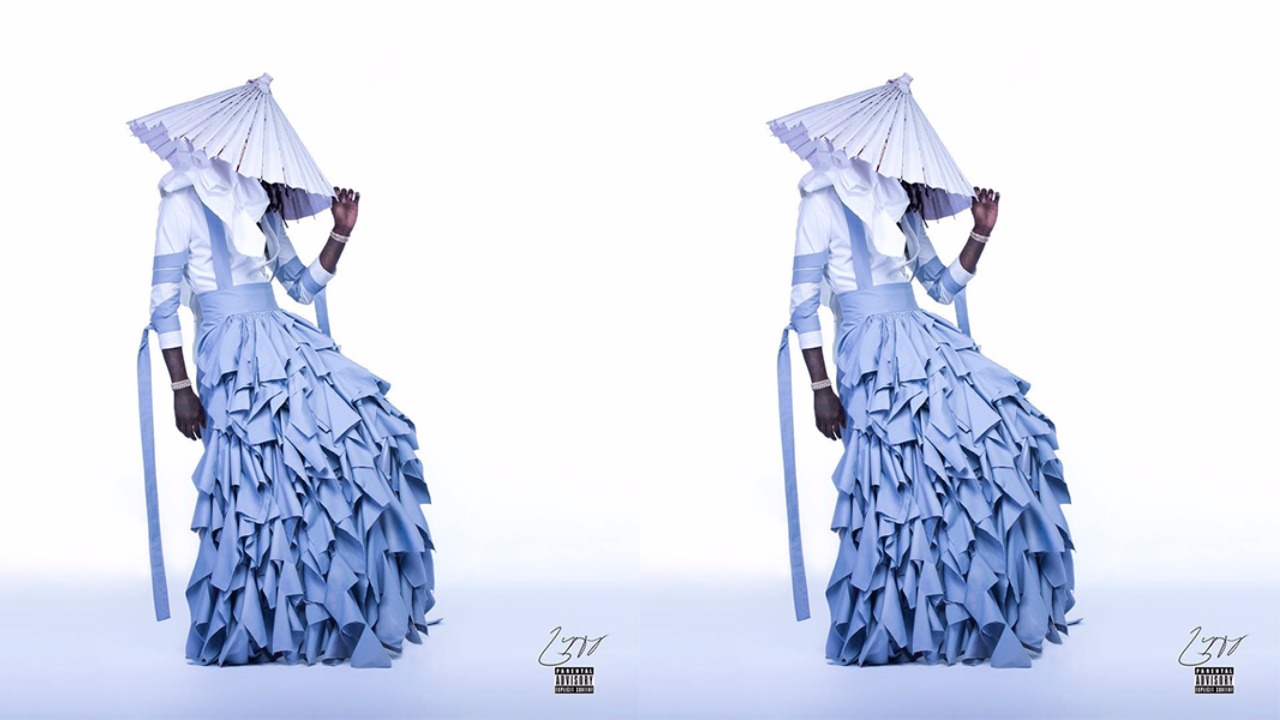
It was late August 2016. The internet was a different place, but the shockwaves felt modern even by today's standards. When Young Thug dropped the cover for his mixtape Jeffery, he didn’t just release music; he launched a cultural hand grenade. There he was: standing tall, face partially obscured by a conical hat, draped in an intricate, ruffled, lavender-blue garment.
People lost their minds. For another view, see: this related article.
Looking back now, it's easy to see it as just another "viral moment." But the Young Thug Jeffery dress was a massive middle finger to the rigid walls of hip-hop hyper-masculinity. It wasn't a stunt. It wasn't a joke. It was a calculated, high-fashion statement that almost didn't happen.
The Story Behind the Italian Ruffles
Most people think Thug had this dress custom-made to stir up trouble. He didn't. Related insight on this trend has been provided by E! News.
The garment was actually the work of Alessandro Trincone, an Italian designer who was, at the time, a relatively unknown name in the states. Trincone had designed the piece for his "Annodami" collection. The inspiration? Japanese kimonos and a personal desire to erase the boundaries between "male" and "female" clothing.
Thug first laid eyes on the piece during a meeting at VFILES in New York. He was there to serve as a mentor for their fashion panel. According to the photographer who shot the cover, Garfield Larmond, Thug saw a photo of the dress and made up his mind instantly.
"I want that for the cover," he said. No hesitation. No second-guessing.
Getting into the thing was a nightmare, though. It reportedly took about an hour and a half to get the rapper into the dress. Once he was in it, they realized parts were sagging or sitting weirdly. They spent another thirty minutes pinning ruffles and adjusting the "umbrella" hat to get that perfect, sculptural silhouette.
Why the Dress Reminded Thug of "Mortal Kombat"
Funny enough, Thugger’s own take on the look was way less "high-fashion theory" and way more "90s gamer." When he first saw it, he told people it reminded him of Sub-Zero from Mortal Kombat.
He didn't see a dress. He saw a boss-level character outfit.
Why the Young Thug Jeffery Dress Still Matters in 2026
You can't talk about the current landscape of rap fashion—from Lil Nas X to Harry Styles’ Vogue cover—without tracing it back to this specific periwinkle moment.
Before this, the "gangster rapper" archetype was a monolith. You wore baggy jeans, jerseys, or maybe high-end streetwear. You certainly didn't wear a Japanese-inspired gown. Thug changed the math. He proved that you could rap about the "trap" and street life while wearing a dress.
"You can be a gangster in a dress," he famously said in a Calvin Klein campaign.
It was a radical idea. Honestly, it still is for some people. The blowback was intense. Social media was flooded with homophobic slurs and "old head" rappers claiming the genre was dying. But the music on Jeffery was so undeniably good that the haters had to swallow their pride. Tracks like "Wyclef Jean" and "Kanye West" (the names of his idols used as song titles) were brilliant.
The dress didn't overshadow the talent; it framed it.
The Technical Artistry of Alessandro Trincone
Let’s talk about the dress itself for a second. It wasn't just "some clothes."
Trincone’s design was a masterclass in texture.
- Color: A soft, periwinkle blue that felt regal.
- Structure: Heavy pleating and ruffles that created a 3D effect.
- Philosophy: Trincone built it to be "gender-free sculptural fashion."
For the designer, seeing a major American rapper wear his work was a shock. He was in Italy, and it was about 2:30 a.m. when he saw the cover. He didn't sleep that night. He realized his niche, androgynous vision had just been broadcast to millions of hip-hop fans who had never heard of "gender-free" fashion.
Misconceptions: Was It a Marketing Gimmick?
A common critique was that this was "queer-baiting" or just a play for clicks.
That doesn't really hold water when you look at Thug’s history. Since he was 12, he was wearing his sisters' glitter shoes. He told Billboard that his dad used to beat him for it, but he "never gave a f***." This wasn't a persona he put on for the Jeffery era; it was a part of who he was in the Atlanta streets long before he was famous.
He once told GQ that 90% of his closet was women's clothes because they fit his slim frame better. He liked the "vibe" of them. It was more about aesthetics and comfort than a political manifesto, which, in a way, made it even more powerful.
He wasn't trying to be a hero. He was just being Jeffery.
How to View the Legacy Today
If you’re looking at this through a 2026 lens, the dress represents the moment the "rules" of hip-hop finally broke. It paved the way for a generation of artists who don't feel the need to perform a specific type of masculinity to be taken seriously.
Actionable Takeaways for the Culture Obsessed:
- Look beyond the "shock": If you only saw the dress, go back and listen to the album. The production and vocal experimentation are what actually gave the cover its staying power.
- Support independent designers: Alessandro Trincone is still creating. The lesson here is that one bold collaboration can change a designer's entire trajectory.
- Question the "Dress Code": Next time you see an artist doing something "weird," ask if it’s actually weird or if you’re just used to a very narrow definition of what’s "normal."
The Young Thug Jeffery dress wasn't a costume. It was a declaration of independence from a genre that had been suffocating under its own rules for far too long.



