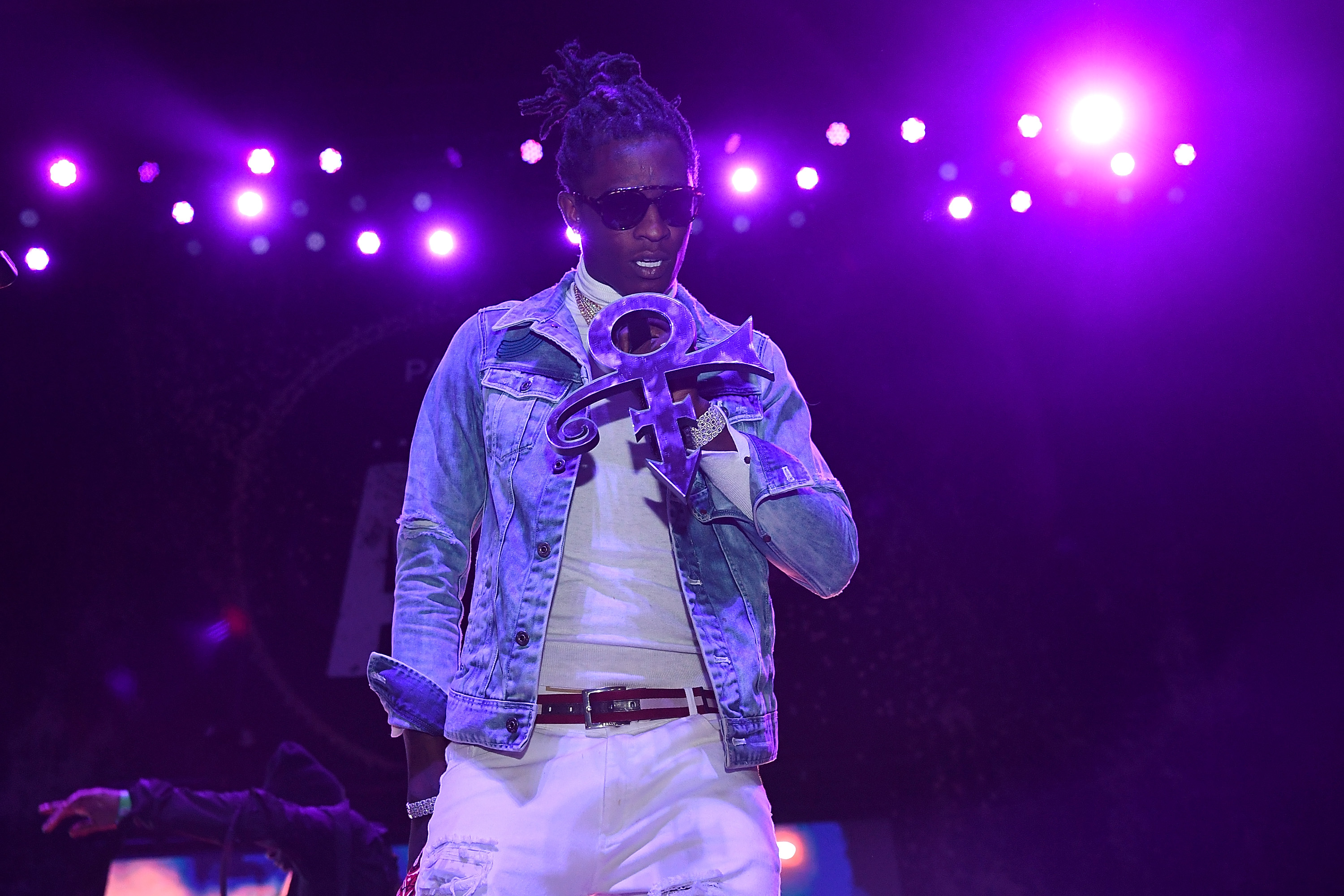
August 2016 was a weird, electric time for music. If you were scrolling through Twitter back then, you probably remember the exact moment your feed froze. It was a photo of a man in a tiered, periwinkle floor-length dress and a pleated parasol hat. That man was Young Thug.
He didn't just drop a project; he dropped a cultural bomb. The Young Thug Jeffery mixtape—originally titled No, My Name is Jeffery—wasn't just ten tracks of Atlanta trap. It was a high-fashion manifesto that basically told the world the old rules of hip-hop were dead.
Honestly, people lost their minds. Half the internet was making memes comparing him to a Mortal Kombat character or a luxury feather duster, while the other half realized they were watching a genius pivot. Thugga has always been a bit of a shapeshifter, but Jeffery was different. It felt intentional.
The Story Behind the Dress and Alessandro Trincone
Let’s talk about that outfit because you can’t mention this mixtape without it. It wasn't some random rack find. The garment was designed by an Italian named Alessandro Trincone, part of a collection called "Annodami."
Thug saw it at a VFILES mentorship meeting in New York and apparently just said, "I need it." No hesitation.
It took him over an hour and a half to get into the thing. There were pins everywhere. Complex details that had to be perfectly aligned. Garfield Larmond, the photographer, has talked about how the mood on set shifted the second Thug stepped out. Everyone knew it was going to be "the" image of the year.
What’s wild is that Thug didn't see it as "wearing a woman's dress." To him, gender didn't really exist in fashion. He told Calvin Klein around that time that "you could be a gangster with a dress." It was a massive middle finger to the hyper-masculine, often homophobic tropes that had policed rap for decades.
Every Song is a Tribute (Kinda)
The tracklist is a literal hall of fame. Every song on the Young Thug Jeffery mixtape is named after one of his idols or "heroes."
- Wyclef Jean: The opener. A reggae-infused bop that feels like a summer day in a blender.
- Floyd Mayweather: A heavy-hitter featuring Travis Scott, Gucci Mane, and Gunna.
- Harambe: Probably the most polarizing track. Thug uses this raspy, guttural vocal style that sounds like he’s literally tearing his vocal cords apart.
- Kanye West: Originally called "Pop Man" (and "Elton John" for a minute), it features a rare, melodic verse from Wyclef Jean himself.
The funny thing? The lyrics usually have nothing to do with the people they’re named after. "Riri" isn't a biography of Rihanna; it’s just Thug being Thug. It was a brilliant marketing move, though. It forced you to look at the titles and wonder what the connection was, even if the connection was just "I think this person is cool."
Why the Music Sounded So Different
If Barter 6 was Thug’s smoky, late-night masterpiece, Jeffery was his colorful, midday explosion. He worked heavily with engineers like Alex Tumay and producers like Wheezy and TM88 to polish a sound that was surprisingly accessible.
It wasn't just "mumble rap."
The vocal performance on "Harambe" is basically performance art. He’s growling. He’s yelping. He’s pushing the boundaries of what a human voice should do over a trap beat. On the flip side, "Webbie" (featuring Duke) is almost sweet. It’s melodic and introspective in a way that felt new for him.
The mixtape debuted at number 8 on the Billboard 200, moving about 37,000 units in its first week. By 2026 standards, that might seem small, but you have to remember that streaming was still finding its legs back then. It was a massive win for a guy who many "purists" wanted to dismiss as a fluke.
The Lasting Legacy of the Jeffery Era
Look at the landscape of rap now. You see artists like Lil Uzi Vert, Playboi Carti, and even Lil Nas X pushing visual boundaries constantly.
They all owe a debt to the Young Thug Jeffery mixtape.
Thug proved that you could be the most influential "trapper" in the world while wearing high-fashion couture. He showed that "Atlanta" didn't have to mean just one thing. He wasn't just a rapper; he was a curator of vibes.
Even the way he tried to change his name to "Jeffery" for just one week was a classic Thug move. It was confusing, it was annoying to his label (300 Entertainment), and it was exactly what he wanted. He wanted people to see the human behind the "Young Thug" persona.
How to Revisit Jeffery Today
If you haven't listened to it in a while, or if you're a new fan trying to understand the hype, don't just put it on as background music.
- Watch the "Wyclef Jean" video: The one where Thug never actually showed up to the shoot, so the director had to explain the whole disaster via text overlays. It's a masterpiece of "accidental" art.
- Listen for the vocal textures: Pay attention to how he switches from the gravelly voice in "Harambe" to the high-pitched "Riri" squeaks.
- Appreciate the production: Check out the basslines on "Guwop." Wheezy and TM88 were at the absolute top of their game here.
The Young Thug Jeffery mixtape remains a high-water mark for creativity in the 2010s. It’s the sound of an artist realizing he can do whatever he wants and the world will eventually have to catch up. And honestly? We’re still catching up.
If you're looking to understand the evolution of modern trap, your next step should be comparing the vocal experimentation on Jeffery to his 2019 "mainstream" breakthrough So Much Fun—it's a fascinating study in how an avant-garde artist eventually learns to speak to the masses without losing his soul.



