Jeffery Williams, known to most of the world as Young Thug, didn't just change how rap sounds. He changed how it feels to live it. When you listen to young thug lifestyle lyrics, you aren't just hearing a checklist of expensive Italian cars or high-fashion brands like Margiela or Chanel. You’re hearing a complex, often contradictory blueprint of a man who moved from the Jonesboro South projects to a world of "Lifestyle" (literally).
He’s a shapeshifter.
Most people look at the surface. They see the jewelry. They hear the high-pitched squeals and the mumbles that critics used to mock back in 2014. But if you actually sit with the words, especially on projects like Barter 6 or Jeffery, you realize the "lifestyle" he’s rapping about isn't just about spending money. It’s about the frantic, almost desperate need to stay ahead of a past that’s always trying to catch up. It’s about the weight of taking care of a hundred people at once.
The Language of Luxury and Survival
In the 2014 breakout hit "Lifestyle" with Rich Homie Quan, Thug delivers a line that basically defined an era: "I've done did a lot of shit just to live this here lifestyle."
It sounds simple. It’s not.
That specific line anchors the entire ethos of his career. It acknowledges the "shit"—the legal battles, the street politics, the hunger—that acts as the tax for the private jets and the diamond-encrusted watches. Thug's lyrics often function as a stream of consciousness. One second he’s talking about putting his sister in a new house, and the next, he’s describing a shootout with a level of casualness that is honestly jarring. This contrast is the heart of the young thug lifestyle lyrics phenomenon. It’s a mix of extreme vulnerability and extreme aggression.
Take "Check." The song is an anthem for ambition. But listen to the way he describes the money. It isn't just "I have money." It's "I got the check, I got the check." It's an active, ongoing pursuit. He’s obsessed with the "check" because, in his world, the alternative is non-existence. He once told Rolling Stone that he didn't want to be a "broken" artist. He wanted the business side to match the creative side. His lyrics reflect that obsession with fiscal health, even when it's wrapped in slang and heavy bass.
The Fashion As a Shield
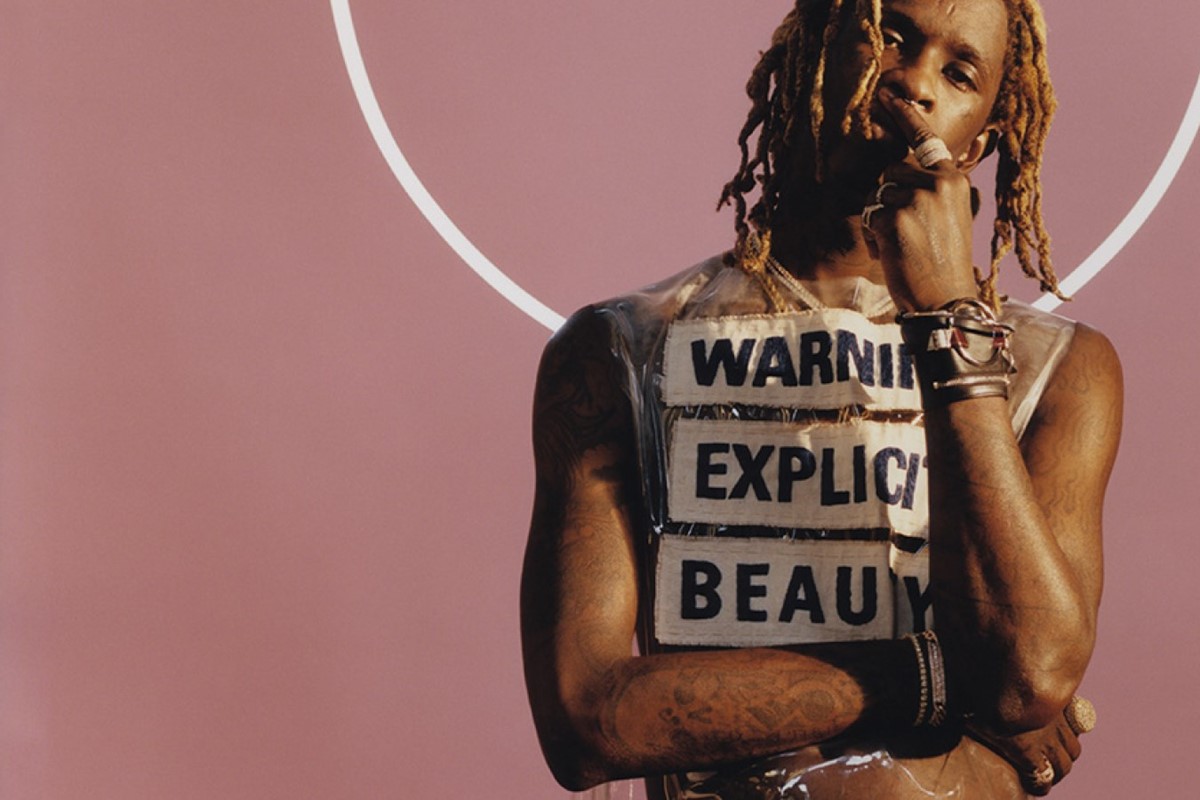
You can't talk about his lyrics without talking about clothes. He’s the guy who wore a dress on the cover of Jeffery. He’s the guy who mentions Hedi Slimane and Alessandro Michele like they’re his neighbors.
In "Halftime," he raps about his "shoes from Italy" and his "shirt from France." But this isn't just vanity. For Thug, fashion is a form of armor. By dressing in a way that defied every "macho" stereotype of Atlanta trap music, he was asserting a level of dominance that was purely psychological. He was saying, "I am so successful and so untouchable that I can wear whatever I want and you still have to respect the lyrics."
It’s a power move.
Decoding the Slime Language
The term "Slime" has been around, but Thug turned it into a global brand. When you dig into his lyrics, "Slime" is the lifestyle. It stands for "Street Love In My Eyes." It’s a code of loyalty that supersedes everything else.
His lyrics are littered with references to his "brothers" and his "team."
Honestly, the young thug lifestyle lyrics we see in the Slime Language compilations are less about individual glory and more about the collective. He’s the CEO of YSL (Young Stoner Life), and his bars reflect the burden of that leadership. He isn't just rapping for Jeffery; he’s rapping for Gunna, for Lil Keed, for his siblings. There’s a specific kind of pressure that comes with being the "pioneer" of a sound. You hear it in the more somber tracks on Punk, where the lifestyle starts to feel heavy. The upbeat, manic energy of his early tapes is replaced by a slower, more melodic reflection on fame.
Reality vs. The Persona
There is a massive elephant in the room when discussing Thug’s lyrics: the legal system. In the ongoing YSL RICO trial in Georgia, prosecutors have literally tried to use his lyrics as evidence of criminal activity.
This brings up a crucial point about how we consume his music. Is the lifestyle he raps about a literal diary, or is it theater?
Thug’s legal team has argued that "lyrics are art, not admissions of guilt." It’s a sentiment echoed by experts like Professor Andrea Dennis and rapper Killer Mike. When Thug raps about "taking hits" or "moving weight," he’s often drawing from a cultural lexicon that existed long before he picked up a microphone. If we treat his lyrics as a literal police report, we miss the artistry of the metaphor. We miss the fact that he is a storyteller.
The Sonic Evolution of Success
If you compare the lyrics on 1017 Thug to Business is Business, you see a man who has grown bored with traditional success.
Early on, the lifestyle was about the basics of escaping poverty.
- Food.
- Jewelry.
- Fast cars.
- Designer sneakers.
Now? The lyrics are about legacy. They're about his kids. They’re about the trap being "a lifestyle" that you never truly leave, even when you're a millionaire. He’s experimenting with his voice—using it as an instrument—because the words themselves sometimes aren't enough to convey the emotion.
Think about the track "Digits." "Why the fuck you think I'm workin' so hard? / To make sure my kids and my grandkids and my great-grandkids stay with a car."
That is the core of the young thug lifestyle lyrics ethos. It’s generational. It’s not about a "hot summer" or a club hit. It’s about building an empire that survives the artist. It’s why he works at such a prolific rate, sometimes recording dozens of songs in a single week. The lifestyle requires constant fuel.
Why the Lyrics Still Hit Different
There’s a reason why 18-year-olds in suburban Ohio and 30-year-olds in London both connect with these songs. It’s the energy of rebellion.
Thug doesn't follow the rules of grammar. He doesn't follow the rules of rhythm. He doesn't follow the rules of gender. His lifestyle is a total rejection of the "correct" way to do things. That’s infectious. When he raps about his life, he makes it feel like anyone can create their own reality if they’re weird enough and hardworking enough.
But it’s not all sunshine.
The lifestyle has a dark side that he doesn't shy away from. He talks about drug use (lean, pills) with a level of honesty that is sometimes uncomfortable. He talks about the paranoia of being watched. He talks about the friends he’s lost to the system or the streets. This isn't a sanitized version of success. It’s the raw, unfiltered truth of what happens when a kid from a "war zone" becomes a global icon.
Actionable Ways to Understand the Lyrics
If you really want to get into the head of Young Thug and understand what his lifestyle lyrics are trying to communicate, don't just look at a Genius page.
- Watch the videos. The visual language of his videos—the way he moves, the clothes he picks—provides the context for the slang.
- Listen to the ad-libs. Often, the "lifestyle" is explained in the background. The "skrrt-skrrts" and the bird calls aren't just noise; they're rhythmic punctuation that emphasizes his points about speed and freedom.
- Compare his features. Notice how he changes his tone when he’s on a song with Drake versus a song with Future. He adapts his "lifestyle" to fit the room, which is a key survival trait he learned in Atlanta.
- Research the "Atlanta Sound." Understanding the history of the city’s trap scene (from T.I. to Gucci Mane) helps you see where Thug fits in and where he broke the mold.
The "Lifestyle" isn't just a song. It's a philosophy of excess, survival, and unapologetic self-expression. It’s about being "slime" in a world that wants you to be a square. Whether he’s rapping from a jail cell or a private island, Young Thug’s lyrics remain a testament to the fact that his life is anything but ordinary.
To fully grasp the impact of these lyrics, start by listening to Barter 6 from start to finish. It’s the definitive text on how to turn street struggle into high-art luxury. Pay attention to the transitions between tracks; that’s where the real story of the YSL lifestyle lives. Avoid looking for a linear narrative. Instead, let the vibes and the specific brand references paint a picture of a man who refused to be small. Through this lens, the lyrics become more than just words—they become a map of a very specific, very influential American dream.



