Before the pink suits, the avant-garde dresses, and the legal battles that have dominated headlines for years, Young Thug was just Jeffery from Jonesboro South. If you spend enough time digging through the digital archives of MySpace, old Twitter threads, or the early 2010s blogosphere, you’ll find young thug old pictures that look almost nothing like the "Punk" era rockstar we see today. It’s wild. The transformation isn’t just about the clothes; it’s a visual roadmap of a kid from Atlanta figuring out how to break every rule in the book.
He wasn't always the fashion iconoclast.
Looking at those grainy, low-resolution photos from 2011, you see a young man who looks remarkably typical for the era. Oversized white tees. Standard fitted caps. Maybe a simple chain. There’s a certain rawness in his eyes, but the flamboyant, gender-bending aesthetic that redefined hip-hop wasn’t even a whisper yet. It's fascinating because these images serve as a receipt of his growth. They prove that the "Thugger" persona wasn't some manufactured label product—it was a slow, deliberate shedding of societal expectations.
The Jonesboro South Era: Before the Fame
Most people forget that Young Thug’s journey started in the 15th Ward. When you look at young thug old pictures from the early I Came From Nothing mixtape days, the vibe is strictly street. We’re talking about a time when he was closely associated with Gucci Mane’s 1017 Brick Squad.
In these photos, Thug is often surrounded by a dozen people in cramped studio spaces or on neighborhood porches. The fashion is "standard Atlanta rapper" starter pack: True Religion jeans, maybe some Robin’s Jean with the wings on the pockets, and the classic mohawk-style haircut that he sported before the long blonde dreads became his signature. Honestly, he looked like a kid trying to fit in while his music was already starting to sound like he wanted to stand out.
It’s the contrast that kills me.
You see him in a 2010 photo wearing a basic hoodie, and then you flash forward to the Jeffery album cover where he’s in a tiered blue dress by Alessandro Trincone. The jump is jarring. But the old photos are essential because they ground him. They show a person who actually lived the life he rapped about before he decided that the "tough guy" uniform was too small for his personality.
The Rise of the Red Mohawk
If you want to pinpoint the exact moment the "old" Thug started transitioning into the superstar, look for the photos where his hair starts changing. The red-dyed hair was a massive signal. In the early 2010s, especially in the South, rappers weren't really playing with color like that. It was still a very hyper-masculine, rigid environment.
Thug didn't care.
There are these specific shots from the "Stoner" and "Danny Glover" era—around 2013—where you can see the confidence shifting. He’s skinnier. He’s wearing tighter clothes. The jewelry is getting more eccentric. You can almost see the moment he realized that his voice was an instrument and his body was a canvas. This was the era of the "Rich Gang" lifestyle with Birdman, and the photos from those private jet sessions are legendary. They show a young man who finally had money and was using it to buy the weirdest, most expensive things he could find.
Why We Are Obsessed With These Throwbacks
Nostalgia is a hell of a drug, but with Thug, it’s more about the "Receipts of Authenticity." In a world where every artist is curated by a team of stylists and creative directors from day one, Thug’s evolution was messy and public. We saw the growing pains.
- The early tattoos that look a bit amateurish compared to the full-body art he has now.
- The transition from basic gold teeth to the high-end diamond grills.
- The shift from "looking like a shooter" to "looking like a mogul."
People search for young thug old pictures because they want to see the human being underneath the YSL trial and the celebrity status. They want to see Jeffery. There is a specific photo of him as a teenager, wearing a striped polo shirt and looking like he’s about to head to a high school dance. It’s been circulated a million times on Reddit and Twitter. Why? Because it’s relatable. It reminds everyone that even the most "alien" figures in pop culture started at zero.
The Style Shift: From Streetwear to High Fashion
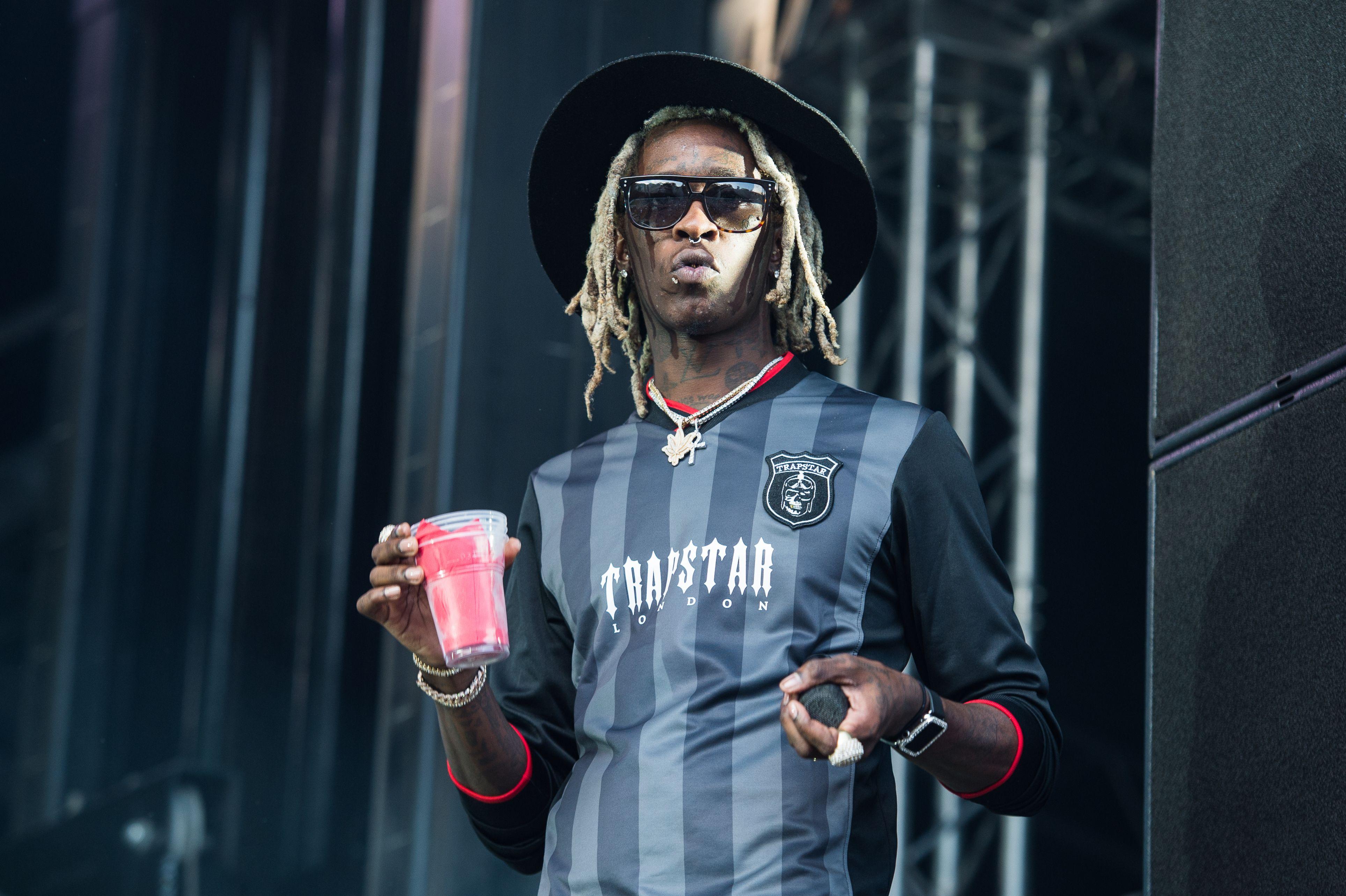
Let’s talk about the clothes for a second. If you look at photos from 2012, Thug was wearing what everyone else in Atlanta was wearing. Fast forward to 2015, and he’s appearing in Vogue. That doesn't happen by accident.
The old photos show a guy who was clearly experimenting. You’ll see a photo of him in a dress over pants, or wearing a leopard print shirt that looks like it came from the women’s section. Actually, he famously told GQ that 90% of his clothes were women’s clothes because they fit his slim frame better. That honesty is rare. Most guys would have made up some deep philosophical reason for it, but Thug was just like, "it fits better, so I bought it."
- 2011: The "I Came From Nothing" phase. Baggy clothes, simple hair, trying to find a flow.
- 2013: The breakout. Skinny jeans, bleached hair, the beginning of the heavy jewelry.
- 2016: The peak of "Jeffery." Experimental silhouettes, international fashion weeks, total disregard for gender norms.
- 2020-Present: The "Spider" era. High-end streetwear, mogul vibes, and unfortunately, the courtroom attire that has become the most recent addition to his visual history.
It’s a trajectory that mirrors his musical output. The early music was more straightforward trap. As his clothes got weirder, his music got more experimental—the yelps, the squeaks, the "mumble" that was actually just a new way of using the human voice as a synthesizer.
The Influence of the 1017 Days
You can't talk about his old photos without mentioning Gucci Mane. Gucci was the mentor, and the early photos of them together are like a time capsule. Gucci looks like the traditional kingpin, and Thug looks like the hyperactive protege. There’s one photo of them in the studio where Thug is literally hanging off the furniture. It captures that frantic energy he brought to the game. It was a chaotic time in the Atlanta scene, and the photography from that era—mostly shot on early iPhones or basic DSLRs—captures a grit that you just don't see in the polished Instagram era of today.
Debunking the Myths Around His Early Look
There’s this weird misconception that Thug was "forced" into his experimental style by a label. The young thug old pictures prove that’s total nonsense. Even in the very early days, you can see hints of his quirkiness. He’d wear a weird hat or a strange combination of colors that didn't quite make sense.
Another myth? That he was never "about that life." The photos from Jonesboro South tell a different story. He grew up in one of the toughest housing projects in Atlanta. The old photos show him in those environments, not as a tourist, but as a resident. It’s important to acknowledge that his fashion wasn't a way to hide his roots; it was a way to transcend them. He didn't have to dress like a "thug" because his name and his history already carried that weight.
How to Find the Rarest Photos
If you’re a real fan looking for the deep cuts, don’t just look at Google Images. You have to go to the source.
- Old Mixtape Covers: Look at the back covers of the original I Came From Nothing series. The candid shots in the liner notes are gold.
- Archived Blogs: Sites like Dirty Glove Bastard or early Complex archives have galleries from his first performances at small Atlanta clubs.
- Fan Accounts: There are "Thugger History" accounts on Instagram that specialize in finding photos from his sisters’ old Facebook profiles or his childhood friends’ uploads.
Seeing these images gives you a sense of perspective. It makes his current situation feel even more heavy. To see a kid go from the project porch to the top of the charts, only to end up in a courtroom, is a classic American tragedy, but the photos remind us of the vibrant, unstoppable creativity that got him there in the first place.
Final Insights on the Thugger Aesthetic
The evolution of Young Thug is a lesson in radical self-acceptance. Looking back at his old photos isn't just about mocking old fashion trends—it's about witnessing the birth of an artist who decided that "normal" was a prison.
If you want to understand the impact he’s had on the culture, just look at the rappers who came after him. Lil Uzi Vert, Playboi Carti, Gunna—they all stand on the foundation Thug built. And that foundation was laid in those early, grainy photos where he first decided to dye his hair or put on a shirt that was "too small."
What you should do next:
If you're interested in the visual history of Atlanta hip-hop, start by looking up the photographers who were there at the beginning. Cam Kirk is a huge one. He captured some of the most iconic early images of Thug, Gucci Mane, and Metro Boomin. Studying his work will give you a much better understanding of the "vibe" that created the modern rap landscape.
Also, take a second to watch the "Check" or "With That" music videos from 2015. They act as a bridge between the "old" Thug and the fashion icon we know now. You'll see the overlap of the street aesthetic and the high-fashion influence in real-time. It's the best way to see the pictures come to life.
Lastly, if you're ever feeling like you need to "fit in" to succeed, just pull up a photo of Thug from 2016. It’s the ultimate proof that being yourself—even if people think it’s weird at first—is the only way to actually change the world.