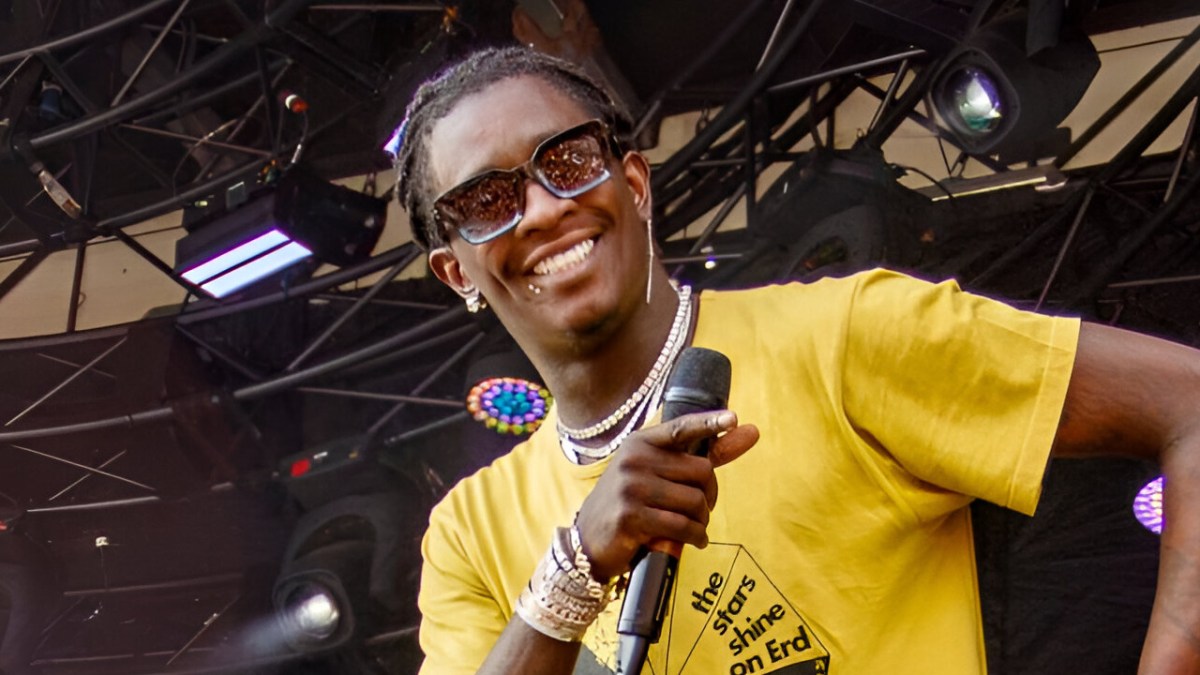
Jeffery Williams, known to everyone as Young Thug, didn’t just walk out of a Fulton County courtroom; he walked into one of the most complex legal puzzles the music industry has ever seen. It’s wild. After the longest trial in Georgia’s history, the YSL leader accepted a non-negotiated plea deal that essentially traded immediate freedom for a massive, decade-plus shadow of supervision. People keep asking if he’s "free." Well, technically? Yes. But the Young Thug probation terms are so specific and restrictive that his life for the next 15 years will look nothing like the rockstar chaos that defined his rise in the late 2010s.
He basically has to be a model citizen in a way few rappers are ever asked to be. Recently making news in this space: The Anatomy of Manufactured Rage: Technical Substitution in High-Budget Performance Architecture.
The deal, handed down by Judge Paige Reese Whitaker in late 2024, came after months of grueling testimony, viral courtroom moments, and the eventual breakdown of the state's case against several co-defendants. Thug pleaded guilty to one gang charge, three drug charges, and three gun charges. He also entered an Alford plea on the racketeering count and the leadership charge—basically saying he’s not admitting guilt but acknowledges the state has enough evidence to likely convict him. The result? A 40-year sentence. He’s serving five of those in "time served," and another 15 on probation. If he finishes that probation without a single slip-up, the remaining 20 years are commuted. If he messes up? He could go right back behind bars for two decades.
The Ban from Metro Atlanta: A Career Logistics Nightmare
One of the most jarring parts of the Young Thug probation terms is the geographical restriction. For the first 10 years of his probation, Williams is barred from entering the five-county Metro Atlanta area. This is his home. This is where the music happens. This is the heartbeat of the YSL empire. He’s only allowed back for very specific reasons: weddings, funerals, or his quarterly "anti-gang" presentations. Additional details regarding the matter are detailed by IGN.
Think about the impact on a recording artist. Most of the producers he works with are based in Atlanta. The studios he owns are there. By forcing him out of the city, the court is effectively trying to sever the physical ties between the man and the environment the prosecution claimed was a "criminal street gang." It's a geographical lobotomy of his influence. He can still make music, sure, but he can't go to the spots where that music was born.
The Mandatory Anti-Gang "Tours"
Thug has to return to Atlanta four times a year. Not to perform at State Farm Arena, but to give presentations to kids about the dangers of gangs and gun violence. Judge Whitaker was very clear about this. These aren't just "show up and wave" events. He has to actually engage. It’s a fascinating pivot. The state spent years trying to prove he was a "Kingpin," and now they’re using his massive cultural capital to try and dismantle the very structures they accused him of building.
The No-Contact List and the Gun Ban
This is where things get really tricky for the music business. The Young Thug probation terms strictly forbid him from associating with known gang members or his co-defendants in the YSL case. There are two big exceptions: his brother, Quantavious Grier (unfoonk), and Gunna (Sergio Kitchens).
The Gunna exception is huge. It basically allows them to keep their professional relationship alive despite the massive "snitching" narrative that dominated social media for the last two years. However, for almost anyone else associated with the YSL label who took a plea or was convicted, Thug has to keep his distance. For a guy whose entire brand is built on "Slime Family," that’s a lonely road.
- No firearms. Obviously.
- No possession of any illegal drugs (he’s subject to random testing).
- No "promoting" or "glorifying" gang life in a way that violates his specific behavioral mandates.
It’s not just about what he does; it’s about who he’s seen with. If he’s at a club in Los Angeles or Miami and a co-defendant walks in, he has to leave. The burden of compliance is entirely on him.
Can He Still Be "Young Thug"?
The biggest question for fans is whether his music will change. Can you still be the "Slime" leader when your probation papers say you can’t acknowledge the gang? The court isn't necessarily censoring his lyrics—the First Amendment still applies—but they are watching his actions. If his videos feature people he’s not supposed to be around, or if he’s caught with "tools of the trade," that’s a wrap.
Honesty, it’s a tightrope. He’s 33 now. By the time this probation ends, he’ll be nearly 50. This isn't a short-term "stay out of trouble" deal. This is a lifestyle overhaul. The court has essentially given him a choice: evolve or disappear.
Real-World Impact: The "Back-Loaded" Sentence
The 20-year "back-loaded" prison threat is the real teeth of this agreement. Usually, if you violate probation, you might serve a few months or the remainder of a short sentence. Here, the judge has held a massive 20-year hammer over his head. It’s a deterrent designed to make sure he doesn't just treat these rules as suggestions.
We saw this recently with other high-profile rappers like Meek Mill, whose legal battles over probation lasted a decade. But Thug’s situation is even more precarious because of the RICO context. Everything is scrutinized. Every social media post, every "hand sign" in a photo, and every person in the background of a studio session becomes a potential piece of evidence for a probation officer.
Actionable Steps for Following the YSL Case
If you're trying to keep up with how these Young Thug probation terms play out in real-time, you have to look past the headlines. The legal system moves slowly, and the "wins" or "losses" happen in small, boring status hearings.
- Monitor the Fulton County Court Records: Changes to probation conditions are often filed as motions. If Thug needs to travel internationally for a tour, his lawyers have to file for permission. These filings tell you more about his freedom than his Instagram does.
- Watch the Anti-Gang Presentations: These will likely be public or leaked. They will be the first real indication of how Thug is handling his "rehabilitation" and whether he’s taking the court’s mandate seriously.
- Check the "No-Contact" List Nuances: Legal experts often point out that "association" is a broad term. Watch who he collaborates with on his next album. If the credits are scrubbed of certain YSL names, you know the legal team is playing it safe.
- Evaluate the Lyrics vs. The Law: It’ll be interesting to see if he shifts his lyrical content to avoid "glorification" issues. While lyrics weren't the only thing that got him in trouble, they were a central pillar of the prosecution's narrative.
The reality is that Young Thug is still in the middle of his legal journey. He’s home, but he’s not "free" in the traditional sense. He’s living within a 15-year experiment conducted by the Georgia justice system. Whether he can navigate the distance between his persona and these strict legal boundaries will define the rest of his life.



