Tom Cruise is basically the last true movie star. You look at him now, jumping off planes at sixty-something, and it’s easy to forget where it started. But if you scroll through young Tom Cruise pics from the early eighties, you aren't just looking at a kid with a toothy grin. You're looking at the literal blueprint for modern celebrity.
It’s wild.
The transformation from the "boy next door" in The Outsiders to the high-gloss, aviator-wearing icon of Top Gun happened in a flash. Honestly, those early photos tell a story that the movies sometimes miss. They show a guy who was figuring out his "angles" long before everyone had a smartphone in their pocket.
The Pre-Glossy Era: 1981 to 1983
Most people think Risky Business was the beginning. It wasn't. If you dig into the archives of 1981, you find a version of Cruise that is almost unrecognizable. He had this raw, slightly unpolished look. In his debut role in Endless Love, he’s just a shirtless teenager with messy hair.
Then came Taps.
In the promotional stills for Taps, he’s got this intense, buzz-cut energy. He played David Shawn, a loose-cannon military cadet. There’s a specific photo of him holding an M16—eyes wide, jaw set—that looks nothing like the polished "Maverick" persona we'd see five years later. It was gritty. It was weird. It showed he wasn't afraid to look unappealing if it meant the character worked.
The most famous young Tom Cruise pics from this era usually come from the set of The Outsiders (1983). Francis Ford Coppola basically assembled a "who’s who" of future legends: Patrick Swayze, Rob Lowe, Matt Dillon, and Emilio Estevez. But Cruise? He actually requested to have his teeth temporarily "uglied up" for the role of Steve Randle. He wanted to look like a grease-monkey kid from the wrong side of the tracks.
You can see it in the group shots. He’s often in the back or leaning against a car, looking significantly more "street" than the teen idol he would soon become. It’s a fascinating pivot point.
The Smile That Changed Everything
We have to talk about the teeth. It’s a thing.
Early headshots show a much more natural, slightly crooked alignment. By the time Legend and Top Gun rolled around, the "Million Dollar Smile" was under construction. Photography from 1982 versus 1986 shows a massive shift in how he presented himself to the camera. He learned how to use that grin as a weapon.
In the Risky Business era, the imagery was all about rebellion. That iconic shot of him sliding across the floor in a button-down and socks? That wasn't just a movie scene; it became a visual shorthand for youth culture. Photographers like Terry O'Neill began capturing him during this window, and you can see the shift from "actor" to "icon." The lighting got sharper. The poses got more deliberate.
Breaking Down the 1986 Top Gun Aesthetic
If you want to understand why young Tom Cruise pics are still trending decades later, look at the Top Gun press tour. This was peak 80s.
- The G-1 flight jacket.
- The Ray-Ban Aviators (which reportedly saw a 40% jump in sales after the movie).
- The Kawasaki Ninja 900.
Photographer Herb Ritts captured some of the most enduring images of Cruise during this time. Ritts was known for a clean, high-contrast style that emphasized physical perfection. These photos moved away from the "character actor" vibe of the early 80s and leaned hard into the "Golden Boy" mythos. It’s the squint. It’s the leather jacket. It’s the way he looks like he’s permanently standing in the "golden hour" of a sunset.
Rare Finds and Candid Moments
The staged stuff is one thing. The candids are where it gets interesting.
There’s a great shot of Cruise at the 1982 Academy Awards—his first time attending. He’s wearing a tuxedo that looks slightly too big for him. He looks nervous. He looks like a kid who won a contest. Compare that to a photo of him at the Rain Man premiere just six years later. The confidence is night and day.
Then there are the "brat pack" adjacent photos. Even though he wasn't technically a core member of the Brat Pack (a term coined by David Blum in New York Magazine), he was always orbiting that sun. You’ll find shots of him hanging out at the Hard Rock Cafe with Sean Penn or grabbing dinner with Timothy Hutton. These photos feel more human. They lack the manicured perfection of the studio-mandated portraits.
Why We Are Still Obsessed
Nostalgia is a hell of a drug, sure. But there’s a technical reason these photos work.
Film photography in the 80s had a specific grain and color science—Kodachrome and Ektachrome—that made skin tones look warm and alive. Digital photography can feel clinical. When you look at young Tom Cruise pics, you’re seeing the last era of purely chemical photography before the digital transition.
There’s also the "effort" factor. Cruise is famous for his work ethic. Even in his early twenties, you can see it in his eyes. He isn't "checking out" during a photo shoot. He’s leaning in. He’s giving the lens everything he’s got. Whether he was posing for Rolling Stone or doing a quick promo for The Color of Money with Paul Newman, the intensity is constant.
Speaking of The Color of Money, the photos of Cruise and Newman together are a masterclass in the "passing of the torch." Newman, the old-school cool, and Cruise, the high-energy upstart. The contrast between Newman’s weathered grace and Cruise’s kinetic energy is palpable even in a still frame.
The Evolution of the "Movie Star" Look
By the time the 90s hit, the "young" version of Cruise began to fade into the "serious" version. Days of Thunder (1990) was the bridge.
The hair got longer. The roles got heavier. The photos from the Interview with the Vampire era (1994) are a total departure. Gone was the All-American jock. In his place was something Gothic, pale, and brooding. It proved that his "look" wasn't just a fluke of good genetics and a 1986 haircut. He could manipulate his image to fit whatever narrative he wanted to sell.
But for most fans, the "definitive" young Cruise will always be that 1983-1988 window. It represents a specific type of American optimism that doesn't really exist anymore.
How to Find High-Quality Archival Images
If you're looking to source or view authentic young Tom Cruise pics without the AI-generated weirdness that's flooding the internet lately, you have to go to the primary sources.
- Getty Images (Archival Section): They hold the rights to the most famous red carpet and premiere photography.
- The Terry O’Neill Collection: O’Neill captured some of the most intimate portraits of Cruise in the mid-80s.
- Studio Archives: Paramount and Warner Bros. often release high-res "stills" for anniversaries of films like Risky Business or Top Gun.
Don't just trust every Pinterest find. A lot of "vintage" photos circulating now are actually AI-upscaled or filtered to the point of losing their original texture. The real stuff has grain. The real stuff has tiny imperfections. That’s what makes it good.
Actionable Steps for Collectors and Fans
If you're diving into the world of vintage celebrity photography or just want to appreciate this era of Hollywood history, here’s how to do it right.
Check the Credits When you find a photo you love, look for the photographer’s name. Names like Annie Leibovitz, Herb Ritts, and Bruce Weber defined the "Cruise look." Knowing the photographer helps you find other images from that same session that might not be as "viral" but are equally stunning.
Understand the Film Stock If you’re a photography nerd, look for the difference between shots taken on set (usually unit photography) and studio portraits. Unit photography (stills taken during filming) is usually more candid and shows the "work" of acting. Studio portraits are about the "brand." Both are essential to the Cruise archive.
Avoid the AI Fakes In 2026, the internet is crawled with "enhanced" photos. If Tom Cruise’s skin looks like plastic and his eyes are glowing neon blue, it’s probably a modern "remaster" that ruins the original intent. Stick to scanned film prints for the authentic 80s feel.
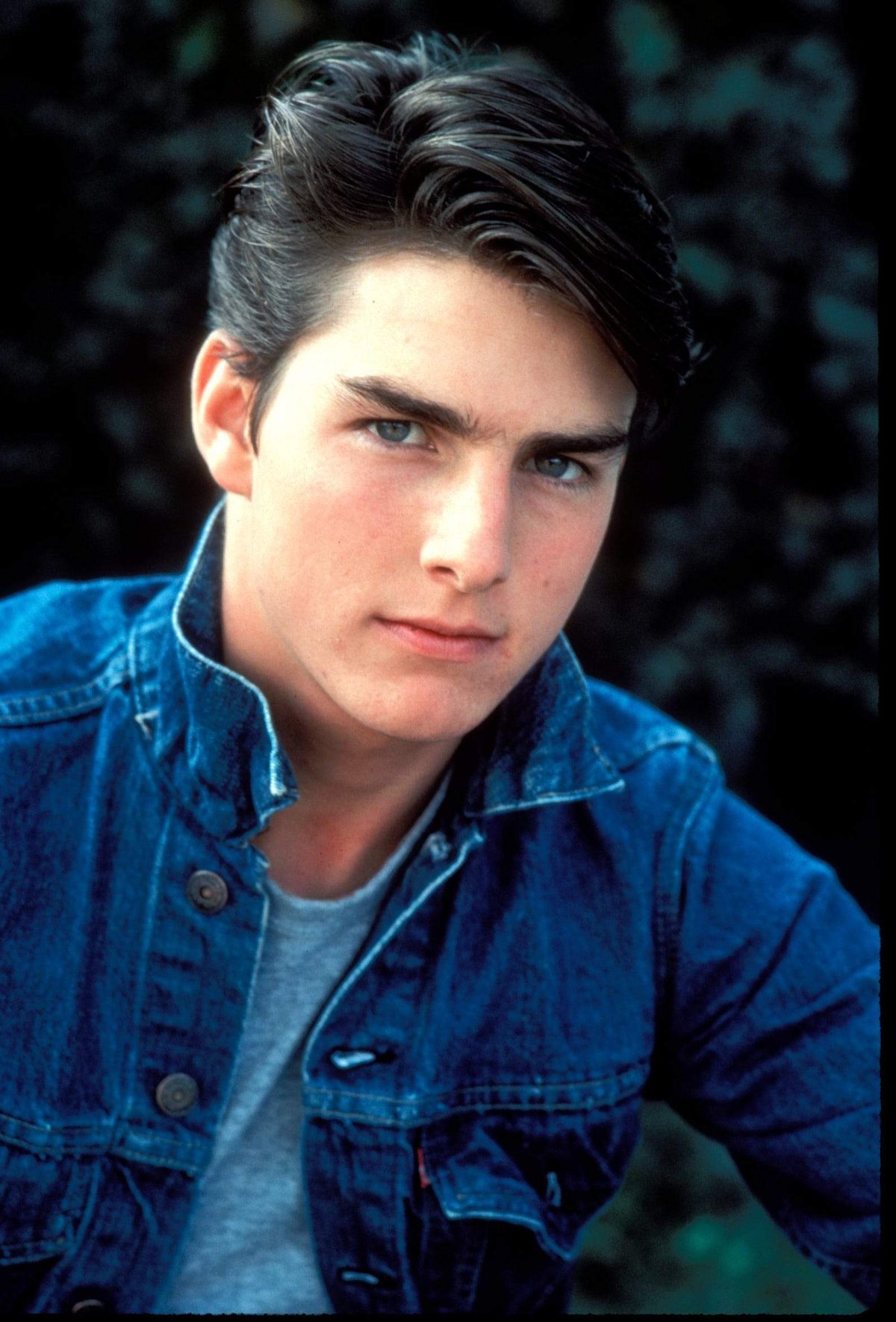
Study the Style Evolution Watch how his fashion changed from 1981 to 1989. It goes from "Midwest teenager" (denim jackets, plain tees) to "High-Fashion Icon" (structured blazers, luxury watches). It’s a literal map of how a person learns to be famous.
The staying power of young Tom Cruise pics isn't just about a handsome face. It’s a record of the last moment in history where a movie star could be built through a lens, one frame at a time, before the world went digital and everything became instant. These images are artifacts of a specific kind of magic.
To really appreciate the history, start by looking at the Outsiders press kit photos—it's the last time he ever looked like "just another actor" in a group. Everything after that was pure superstardom.