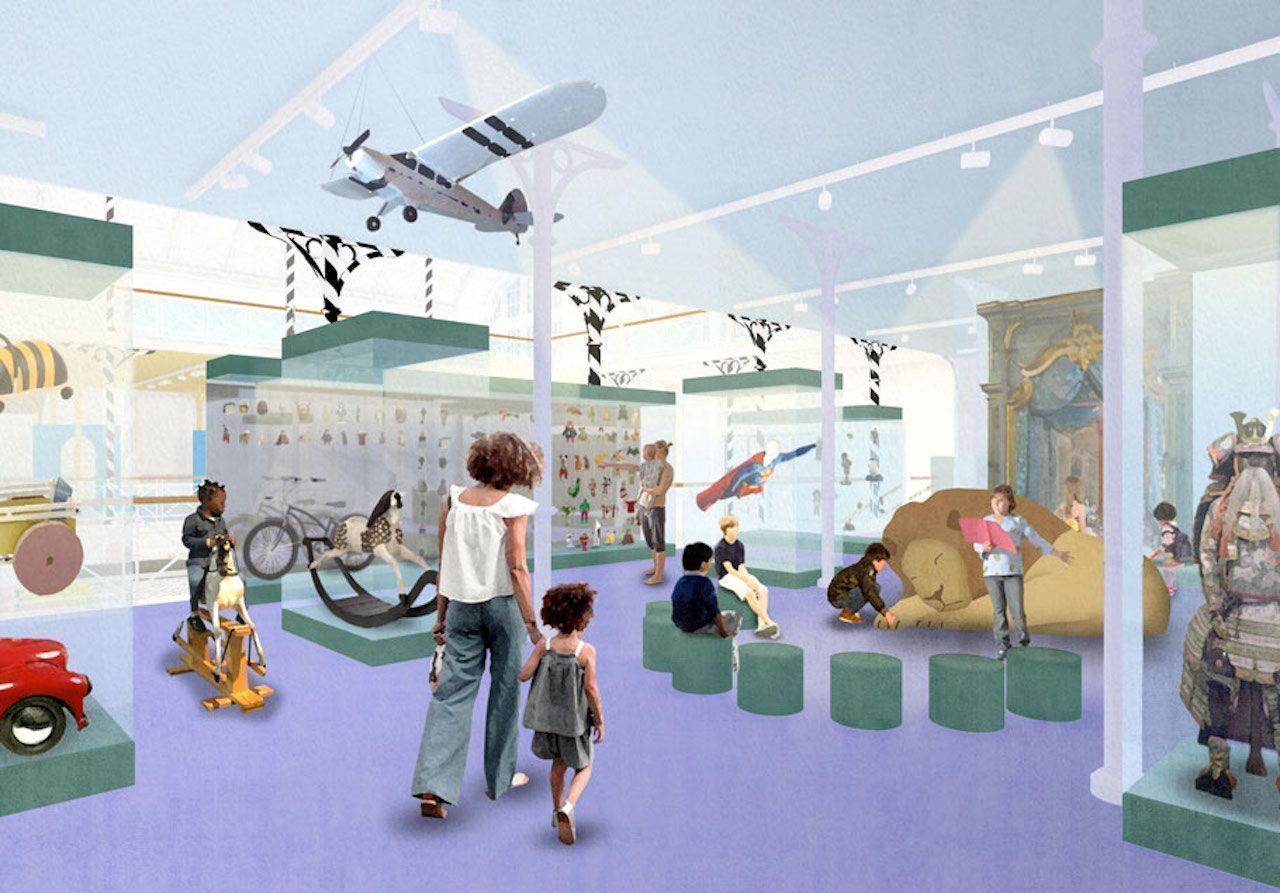
If you haven’t been to Bethnal Green in a few years, you’re basically going to a different planet. The old Museum of Childhood London—that echoey, slightly creepy hall of glass cases and Victorian dolls—is gone. It’s officially dead. In its place sits the Young V&A, a £13 million reimagining that opened in the summer of 2023. Honestly, it was a risky move. People loved the nostalgia of the old place, even if it felt a bit like a dusty attic. But the V&A realized that kids today don't want to just stare at a 100-year-old rocking horse behind a pane of glass. They want to break stuff. Or at least touch it.
The building itself is a bit of a local legend. It’s been there since 1872. It actually started as a sort of "pre-fab" structure from South Kensington before being hauled across London to provide culture to the East End. For decades, it served as the Victoria and Albert Museum’s childhood branch, housing the UK's national collection of childhood objects. But by the late 2010s, it was tired. It felt more like a museum about childhood for adults than a space for children.
What Actually Changed at the Young V&A?
Everything. It’s loud now. That’s the first thing you notice. The muffled silence of the old museum has been replaced by a constant hum of activity. The curators, led by Dr. Helen Charman, didn’t just move the furniture around; they worked with local schools and kids to figure out what a "museum" even means in 2026.
The layout is split into three main galleries: Play, Imagine, and Design.
In the Play gallery, it’s all about sensory stuff. You’ve got a "Mini-Museum" for the tiny ones—basically crawlers and toddlers who just want to feel different textures. There’s a giant foam block area where kids build structures that inevitably get knocked over in five minutes. It’s chaotic but intentional. The Imagine gallery is where the old soul of the museum lives, featuring those incredible dolls' houses the museum is famous for. But they aren't just sitting there. They are framed in a way that asks questions about how we live and who gets to have a "home."
Then you have Design. This is arguably the coolest part for anyone over the age of ten. It showcases how objects are actually made. You'll see everything from the evolution of the skateboard to how prosthetic limbs are designed to look like superhero gear. It’s a massive shift from "look at this old toy" to "look at how this toy changed the world."
The Controversy of the "Missing" Collection
Some people are still pretty salty about the renovation. If you go looking for the massive rows of lead soldiers or every single Barbie ever made, you might be disappointed. To make room for the interactive zones, a huge chunk of the 33,000 objects in the national collection went into storage or moved to the V&A East Storehouse in Stratford.
It’s a trade-off.
The critics—mostly nostalgic Gen Xers and Boomers—argued that the Museum of Childhood London lost its academic weight. They miss the "cabinet of curiosities" vibe. But if you watch a seven-year-old in the new Design gallery trying to figure out how a 3D printer works, it’s hard to argue with the result. The museum went from a place of passive observation to a place of active creation.
Why Bethnal Green Matters
You can't talk about this museum without talking about the East End. This isn't South Kensington. It's not shiny. The museum sits right next to the Bethnal Green tube station, a site of immense local history (and a tragic WWII disaster). The Young V&A tries hard to stay rooted here. The "Town Square" in the center of the museum is designed to be a community hub. They host workshops that aren't just for tourists; they’re for the families living in the nearby estates who need a free, warm, and safe place to bring their kids on a rainy Tuesday.
Practical Tips for Your Visit
Don't just show up at noon on a Saturday. Just don't. You'll regret it.
- The Quiet Hour: If you or your kid have sensory sensitivities, check their schedule for quiet sessions. The acoustics in that big iron-and-brick hall are... intense.
- The Cafe: It's actually decent. Usually, museum food is overpriced cardboard, but they’ve made an effort here with healthy-ish options that kids will actually eat.
- The Shop: Be prepared. It’s a trap. They have some of the coolest, most well-designed toys in London, and you will end up spending £20 on a wooden puzzle you didn't know you needed.
- Getting there: Central Line to Bethnal Green. It's literally a two-minute walk from the exit.
The Hidden Gems Most People Miss
Look up. Seriously. The ceiling and the ironwork are original 19th-century engineering. It’s a miracle the place is still standing after the Blitz. Also, keep an eye out for the "Micro-museums" tucked into corners—these are small displays curated by local kids or community groups that change out frequently. They give a voice to the neighborhood that you don't get at the bigger museums in Central London.
The Museum of Childhood London has successfully transitioned from a warehouse of memories into a factory of ideas. It’s not perfect—the crowds can be overwhelming and some of the tech-heavy exhibits are bound to break down—but it’s a living, breathing space. It acknowledges that childhood isn't just something to be archived; it's something to be experienced.
Whether you’re a design nerd or just a parent looking to burn off some of your toddler’s energy, the Young V&A is one of the few places in the city that feels genuinely inclusive without being patronizing.
How to Make the Most of Your Day
- Book ahead for special exhibitions. While the main galleries are free, the temporary shows (like the recent Japan: Myths to Manga) usually require a paid ticket and sell out fast.
- Use the lockers. The museum is multi-level and you'll be doing a lot of walking/chasing. Don't lug your coat and bags around.
- Combine it with Victoria Park. If the weather is even remotely nice, walk ten minutes down the road to Victoria Park after the museum. It’s one of London's best green spaces and has a massive playground to finish the day.
- Check the "Open Studio" times. Sometimes the design labs are open for kids to actually play with CAD software or physical prototyping tools. These are the best value-add experiences in the building.