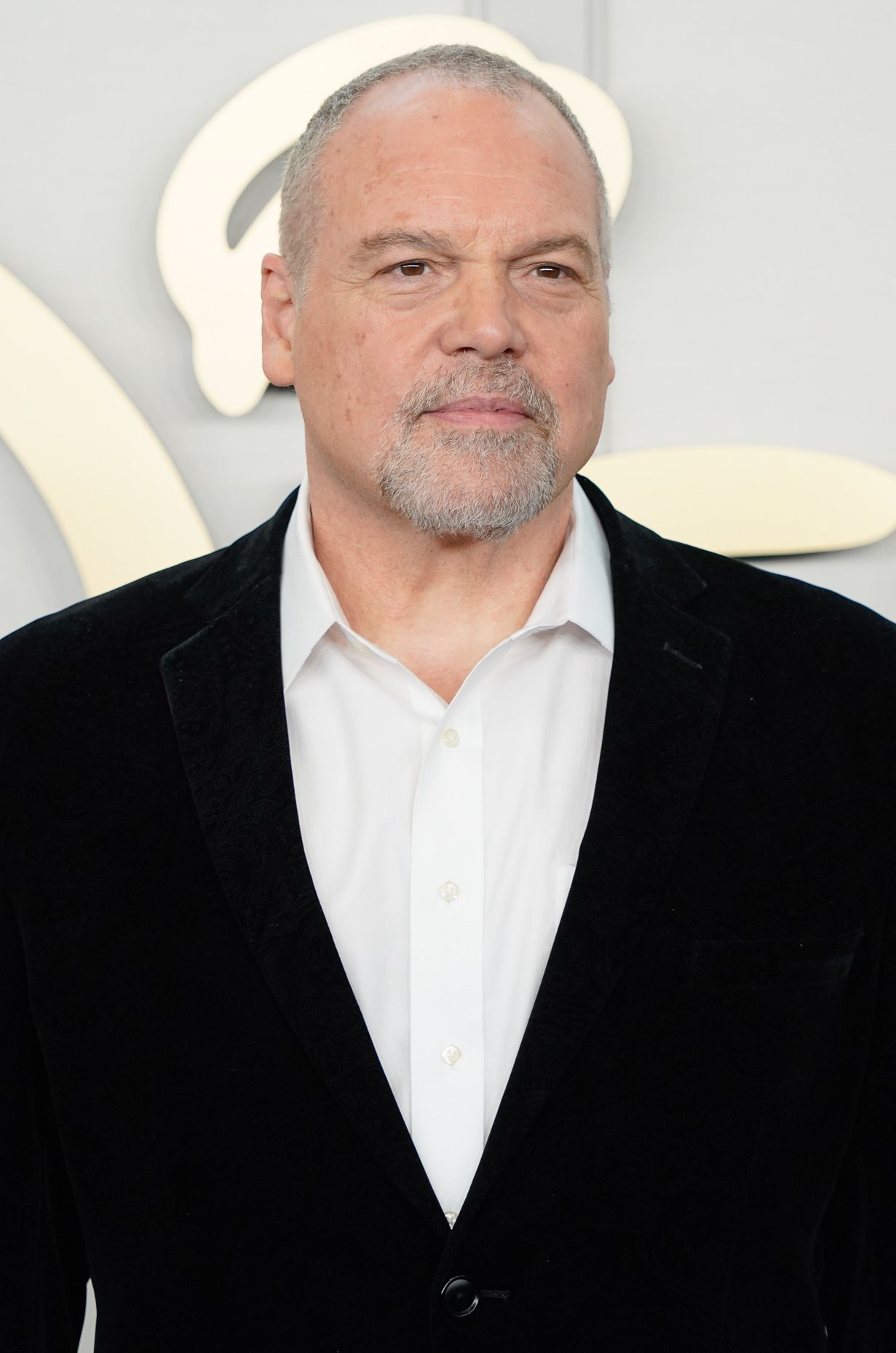
If you saw young Vincent D’Onofrio on the street in 1985, you probably would have handed him your jacket and asked him to keep an eye on the door. He was a 6'3" bouncer at the Hard Rock Cafe. He was a bodyguard for Robert Plant. He was basically a giant, lanky kid from Brooklyn with a head full of curly hair and zero idea that he was about to become the most intense "actor's actor" of his generation.
Most people today know him as the terrifying Kingpin in Daredevil or the eccentric Bobby Goren from Law & Order: Criminal Intent. But the version of D'Onofrio that existed before the fame? That guy was a total wild card.
From Bouncing at the Hard Rock to Broadway
Born in Brooklyn in 1959, Vincent Philip D’Onofrio didn't just walk onto a movie set and start acting. He was a theater rat. His dad, Gene, was a theater production assistant, so the smell of greasepaint was in his DNA.
He spent time in Colorado doing community theater before coming back to New York to get serious. He studied method acting at the American Stanislavski Theatre and the Actors Studio. Honestly, he was just a working-class guy trying to figure it out. While he was training under Sonia Moore and Sharon Chatten, he was literally delivering packages and guarding Yul Brynner to pay the rent.
His first professional break wasn't a movie. It was an off-Broadway play called This Property Is Condemned. By 1984, he finally hit the big time with his Broadway debut in Open Admissions. He played Nick Rizzoli, and he was good. But "Broadway good" is different from "Stanley Kubrick good."
The Full Metal Jacket Transformation
You can't talk about young Vincent D’Onofrio without talking about Private Pyle. This is the role that changed everything, and it almost didn't happen.
His friend Matthew Modine—who had already been cast as Joker—was the one who pushed him to audition. Vincent didn't even have a video camera. He had to borrow one to record his audition tapes. It took four different tapes sent to England before Kubrick was convinced.
Originally, the character of Leonard "Gomer Pyle" Lawrence was written as a "skinny, ignorant redneck." Kubrick decided it would be much more tragic if the guy was big and clumsy. So, he asked Vincent a question that would change his life: "Can you gain some weight?"
Vincent didn't just gain "some" weight. He went full Method.
- He gained 70 pounds. (Some sources say up to 80).
- He reached a total weight of 280 pounds.
- He shaved his head completely. At the time, this was a world record for the most weight gained for a single film role, surpassing Robert De Niro’s transformation for Raging Bull. It wasn't just about looking fat, though. The weight actually messed him up. He blew out his left knee on an obstacle course scene during filming and had to have surgical reconstruction.
Beyond the physical, the mental toll was real. He later said that people treated him differently when he was that size. Women wouldn't look at him. People spoke to him slowly because they assumed his physical size meant he was mentally slow. That isolation is exactly what you see on screen when Pyle finally snaps in that bathroom.
Why He Never Became a "Standard" Leading Man
After Full Metal Jacket, Vincent did something weird. He lost the weight in nine months and went back to being a handsome, lanky guy.
Look at him in Adventures in Babysitting (1987). He’s Dawson, the garage owner. The kids think he's Thor. He looks like a Greek god with long blonde hair. Then look at him in Mystic Pizza (1988) as Bill, the sweet guy who just wants to marry Lili Taylor.
Most actors would have stayed in that "hunky leading man" lane. Not Vincent. He deliberately chose roles that scared him.
He played a young Orson Welles in Ed Wood (1994). He played an aspiring screenwriter in Robert Altman's The Player (1992). He even played the pulp writer Robert E. Howard in The Whole Wide World (1996), a performance that won him Best Actor at the Seattle International Film Festival.
The "Bug" That Sealed the Deal
If Full Metal Jacket proved he could transform, Men in Black (1997) proved he was a literal alien.
As Edgar the Bug, he did something nobody expected. He wore knee braces that prevented him from walking normally to simulate a creature wearing a "human suit." He watched bug documentaries to get the head movements right. It's one of the weirdest, most physical performances in blockbuster history.
Basically, young D’Onofrio was a shapeshifter. He refused to have a "brand."
Lessons From the Early D'Onofrio Era
Looking back at his early career, you can see a blueprint for what it means to be a character actor. He wasn't interested in being "Vincent D'Onofrio." He was interested in the work.
If you're looking to apply his "method" to your own creative life, here’s how he did it:
Don't wait for permission. He didn't have an agent when Robert Altman wanted to cast him in The Player. He didn't even have a phone! Altman literally had to wander around his neighborhood in New York to find his house and drop off the script.
Commit to the "scare." D'Onofrio has famously said he picks roles based on what scares him the most. If it feels safe, he's not interested.
Ignore the "hunk" trap. He could have been a 90s heartthrob. He chose to be a 70-pound-heavier recruit, a dying man on a subway (in the legendary Homicide: Life on the Street episode "Subway"), and a cockroach in a human skin.
To really appreciate him, go back and watch The Whole Wide World. It’s his best work from that era—raw, vulnerable, and completely different from the "Kingpin" persona we see today.
Start by watching his performance in Full Metal Jacket and then immediately jump to Mystic Pizza. The fact that those two characters are played by the same human being within a year of each other is the only proof you need that young Vincent D'Onofrio was on another level entirely. Check out his early indie work on streaming platforms to see the range for yourself.



