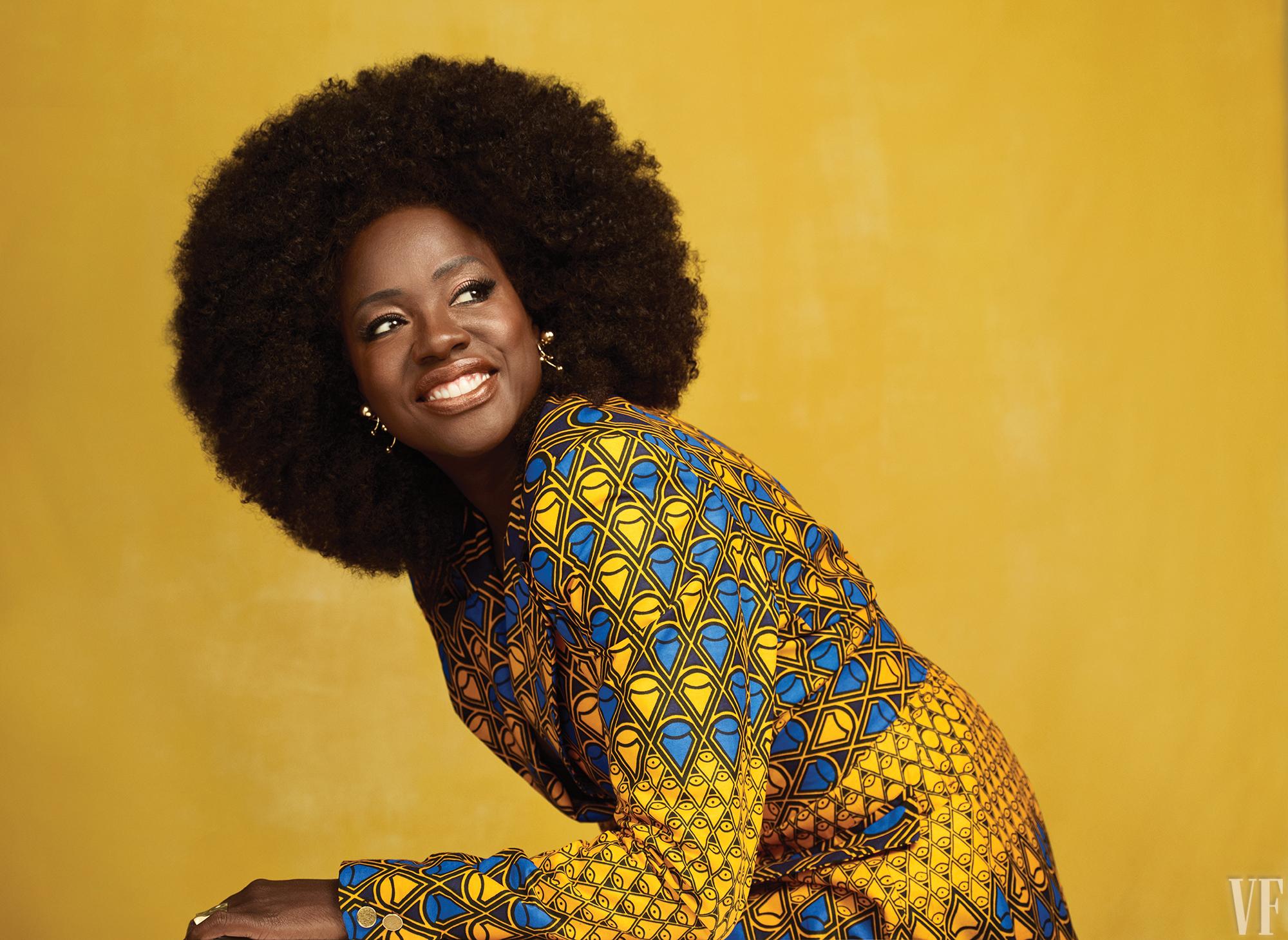
Viola Davis didn't just appear out of nowhere as a powerhouse in a white gown holding an Oscar. Honestly, the version of young Viola Davis that existed in the 1970s and 80s would probably have found that image impossible. She grew up in Central Falls, Rhode Island, in what she has famously described as "abject poverty." This wasn't just being broke; it was the kind of hunger that makes you forage in dumpsters. It was the kind of cold that comes from having no heat in a condemned building.
She was a "latchkey kid" before the term felt trendy. Also making headlines recently: The Anatomy of Manufactured Rage: Technical Substitution in High-Budget Performance Architecture.
The story of her youth is often glossed over in highlight reels, but if you want to understand why she acts the way she does—with that raw, vibrating intensity—you have to look at the girl who used to tie rags around her neck to keep the rats from biting her at night. It’s heavy. It’s uncomfortable. But it is the literal foundation of her craft.
The Reality of Central Falls and the "Hungry Girl"
Most people see a celebrity and assume there was some lucky break early on. For a young Viola Davis, the "break" was just surviving the day. She was one of six children born to Mae Alice and Dan Davis. Her father was a horse trainer and groomer; her mother was a maid and a factory worker who also became a civil rights activist. Further insights on this are covered by Vanity Fair.
The family lived in a dilapidated apartment on Washington Street. It was infested. It was crumbling. Davis has been incredibly candid about the "shame" of that period. She’s talked about how she and her sister, Dianne, would go to the local recreation center just to get a meal, or how they’d sometimes have to steal food because the hunger was just too much to handle.
Imagine being a child and realizing your environment is actively trying to erase you. That was her reality. She has mentioned in interviews—specifically her memoir Finding Me—that she used to wet the bed well into her adolescence because of the trauma and stress of her environment. The smell of urine stayed with her at school, adding a layer of social isolation to the physical hardship. It's a miracle she found the stage at all.
How a Young Viola Davis Found the Stage
It started with a skit. In the fourth or fifth grade, Viola and her sisters entered a talent competition at the public library. They didn't have costumes. They didn't have a script. They just had an idea. They won.
That moment was a pivot. For the first time, people weren't looking at the "poor girl" or the "smelly girl." They were looking at a performer.
She eventually got involved with the Upward Bound program and the Young People’s School for the Performing Arts in Rhode Island. There was a teacher there, Ron Stetson, who saw something. Not just talent, but a desperate, clawing need to be heard.
The Juilliard Years: A Different Kind of Struggle
After graduating from Rhode Island College in 1988, she headed to Juilliard. You’d think this was the "I made it" moment, but the young Viola Davis at Juilliard felt like an outsider in a completely new way.
The school at the time was very focused on a "Eurocentric" style of acting. They wanted her to speak with a Mid-Atlantic accent. They wanted her to fit into a mold of "classical" theater that didn't necessarily have room for a dark-skinned Black woman from a condemned building in Rhode Island.
- She felt she had to disappear to succeed.
- The training was rigorous but often felt like it was stripping away her identity.
- She spent four years learning how to be "proper" while her internal engine was fueled by the chaos of her childhood.
She’s since said that she spent years trying to unlearn some of that "polishing" to get back to the truth of her own voice. It’s a common critique of prestigious acting conservatories from that era—the idea that you have to "fix" the student rather than empower their unique background.
The "Missing" Decade: 1996 to 2008
If you look at her IMDb, you see a lot of "Nurse," "Police Officer," and "Social Worker" roles in the late 90s and early 2000s. This is the period where the young Viola Davis became a working professional, but not yet a star.
She was doing the work. She was in Out of Sight. She was in Solaris. She was winning Tonys on Broadway for King Hedley II (2001), but the mainstream film world hadn't caught up.
There’s a misconception that she was a "late bloomer." She wasn't. She was an elite, highly trained stage actor who was simply being underutilized by a Hollywood system that didn't know what to do with her. She was "too old" for the ingenue roles and "too intense" for the fluff.
Then came Doubt in 2008.
She had one scene. Eight minutes of screen time. She went toe-to-toe with Meryl Streep and, frankly, she held the floor. That wasn't luck. That was thirty years of stored-up Central Falls grit being released in a single performance. That was the moment the world finally saw what the young Viola Davis had been building in the dark.
Why Her Early Life Actually Matters for Actors Today
We talk about "authenticity" like it’s a buzzword. For Davis, it’s a survival mechanism. She has frequently discussed how her poverty gave her a "bullshit detector." When she reads a script, she knows if a character feels real because she’s lived the extremes of human experience.
If you’re an aspiring creative, her trajectory offers a few harsh but necessary lessons:
- Poverty isn't a character flaw. It’s a circumstance. Davis proves that your starting point doesn't dictate your ceiling, but it will definitely influence the "texture" of your work.
- The "Slow Path" is often the sturdier one. She didn't get famous at 19. She got famous after she had already mastered her craft on stage.
- Education is a tool, not a cage. Juilliard gave her technique, but her life gave her the "blood" for her roles. She had to learn how to balance both.
Surprising Facts About Her Early Career
- She almost didn't go to Juilliard. She was worried about the cost and the culture shock. It was her sister and mentors who pushed her to realize she belonged there.
- The "snot" scene in Doubt was real. It sounds silly, but that level of physical abandonment in a scene—letting your body react without vanity—is something she developed early on as a way to remain "truthful."
- She used to work as a "surrogate" for other actors. In the theater world, she was the person others looked to when they needed to find the emotional core of a scene.
Basically, she was an "actor's actor" for nearly twenty years before she became a household name.
Actionable Takeaways for Fans and Students
If you want to truly appreciate the depth of Davis's career, don't just watch The Woman King or Fences.
- Watch her early stage interviews. Look for archives of her talking about August Wilson. Her relationship with Wilson’s work is where she truly found her footing as a young Viola Davis transitioning into a legend.
- Read her memoir, "Finding Me." It’s not a typical "celebrity" book. It’s a raw account of trauma and the transformative power of art.
- Study her "Doubt" monologue. If you’re an actor, break it down. Notice how she doesn't use "acting" tricks. She uses memory and stillness.
The story of Viola Davis isn't just a "rags to riches" tale. It’s a "trauma to triumph" blueprint. She didn't leave her past behind in Central Falls; she packed it up and took it with her to the Oscars. That is why, when she speaks, the whole room goes quiet. She isn't just performing; she's testifying.
To further understand her evolution, compare her performance in the 1996 film The Substance of Fire to her later work in Ma Rainey's Black Bottom. You can see the same fire, but the older Davis has learned exactly how to direct the flame.



