If you were a door-to-door salesman in Lynwood, California, in 1966, you probably didn't think you were about to change pop culture. You were just trying to sell a musical instrument. You knock on the door of Nick and Mary Yankovic. You offer them two choices for their six-year-old son, Alfred: guitar or accordion.
Nick and Mary look at each other. They see the name "Yankovic" on the local polka charts—no relation to them, by the way—and decide that the world definitely needs one more accordion-playing Yankovic.
That was it. That was the moment. Young Weird Al Yankovic didn't choose the squeezebox; the squeezebox chose him.
Honestly, it’s kinda poetic. Most kids in the late '60s were dreaming of being Jimi Hendrix. Al was in his bedroom, alone, figuring out how to play "Goodbye Yellow Brick Road" on a 30-pound instrument strapped to his chest. He was a scrawny, shy kid who skipped second grade. He was always the youngest, the smartest, and arguably the weirdest person in any room.
The Valedictorian Who Repo'd Accordions
People think Al's "weirdness" is just a stage act. It's not. It’s a survival mechanism. He graduated from Lynwood High School as valedictorian at just 16 years old. Think about that for a second. While most of us were struggling to pass Algebra II, Al was basically running circles around his peers academically.
But he wasn't just a bookworm. He had a side hustle.
He was a part-time accordion teacher. And occasionally? An accordion repo-man. Imagine being a deadbeat who didn't pay for your polka lessons and a teenage Weird Al shows up at your door to take the instrument back. It sounds like a bit from one of his later movies, but it’s 100% real.
The Dr. Demento Connection
In 1973, Al’s life took a hard turn toward the absurd. Barret Hansen—better known as Dr. Demento—came to speak at Al’s school. Al was 13. He didn't just sit there; he handed the doctor a demo tape. It was recorded on a "cheesy little tape recorder" in his bedroom.
The Doctor didn't play it. Not yet.
Al didn't quit, though. Three years later, he sent another tape featuring a song called "Belvedere Cruisin'." It was an ode to his family’s Plymouth. Dr. Demento played it. It was the first time Alfred Matthew Yankovic heard himself on the radio. He was 16. The world had no idea what was coming.
Why Architecture? The Cal Poly Years
You’d think a kid with a radio hit (even a niche novelty one) would run straight to Hollywood. Nope. Al went to Cal Poly San Luis Obispo to study architecture.
Why architecture?
Because he was good at drawing and a guidance counselor told him he should. That’s it. That’s the whole reason. He called his major "Architorture." He spent his nights at the campus radio station, KCPR, where he finally adopted the name "Weird Al." It started as a jab from other students in the dorms—a way to mock the guy who slunk through the halls looking "goofy."
Al just leaned into it. He took the insult and turned it into a brand.
The Bathroom Recording That Changed Everything
In 1979, The Knack had the biggest song in the country: "My Sharona." Al was sitting in the KCPR studio and realized the bathroom across the hall had incredible acoustics. Specifically, the men's room.
He took his accordion and a cassette deck into the stalls. He recorded "My Bologna." It wasn't a studio production. It was a kid in a bathroom with a lunchmeat obsession. He sent it to Dr. Demento, it blew up, and eventually, Al met The Knack after a show. He told them he’d parodied their song. They actually liked it. Capitol Records released it.
Suddenly, the architecture student was a recording artist.
The Myth vs. The Reality
We often see young Weird Al through the lens of the 2022 "biopic" starring Daniel Radcliffe. But let's be real: that movie is a beautiful, hilarious lie. Al never had a torrid affair with Madonna in the '80s. He wasn't a hard-drinking, gun-toting action hero.
The reality is actually more interesting. He was a straight-edge, polite, incredibly focused musician who understood something most people didn't: funny music is still music. * He didn't drink.
- He didn't do drugs.
- He was a vegetarian before it was a trend.
- He was—and is—a "genuine human being" (according to his own FAQ).
He spent his early twenties working in the mailroom of a radio syndication company in Culver City. He had a degree he wasn't using and a dream of playing the accordion for a living. Most people would have called that a mid-life crisis at age 22. For Al, it was just the beginning.
What Most People Get Wrong About Early Al
The biggest misconception? That he was just "lucky."
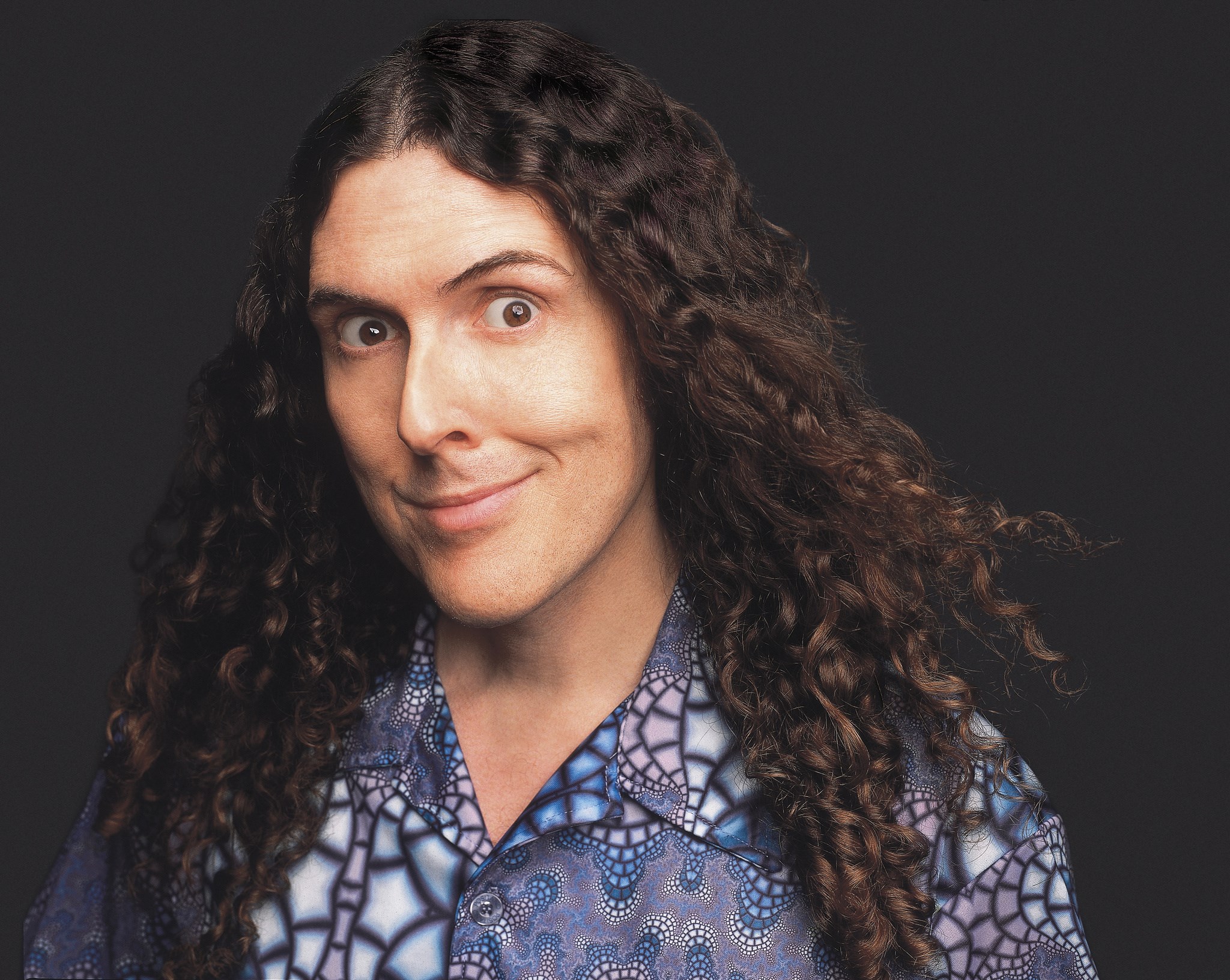
People see the Hawaiian shirts and the glasses and assume it’s all a fluke. But if you look at his early work, the craftsmanship is terrifyingly precise. He wasn't just making fun of songs; he was dissecting them. To parody a song, you have to understand its DNA better than the person who wrote it.
He spent hours replicating Elton John's piano riffs on a squeezebox. That’s not just "being weird." That’s being a virtuoso.
Actionable Takeaways from the Early Years
If you're a creator or just someone trying to find your way, Al’s early years offer some legit lessons:
- Own the Insult: He took "Weird Al" and made it his stage name. If people are going to judge you anyway, you might as well get paid for it.
- Acoustics Matter More Than Gear: "My Bologna" was recorded in a bathroom. Don't wait for a "pro" studio to start creating.
- Persistence is a Superpower: He gave Dr. Demento a tape at 13. He didn't get airplay until 16. He didn't have a real hit until 20. Stick around.
- Listen to Your Dad: Nick Yankovic told Al the key to success was "doing for a living whatever makes you happy." Al took that more literally than anyone.
The Legacy of the Squeezebox
Looking back at young Weird Al Yankovic, you see a guy who refused to grow out of his hobbies. He was the nerd who never apologized for being a nerd. He survived being the youngest kid in class, survived the "architorture" of college, and survived a music industry that thought novelty acts had a shelf life of six months.
He's still here. The accordion is still strapped to his chest. And he's still, thankfully, very weird.
Next Steps to Explore More:
- Check out the original 1976 recording of "Belvedere Cruisin'" on YouTube to hear where it all started.
- Look up Al's early appearance on The Tomorrow Show with Tom Snyder (1981) to see him perform "Another One Rides the Bus" with just a drummer hitting a suitcase.
- Visit the Cal Poly San Luis Obispo campus and find the Graphic Arts building; there’s a lot of history in those bathrooms.