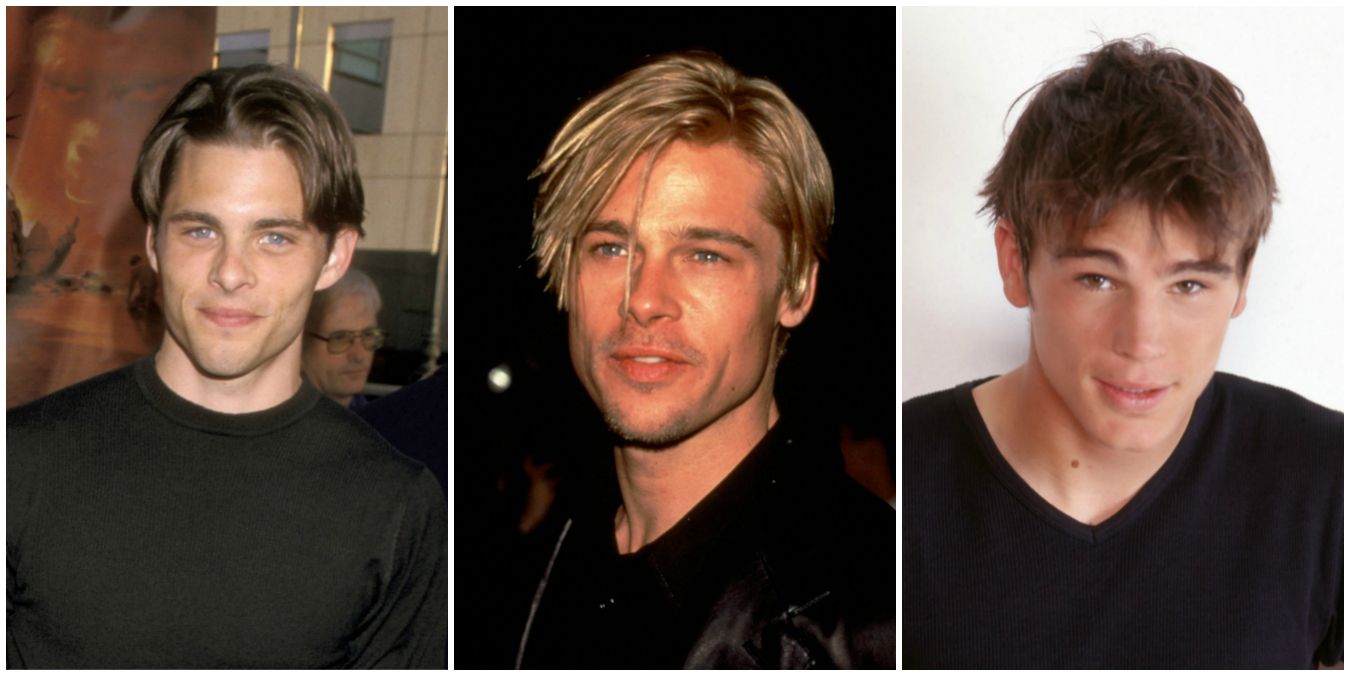
Hollywood is currently obsessed with a very specific type of guy. You’ve seen them. The ones with the sharp jawlines, the messy hair, and that weirdly intense "I haven't slept in three days" energy. If you look at the 2026 release calendar, it's basically a checklist of young white male actors who are trying desperately to prove they aren't just another pretty face. Honestly, the industry is shifting. We're moving away from the untouchable, muscle-bound superhero archetype and heading straight into the "sad, complicated artist" era.
It's a weird time. Some people think these guys are just nepo babies or lucky tiktok-famous faces, but that's a bit of a lazy take. If you actually look at what’s happening on set right now, the competition is brutal. The guys who are actually sticking around—the Timothée Chalamets and the Jeremy Allen Whites—are doing something different. They’re picking roles that would have made a leading man in the 90s cringe.
The Pivot to "Uncomfortable" Leading Men
Remember when being a movie star meant looking perfect? That’s dead. Now, if you're one of the top young white male actors, your goal is basically to look as stressed as possible on camera. Take Jeremy Allen White. He just walked into the 2026 Golden Globes with double nominations for The Bear and the Bruce Springsteen biopic, Deliver Me from Nowhere. He’s 34 now, pushing the upper limit of the "young" bracket, but he’s the blueprint. He doesn't have the classic "Ken doll" look. He looks like a guy who’s about to have a panic attack in a walk-in freezer.
Audiences love it.
There’s a nuance here that gets missed. It’s not just about acting; it’s about brand management. Actors like Austin Butler are literally transforming their entire personalities for roles. People made fun of his "Elvis voice" for years, but look at where he is now. He’s in talks for a Miami Vice reboot with Michael B. Jordan. He’s playing Sonny Crockett. That’s a massive jump from singing "Burning Love." He’s successfully navigated the "Disney kid" curse by being more committed—some might say obsessed—than anyone else in the room.
Who’s Actually Carrying 2026?
If you’re wondering who’s actually going to be on your screen this year, the list is surprisingly short. A lot of the big names are taking breathers.
- Jacob Elordi: This guy is everywhere. While everyone else is on a "hiatus," Elordi is carrying the torch. He’s got Wuthering Heights and a sci-fi flick called The Dog Stars. He’s the only one who didn't get cast in that massive Beatles project, which is kind of hilarious if you think about it.
- Paul Mescal: He’s the king of the "aching soul." His new movie, The History of Sound, hits theaters in January 2026. It’s a 1917-set romance where he stars alongside Josh O’Connor. It’s quiet, it’s folk-music focused, and it’s exactly the kind of "prestige" role that wins Oscars.
- Barry Keoghan: Talk about a trajectory. From the "cat killer" in Love/Hate to playing Ringo Starr in the upcoming Beatles films. He’s also got Crime 101 coming up. Keoghan is the wild card. He doesn’t fit the mold, and that’s why directors like Emerald Fennell and Martin McDonagh keep calling him back.
The Myth of the "Overnight Success"
People love to say these guys just "appeared." They didn't. Most of these young white male actors have been grinding for a decade. Austin Butler was a background extra on Hannah Montana. Barry Keoghan grew up in foster care in Dublin and answered a random casting call in a shop window. There’s a grit there that the "internet boyfriend" memes usually ignore.
The industry is also changing how it casts. There’s a lot of talk about diversity, and rightly so. For a young white actor to get a lead role in 2026, they have to bring something more than just "looking the part." They have to be "transformative." That’s why you see Timothée Chalamet carrying a ping-pong table across Europe to practice for Marty Supreme. He’s not just showing up; he’s trying to disappear into a role.
What the Critics Get Wrong
The biggest misconception? That these actors are interchangeable. They aren't. There’s a huge difference between the "method" intensity of a Butler and the "raw vulnerability" of a Mescal. Critics often lump them together as a monolith of "white boys of the month."
Actually, if you look at the data, the ones who survive the "hype cycle" are the ones who pivot to indie studios like A24 or Neon. They’re avoiding the Marvel trap. Well, mostly. Even Barry Keoghan did Eternals, but he quickly pivoted back to Saltburn. They know that being a "superhero" is a career dead-end these days. People want real stories. They want to see a guy like Leo Woodall—who was just a "lad" in The White Lotus—take on serious drama.
The Financial Reality of Modern Stardom
It’s not all red carpets. The "mid-budget" movie is dying, so these actors are forced into two extremes:
- The Mega-Blockbuster: Think Dune: Messiah (September 2026).
- The Prestige Indie: Movies with a $15-$20 million budget that rely entirely on the actor's face to sell tickets.
It’s a lot of pressure. If one "prestige" movie flops, the "internet boyfriend" status evaporates.
How to Track the Real Rising Stars
If you want to know who’s actually going to be the next big thing, stop looking at Instagram followers. Look at who the "A-list" directors are hiring.
- Christopher Nolan just cast Tom Holland in The Odyssey for Summer 2026.
- Steven Spielberg is working with Josh O’Connor on Disclosure Day.
- Josh Safdie chose Chalamet for Marty Supreme.
That’s the real metric. The directors are the kingmakers.
Actionable Takeaways for Movie Fans
Want to stay ahead of the curve? Here is how you actually spot the next wave of talent before they become household names:
- Watch the "Festival Darlings": Check the credits of movies coming out of Sundance or Telluride. If a name keeps appearing in "supporting" roles next to heavy hitters, they’re being groomed for a lead.
- Follow the Producers: Companies like Plan B (Brad Pitt’s company) or A24 have a specific "vibe." If they sign a young actor to a multi-picture deal, pay attention.
- Ignore the "Hot Takes": A lot of the "hate" for young white male actors comes from overexposure. Don't judge an actor by their Vogue cover; judge them by their second-act performance in a movie where they don't look like a model.
The "Golden Age" of the traditional leading man might be over, but the era of the "Character Actor Lead" is just beginning. Keep an eye on the guys who aren't afraid to look ugly on screen. They're the ones who will still be here in 2030.
To get a head start on the 2026 awards season, you should start by tracking the production updates for Dune: Messiah and The History of Sound, as these two films are already being positioned as the primary benchmarks for the next generation of leading roles.