A lot of movies try to capture that messy, suffocating feeling of being a teenager in a city that doesn't care if you breathe or not. Most fail. They get too glossy or too "after-school special." But when the Young Wild Free film premiered at the Sundance Film Festival, it felt like something shifted. It wasn't just another coming-of-age story. Honestly, it felt more like a fever dream or a panic attack caught on 35mm.
The movie follows Brandon, played by Algee Smith. He’s a guy drowning in responsibility. He’s looking after his siblings, dealing with a mother (Sanaa Lathan) who is struggling with her own mental health battles, and trying to keep a job at a laundromat where the boss is basically a nightmare personified. Then he meets Cassidy. Sierra Capri plays her with this manic, magnetic energy that feels both dangerous and like the only exit sign in Brandon’s life.
It's a debut from director Thembi Banks. She didn't play it safe.
The Visual Language of Brandon’s World
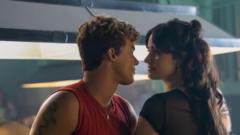
Banks and her cinematographer, Cary Lalonde, didn't want this to look like a documentary. They went the other way. The Young Wild Free film is soaked in color. We’re talking saturated magentas, deep blues, and high-contrast lighting that makes Los Angeles look less like a postcard and more like a neon-lit pressure cooker.
Usually, when we see stories about Black youth in "tough" neighborhoods, directors lean into grit. Desaturated tones. Handheld cameras that shake too much. Here, the style is hyper-stylized. It mimics Brandon’s internal state. When he’s with Cassidy, the world glows. When he’s back in the apartment with his mom, the walls feel like they’re physically leaning in on him. This isn't just "cool" lighting for the sake of it. It’s a narrative tool. You feel the claustrophobia of his poverty vs. the terrifying expanse of the freedom Cassidy offers.
Why the Casting Matters
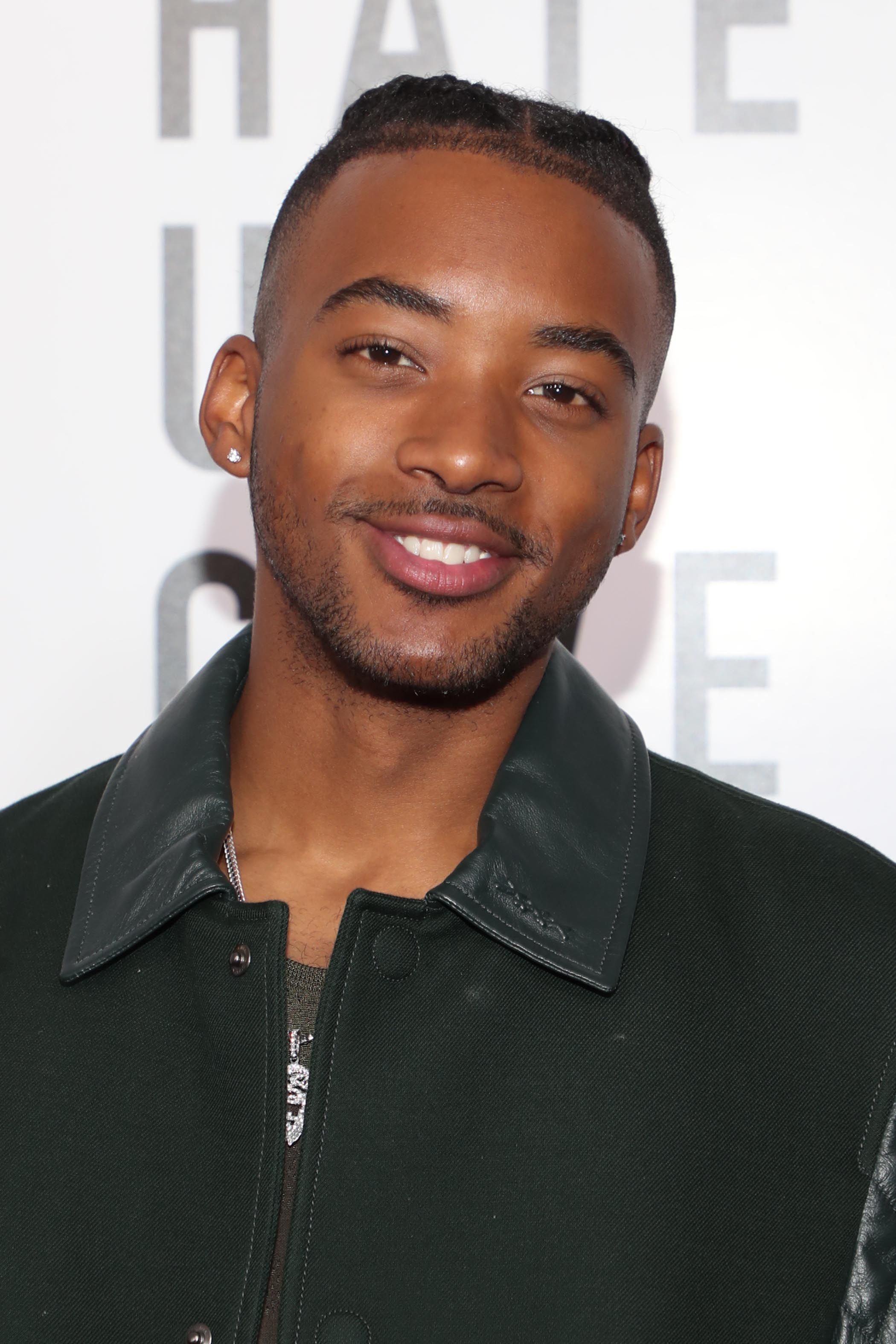
Algee Smith has been on the radar for a while. You probably know him from Euphoria or The Hate U Give. But in this Young Wild Free film, he does something different. He’s quiet. He carries the weight in his shoulders. If you’ve ever had to grow up too fast because your parents couldn't keep it together, you recognize that look in his eyes. It’s the look of someone who is constantly waiting for the other shoe to drop.
Then you have Sanaa Lathan.
People were surprised to see her in this role. She’s an icon of Black cinema—Love & Basketball, Brown Sugar. Seeing her play Janice, a mother who is erratic and clearly suffering from untreated mental illness, is jarring. It’s supposed to be. She’s not a villain, but she’s also not a saint. The film refuses to give her an easy out. It shows how the cycle of trauma just rolls over families when there are no resources to stop it.
Breaking Down the Narrative Risks
The script, co-written by Banks and Juel Taylor (who directed the weird and wonderful They Cloned Tyrone), takes a hard left turn in the second half. This is where the movie lost some people and gained others.
Basically, the film stops being a kitchen-sink drama and turns into a heist-romance.
- Brandon is pushed to his limit at work.
- He meets Cassidy, who is essentially a personification of chaos.
- They embark on a crime spree that feels more like a cry for help than a quest for money.
Some critics at Sundance felt the shift was too jarring. But if you look at it from Brandon's perspective, it makes total sense. When you’ve been "good" your whole life and it has gotten you exactly nowhere—your electricity is still being cut off and your boss is still screaming at you—burning it all down starts to look like a logical career move.
The Influence of 90s Cinema
You can see the DNA of True Romance or Natural Born Killers in the Young Wild Free film. It’s that "us against the world" trope. But by centering it on two Black kids in the hood, the stakes change. For Mickey and Mallory in Natural Born Killers, the violence was almost a philosophical statement. For Brandon and Cassidy, it’s about visibility. It’s about being "young, wild, and free" in a society that usually only allows those things to people with a trust fund or a certain skin tone.
Misconceptions About the Movie
One thing people get wrong is thinking this is a "hood movie." It’s not. It’s an arthouse film that happens to be set in a marginalized community. If you go in expecting Menace II Society, you’re going to be confused.
The pacing is deliberate. It’s dreamy. Sometimes it’s even a bit surreal. There are moments where you aren't quite sure if what you’re seeing is actually happening or if it’s just how Brandon wishes it would happen. This ambiguity is what makes the Young Wild Free film stick in your brain days after the credits roll.
The Reality of Independent Filmmaking in 2026
Getting a movie like this made is a miracle. We’re in an era where studios only want sequels. Macro, the production company behind this, has a track record of backing these kinds of specific, culturally resonant stories (think Mudbound or Judas and the Black Messiah). Without that kind of support, a story about a kid in a laundromat who loses his mind wouldn't get a million-dollar budget for neon lights and 35mm film.
It’s important to support these mid-budget indies. They are the training grounds for the next great directors. Thembi Banks showed she has a voice. Even if the film is messy in parts, it’s her mess. It’s specific. It’s not a movie made by a committee or an algorithm.
Is It Worth a Watch?
Honestly? Yes. Even if you find the ending divisive. The performances alone are worth the price of admission. Sanaa Lathan delivers a masterclass in how to play "unraveling" without turning into a caricature. Algee Smith proves he can carry a film on his back.
It's a reminder that being young is often more about survival than it is about fun. The "wild" part is usually a reaction to being caged. And "free"? Well, the movie suggests that freedom usually comes with a heavy price tag.
Next Steps for Film Lovers
If you want to understand the modern landscape of Black independent cinema, your next step is to track down the Young Wild Free film on streaming platforms or at local independent theaters. After watching, compare it to They Cloned Tyrone—also co-written by Juel Taylor—to see how these creators are blending genre elements (like sci-fi or heist tropes) with serious social commentary. You should also follow the production house Macro on social media; they are currently the most reliable pulse for films that prioritize directorial vision over safe, corporate storytelling. Keep an eye on Thembi Banks' future projects, as her transition from television (directing episodes of Insecure) to feature films marks a significant shift in how visual metaphors are used to portray the Black experience in Los Angeles.