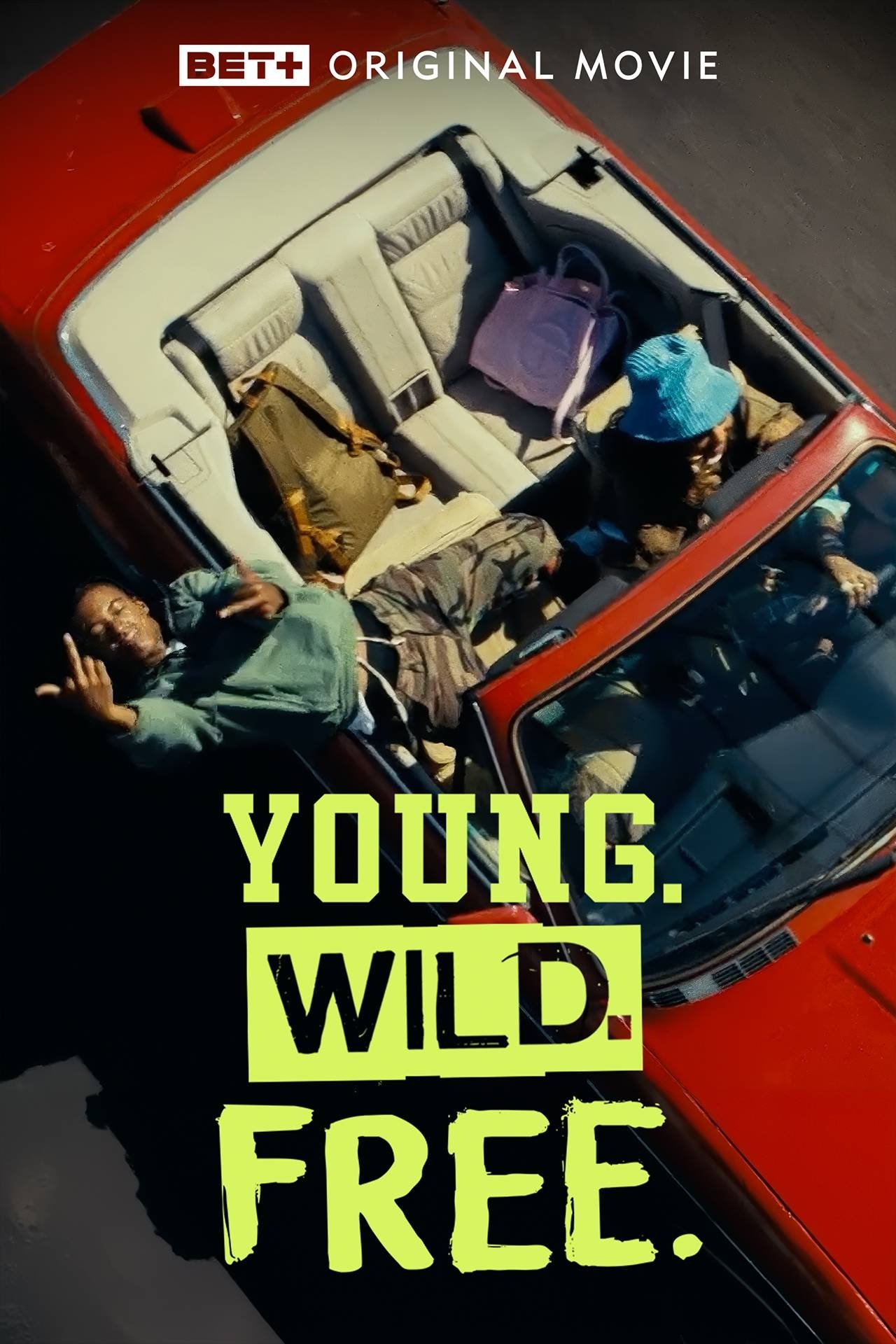
Growing up in the hood is a cinematic trope we’ve seen a thousand times, but the Young Wild Free movie flips the script in a way that feels hallucinatory and grounded all at once. It’s weird. It’s loud. It’s surprisingly quiet when it needs to be. Directed by Thembi Banks, this film made its big splash at the 2023 Sundance Film Festival, and honestly, it’s one of those projects that stays under your skin because it refuses to play by the rules of the "struggle porn" genre.
Brandon is drowning. That’s the core of it. Discover more on a connected issue: this related article.
Algee Smith plays Brandon, a high school senior who’s basically the glue holding his fractured family together in Los Angeles. He’s got a mother dealing with deep mental health struggles (played with a heartbreaking intensity by Sanaa Lathan) and two younger siblings who look to him for everything. The kid is suffocating under the weight of bills, shifts at a soul-crushing job, and the constant hum of survival.
Then enters Marley. More journalism by GQ highlights related views on this issue.
Sierra Capri brings this chaotic, neon-drenched energy to the screen as Marley, a girl who represents everything Brandon isn't allowed to be: reckless. When they meet, it isn't just a romance. It’s a collision. She’s the spark that sets his repressed frustrations on fire, leading them down a path of "Bonnie and Clyde" style escapades that are as much about psychological liberation as they are about breaking the law.
The Visual Language of Young Wild Free
Most directors would shoot a story about a struggling Black teen in grainy, muted tones to emphasize the grit. Thembi Banks went the opposite way. The Young Wild Free movie looks like a fever dream. We're talking saturated purples, deep oranges, and a visual palette that feels more like a music video or a high-fashion editorial than a standard indie drama.
This isn't just for style points.
The vibrancy represents Brandon’s internal world—the "free" part of the title that he’s trying to unlock. It’s a clever bit of storytelling. By making the world look beautiful and surreal, the film highlights the tragedy of Brandon’s situation. He’s surrounded by light and color he can't actually touch because he’s too busy making sure the electricity stays on at home.
The cinematography by Ghasem Ebrahimian is arguably the secret weapon here. There are shots that linger on the mundane—a bus ride, a sink full of dishes—but they are framed with such intentionality that you feel the claustrophobia Brandon feels. Then, when he’s with Marley, the camera moves. It breathes. It feels untethered.
Performance Deep Dive: Algee Smith and Sanaa Lathan
If you haven't been following Algee Smith’s career since The Hate U Give or Euphoria, you’re missing out. He has this incredible ability to communicate a million thoughts through a single blank stare. In the Young Wild Free movie, he has to carry the emotional burden of an adult while maintaining the vulnerability of a kid who just wants to draw in his sketchbook.
It’s a balancing act.
He makes you feel the physical weight of his character's life. You see it in his shoulders. On the flip side, Sanaa Lathan delivers a performance that avoids the "troubled mom" cliches. She isn't a villain. She’s a woman who is genuinely ill, and the love between her and Brandon is palpable even when she’s making his life an absolute nightmare.
Mike Epps also shows up in a role that reminds people he has serious dramatic chops when he wants to use them. He plays Brandon's father, a man who is physically present but emotionally distant, providing a look at the generational cycles that Brandon is desperately trying to break. The scenes between Epps and Smith are tense. They are quiet. They feel like real conversations happening in kitchens across America where words are being used to hide the truth rather than reveal it.
Why This Isn't Just Another Coming-of-Age Story
We talk a lot about "coming-of-age" movies, but usually, that means a kid figuring out who they want to take to prom or getting into their dream college. For Brandon, coming of age means deciding if he’s going to let his environment swallow him whole.
The Young Wild Free movie addresses the specific pressure of "parentification"—when a child is forced to take on the roles and responsibilities of an adult. It’s a heavy theme, yet the movie manages to weave in elements of magical realism and heist-movie tension.
Is it perfect? No. Some critics felt the shift into the more criminal, "wild" aspects of the plot felt a bit jarring compared to the domestic drama of the first act. But isn't that what being a teenager feels like? One minute you’re worrying about your mom’s medication, and the next you’re convinced that running away with a beautiful stranger is the only logical solution to your problems. The tonal shifts reflect the instability of Brandon’s mind.
The Sundance Reception and Cultural Impact
When it premiered at Sundance, the buzz was immediate because of its aesthetic. It felt "new." In a sea of indie films that can sometimes feel repetitive, Banks’ voice stood out as someone who wasn't afraid to be bold.
People often compare it to Queen & Slim or even Euphoria, but that’s a bit of a lazy shortcut. While it shares some DNA with those projects in terms of its "Black Joy vs. Black Pain" exploration, the Young Wild Free movie is more interested in the specific intersection of art and survival. Brandon is an artist. He sees the world through his sketches. The film uses his art as a bridge between his reality and his fantasies, which is something we don't see enough of in stories about young men of color.
Navigating the Themes of Mental Health and Escapism
Escapism is a hell of a drug. Marley is the personification of that drug for Brandon.
The movie asks a really tough question: Is it better to stay and suffer through a "responsible" life, or is it okay to lose yourself in a moment of pure, dangerous freedom? Marley doesn't have the answers. In fact, she’s probably more broken than Brandon is, but she hides it under layers of bravado and glitter.
The depiction of mental health here is nuanced. It’s not just about a diagnosis; it’s about the ripple effect. It’s about the kid who has to miss school because his mom is having an episode. It’s about the shame and the secrecy. By placing these heavy realities alongside the "wild" adventures of the two leads, the film forces the audience to confront the fact that for some people, "acting out" isn't a rebellion—it's a survival mechanism. It’s a way to feel alive when everything else feels like a slow death.
The Soundtrack and Atmospheric Energy
You can’t talk about this film without mentioning the sound. The music is curated to feel like a heartbeat. It pulses through the scenes where Brandon and Marley are driving through the city, making the city of Los Angeles feel like a living, breathing character.
Los Angeles is often portrayed as a place of dreams, but in the Young Wild Free movie, it’s a place of barriers. Highways, fences, locked doors. The music breaks those barriers down. It’s the one place where Brandon can be "free" before the silence of his home life returns.
Practical Takeaways for Fans of the Genre
If you’re planning on watching or have already seen the film, there are a few things to keep in mind to truly appreciate what Banks was trying to do.
First, look at the colors. Every time Brandon is in a space that feels restrictive, the colors are flat. When he’s starting to "break out," the neon creeps in. It’s a visual barometer for his mental state.
Second, pay attention to the sketchbook. The drawings aren't just props; they are a window into how Brandon perceives the people around him. He draws them as more than they are, or sometimes, as less.
Lastly, understand that the ending is polarizing for a reason. It doesn't give you a neat little bow. Life doesn't work that way, especially not for kids in Brandon’s position. The film leaves you in a place of reflection rather than resolution.
How to Support Indie Filmmaking Like This
The Young Wild Free movie represents a shift in how Black stories are told. We are moving away from the "urban drama" boxes of the 90s and into something more experimental and psychological. Supporting these films means:
- Seeking them out on streaming platforms that prioritize indie voices (like MUBI or the Criterion Channel, or catching them during their limited theatrical runs).
- Following the creators. Thembi Banks is a name you’re going to hear a lot more in the next few years.
- Engaging with the discourse. Talk about the themes of mental health and parentification. These are "taboo" topics in many communities, and cinema is one of the best ways to start those conversations.
The Young Wild Free movie is a reminder that even when you’re trapped, your imagination is a territory no one can take from you. It’s a messy, beautiful, flawed, and vibrant piece of work that deserves a spot on your "must-watch" list if you care about the future of American cinema.
Next Steps for the Viewer:
- Check the current availability of Young Wild Free on major VOD platforms like Amazon Prime or Apple TV, as distribution for Sundance hits can sometimes transition quickly between platforms.
- Look up the short films of Thembi Banks to see the evolution of her visual style before she tackled this feature.
- Explore the filmography of Algee Smith, specifically The Hate U Give, to see the range he brings to these "heavy" leading roles.



