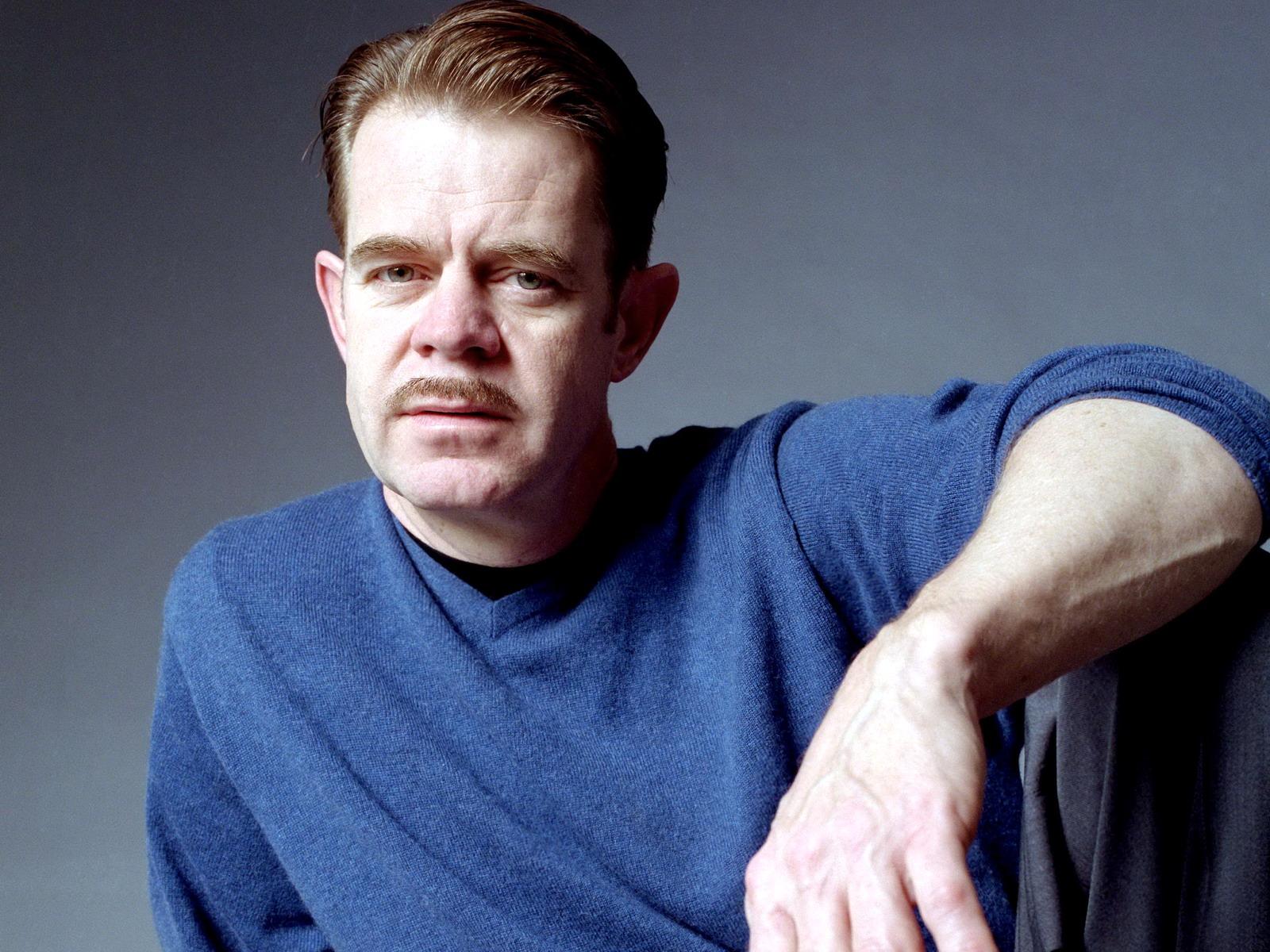
Before he was the chaotic Frank Gallagher or the desperate Jerry Lundegaard, young William H. Macy was a theater rat in a hippie college. People forget that. They see the mustache and the worried brow and assume he stepped out of a 1990s indie flick fully formed. He didn't.
His journey is actually one of the weirdest "slow burns" in Hollywood history.
Honestly, if you look at his 20s and 30s, he wasn't exactly tracking for stardom. He was a character actor before he even knew what a character actor was. He spent a decade doing commercials and avant-garde theater while his peers were landing sitcoms.
It’s kind of wild to think about.
The Goddard Years: Drugs, Sex, and David Mamet
In the late 60s, Macy was a "wretched student" at Bethany College studying veterinary medicine. He hated it. He eventually transferred to Goddard College in Vermont. This place was the capital of counter-culture. No grades. No requirements. Lots of LSD.
It was here he met a young "teaching fellow" named David Mamet.
Mamet wasn't a legend yet. He was just a guy with a very specific, militaristic idea of how people should talk on stage. Macy, along with Steven Schachter, basically became Mamet’s laboratory. They formed a company. They did plays like Sexual Perversity in Chicago when it was still just a raw script.
Macy has joked in interviews that the only reason they worked so hard was that they were bored. There were no rules, and that terrified them. So they invented their own discipline.
The Chicago Grind and the St. Nicholas Theater
After graduating in 1972, the group moved to Chicago. This is where the young William H. Macy really cut his teeth. They founded the St. Nicholas Theater Company.
They weren't making money. They opened a school to pay the rent. Macy was essentially a "scammer" teacher, as he puts it, learning how to act by trying to explain it to others.
During this time, he originated roles that would become iconic in the theater world:
- Bobby in American Buffalo (1975)
- Charles Lang in The Water Engine (1977)
He was known for a "boyish handsomeness" that usually got him cast as the "callow youth" who dies or cries by the end of the show. He was skinny. He had hair. He didn't look like a loser yet; he looked like a poet who might fail his finals.
The "W.H. Macy" Era
By 1980, he moved to New York. He changed his professional name to W.H. Macy to avoid being confused with Bill Macy (from Maude).
His screen debut was tiny. If you blink, you’ll miss him in Somewhere in Time (1980). He plays a theater critic who congratulates Christopher Reeve. That was it.
For the next ten years, he was a "work-a-day" actor. He did over 50 plays. He did a million commercials. He even played a turtle named Socrates in a direct-to-video thing called The Boy Who Loved Trolls.
The Audition That Changed Everything
Most people think Fargo was a lucky break. It wasn't. It was a heist.
Macy was originally called in to read for a tiny role in the Coen Brothers’ film. He saw the script for Jerry Lundegaard and realized, "This is me." He knew it. He felt it in his "jolly Lutheran ass," as he famously said.
When he heard they were still auditioning in New York after he’d already read for them in LA, he flew himself out on his own dime. He crashed the audition.
"I'm scared you're going to screw this up and hire someone else," he told the Coens. He even threatened to shoot their dog (joking, obviously) if they didn't give him the part.
That desperation? That was 25 years of being a "young actor" finally boiling over.
Why We Still Care About Young William H. Macy
The reason his early years matter is because of Practical Aesthetics. That’s the acting technique he developed with Mamet.
It’s not about "finding your motivation" or crying about your dead cat. It’s about action. What are you doing? What do you want?
Macy's early career was a masterclass in being useful. He wasn't waiting to be a star; he was waiting to be an actor.
If you want to understand his craft, don't just watch Shameless. Go back. Look at his bit part in the first-ever produced episode of Law & Order ("Everybody's Favorite Bagman"). Look at his blink-and-you'll-miss-it role in The Last Dragon.
Real World Takeaways
- Embrace the "Slow Burn": Macy didn't "make it" until he was in his mid-40s. If you feel behind, you probably aren't.
- Specialization Wins: His long-term collaboration with Mamet gave him a unique "voice" that nobody else could mimic.
- The "Crashing" Mentality: Sometimes you have to fly to New York and tell the bosses they're about to make a mistake.
To really see the evolution, track down a copy of the 1980 Broadway revival of Our Town or his early work in Kate & Allie. You'll see a man who was already a pro, just waiting for the world to notice the mustache.
Next Steps for Fans:
- Watch Somewhere in Time (1980) specifically to spot his 30-second debut.
- Research the Atlantic Theater Company, which he co-founded; they still teach the Practical Aesthetics method he built in the 70s.
- Check out the original 1994 film version of Oleanna to see him play a role he originated on stage decades prior.



