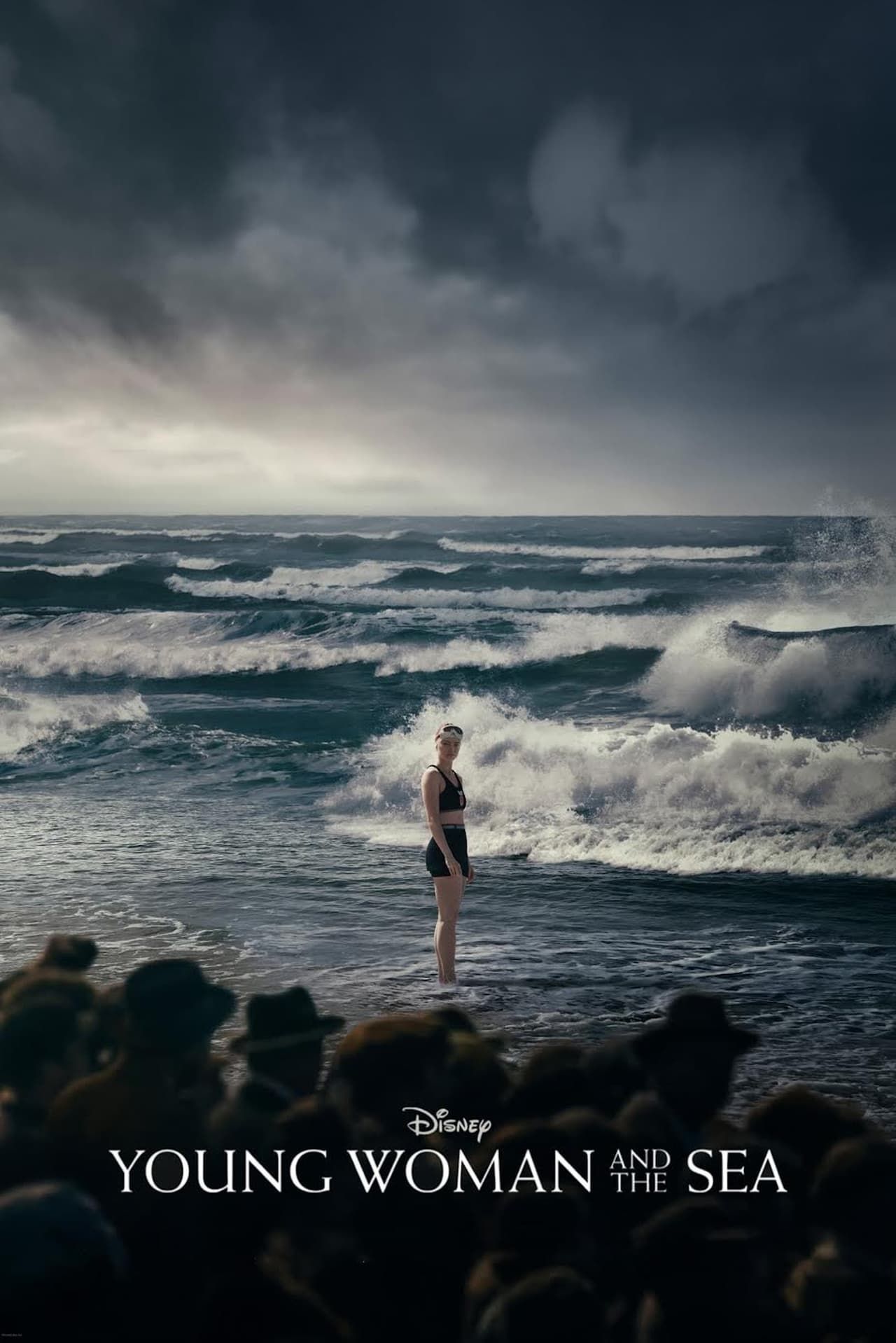
It is wild that almost nobody remembers Gertrude "Trudy" Ederle. In 1926, she was arguably the most famous woman on the planet. People lost their minds when she swam the English Channel. Then, history just kinda... tucked her away in a drawer. Disney’s Young Woman and the Sea movie tries to fix that, and honestly, it’s one of those rare instances where a big-budget biopic doesn't feel like a Wikipedia entry come to life.
Daisy Ridley plays Trudy. You might know her as Rey from Star Wars, but here she’s swapped the lightsaber for a thick coat of sheep’s gall and lanolin. It’s gritty.
The movie isn't just about a girl who likes to swim. It's about a daughter of German immigrants in New York who survives measles and is told by her father and the entire sporting establishment that she’ll literally die if she tries to cross the Channel. In the 1920s, the medical "consensus" was that women were physically incapable of such endurance. The Young Woman and the Sea movie captures that suffocating social pressure perfectly. It’s not just the water that’s trying to drown her; it’s the era itself.
The Real History Behind Young Woman and the Sea Movie
Movies usually fake the drama. They add a love interest or a fake villain to keep you watching. But with the Young Woman and the Sea movie, the reality was actually more intense than what you see on screen.
Trudy Ederle didn’t just beat the record for swimming the English Channel. She absolutely demolished it. She swam from France to England in 14 hours and 34 minutes. To put that in perspective, the men's record at the time was over 16 hours. She wasn't just "good for a girl." She was the best, period.
The film focuses heavily on her first attempt, which was a total disaster. Her coach, Jabez Wolffe, was... well, he was a bit of a nightmare. He had tried and failed to swim the Channel 22 times himself. Some historians believe he actually tried to sabotage Trudy by ordering her out of the water when she was resting, which disqualified her. The movie leans into this friction. It highlights the specialized cruelty of a man who couldn't achieve something and didn't want a woman to achieve it either.
Why the Cinematography Matters
Director Joachim Rønning didn't go for the CGI look. Thank god.
When you watch Ridley struggling through the waves, you’re seeing real water, real cold, and real exhaustion. They filmed in the Black Sea. It looks freezing. It looks murky. You can almost feel the salt stinging your eyes. This choice makes the Young Woman and the Sea movie feel more like a survival thriller than a standard sports flick.
The sound design is also incredible. It’s mostly the rhythmic, suffocating sound of splashing and heavy breathing. It puts you in Trudy’s head. You feel the loneliness of being miles from shore in the middle of the night.
Breaking Down the Cast and Performances
Daisy Ridley is the heartbeat here. She brings this stubborn, wide-eyed persistence to the role that feels authentic. She’s not playing a "girl boss" archetype; she’s playing a woman who just really, really wants to swim and is annoyed that everyone is in her way.
Then you have Christopher Eccleston. He plays Jabez Wolffe with this subtle, simmering resentment. He’s great.
Tilda Cobham-Hervey plays Trudy’s sister, Meg. Their relationship is the emotional anchor. In a world where men are constantly saying "no," Meg is the one saying "why not?" It’s a quiet performance, but it’s the reason the ending hits so hard. If you don't care about the family, the swim is just a long exercise in cardio. But you do care.
What the Young Woman and the Sea Movie Gets Right About the 1920s
The costumes and production design are spot on without being "costumey." You see the transition from the heavy, woolen swimsuits that weighed twenty pounds when wet to the streamlined silk suits Trudy eventually used.
- She had to coat herself in grease to prevent chafing and hypothermia.
- The tides in the English Channel are famously treacherous.
- Jellyfish stings were a constant threat.
The Young Woman and the Sea movie doesn't shy away from the physical toll. Trudy’s face gets blistered. Her tongue swells from the salt water. It’s gross and visceral, and it makes her eventual arrival on the beach in Kingsdown feel earned.
Comparisons to Other Sports Biopics
Most sports movies follow the same beat: the underdog, the training montage, the setback, the big win.
This movie follows that structure too, but it feels fresher because the stakes aren't just a trophy. For Trudy, the stakes were her own identity. If she failed, she proved the skeptics right—that women were "the weaker sex." The pressure was astronomical.
Compare this to something like Nyad. Both involve grueling swims, but Young Woman and the Sea has a different texture. It’s more of a period piece. It’s about the birth of the modern female athlete.
The Cultural Impact of Gertrude Ederle
After she finished her swim, Trudy got a ticker-tape parade in New York City. Two million people showed up. That’s more than showed up for the astronauts or the returning soldiers of WWI.
She was a rockstar.
But the tragedy, which the Young Woman and the Sea movie touches on in its spirit, is how quickly she went deaf due to the salt water and her childhood illness. She spent the rest of her life teaching deaf children how to swim. She didn't chase the fame. She didn't become a Hollywood star, though she had the chance. She stayed true to the water.
Is It Worth a Watch?
Honestly? Yeah. Even if you aren't into swimming.
The movie is a reminder that history is written by the people who show up, even when they’re told they aren't allowed to. It’s a beautifully shot, well-acted piece of cinema that finally gives a pioneer her due. It’s streaming on Disney+, but it feels like a "big screen" movie.
If you're looking for something that isn't a superhero sequel or a gritty true-crime documentary, this is your best bet. It’s inspiring without being cheesy. It’s tough. It’s blue. It’s wet.
Practical Steps for Fans of the Story
If you watched the Young Woman and the Sea movie and want to dive deeper into the history or the sport, here is what you should do next:
- Read the Book: The movie is based on the book Young Woman and the Sea by Glenn Stout. It contains way more detail about the technical aspects of the swim and the internal politics of the US Olympic team at the time.
- Check Out the International Swimming Hall of Fame: They have a massive archive on Ederle, including photos of her original equipment and the "grease" she used.
- Look Up the Channel Swimming Association: If you think the swim looks easy now, look at the current rules. No wetsuits allowed. It’s still one of the hardest physical feats on earth.
- Visit the 135th Street Bathhouse: In New York, you can still see where Trudy trained. It’s a tangible link to a woman who changed sports forever.
The Young Woman and the Sea movie isn't just a movie about a swim. It’s a movie about the moment the world realized that "limits" are usually just things men made up to keep things quiet. Trudy Ederle made a lot of noise. And she’s finally being heard again.
Actionable Takeaway
To fully appreciate the legacy shown in the film, compare Trudy Ederle's 1926 time ($14:34$) with the modern world record for the English Channel. You'll find that despite a century of advances in nutrition, sports science, and technique, her performance remains staggeringly competitive. Her bravery paved the way for the Women’s Swimming Association (WSA) to become a powerhouse in global athletics. Support modern women’s marathon swimming by following organizations like the Marathon Swimmers Federation, which continues to document these incredible feats of human endurance.