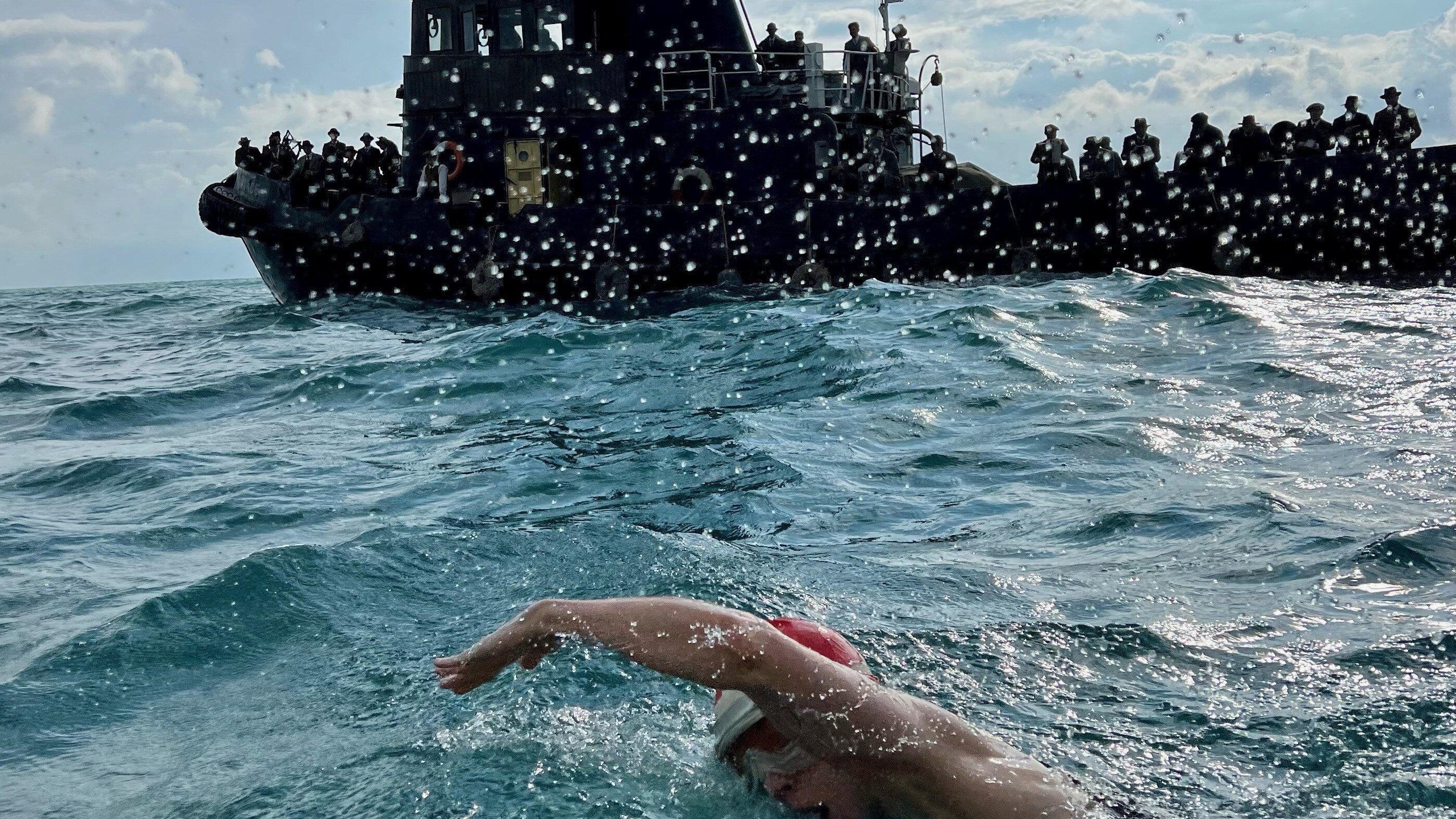
People usually forget that before the Olympics became a multi-billion dollar spectacle, sports were a battlefield for basic human rights. Honestly, if you pick up the Young Women and the Sea book by Glenn Stout, you’re not just reading a sports biography. You’re looking at a time when experts—actual medical doctors—claimed that a woman’s internal organs would literally collapse if she tried to swim a long distance.
It sounds ridiculous now.
But in the early 1920s, that was the "science" of the day. Trudy Ederle didn't just want to swim; she had to fight a culture that viewed her body as inherently fragile. Stout’s book captures this tension perfectly, detailing how a shy, hard-of-hearing girl from a German butcher shop in Manhattan became the most famous woman in the world by doing something everyone said would kill her.
The Reality Behind the Young Women and the Sea Book
Most people know the broad strokes: Gertrude Ederle swam the English Channel in 1926. What the Young Women and the Sea book clarifies is that she wasn't just the first woman to do it—she absolutely crushed the existing men's record. She swam it in 14 hours and 31 minutes. That wasn't just a "good for a girl" moment. She beat the fastest man’s time by more than two hours.
The book isn't just about the swim, though. Glenn Stout spends a lot of time on the systemic hurdles. Imagine trying to train when you're not allowed to swim in most public pools because it's considered "indecent." Or trying to get funding when sponsors think you're a guaranteed failure.
Trudy had a failed first attempt in 1925. People used that failure to "prove" women couldn't handle the Channel. They said she lacked the stamina. They blamed her gender instead of the fact that her coach, Jabez Wolffe, allegedly tried to pull her out of the water when she wasn't actually in trouble. Some even suspect he sabotaged her because he didn't want a woman to succeed where he had failed twenty-two times.
Why the 1920s Context Changes Everything
You have to understand the sheer physical brutality of this. The English Channel is a nightmare. It’s not just the 21 miles; it’s the shifting tides that can turn 21 miles into 35. It’s the jellyfish. It’s the 60-degree water that induces hypothermia.
In the Young Women and the Sea book, Stout describes the "greasing" process. Trudy was slathered in layers of sheep grease, lard, and olive oil to protect her skin from the salt and the cold. She wore goggles sealed with paraffin. She was basically a human engine encased in fat, fighting waves that felt like concrete walls.
The Competition You Didn't Know About
Trudy wasn't alone in the water that year. 1926 was basically the "Space Race" of swimming. There were other women, like Mille Gade Corson and Lillian Cannon, who were also vying for the title. The media turned it into a circus.
- The Sponsorship War: Newspapers like the Chicago Tribune and the New York Daily News were literally buying exclusive rights to these women's stories.
- The Equipment: Trudy and her sister Meg designed a two-piece swimsuit, which was scandalous at the time, but necessary because traditional one-piece wool suits became heavy and caused horrific chafing when soaked in salt water.
- The Internal Stakes: If she failed again, her father, who had bet heavily on her, would have been financially ruined.
What Most People Get Wrong About Trudy Ederle
A common misconception is that Trudy was some kind of "natural" who just jumped in and swam. She was a powerhouse, sure, but she was also struggling with significant hearing loss caused by a childhood bout of measles. Doctors told her that swimming would make her permanently deaf.
She went anyway.
She chose the sea over her hearing. By the time she finished her career, she was almost entirely deaf, a sacrifice she acknowledged was the price of her fame. It’s this kind of nuance in the Young Women and the Sea book that makes it better than a standard "inspiring" sports flick. It’s a bit darker and more costly than the Disney version suggests.
The Cultural Explosion
When she returned to New York, the ticker-tape parade was bigger than the one for the soldiers returning from World War I. Two million people showed up.
Why? Because she had physically debunked the idea of female inferiority. You couldn't argue with a stopwatch. You couldn't "mansplain" away a two-hour lead over the world's best male swimmers. She changed the way physical education was taught in schools. Suddenly, swimming wasn't just "bathing"—it was a sport for women.
Glenn Stout’s Research Method
Stout is known for being a bit of a stickler for the "real" story. He didn't just rely on old newspaper clippings, which were often sensationalized or flat-out wrong. He dug into the logistics of the tides and the actual navigation used by Trudy’s pilot boat, the Alsace.
The book highlights how close she came to drifting off course and how her father and sister stood on the deck of the boat, singing songs and shouting to keep her conscious as she became delirious from the cold in the final miles. It wasn't a graceful swim. It was a grind.
Moving Beyond the Page: How to Engage with This History
If you're interested in the legacy of these athletes, reading the Young Women and the Sea book is the first step, but the history is still visible today if you know where to look.
1. Visit the International Swimming Hall of Fame. They hold many of the original artifacts from the 1926 swim, including the goggles and suits that changed the sport. Seeing the actual gear makes you realize how primitive the technology was compared to today's carbon-fiber suits.
2. Compare the Media Narrative. Check out the archives of the New York Times from August 1926. Seeing the shift in tone—from skepticism to worshipful praise—is a masterclass in how society reacts when a "status quo" is shattered.
3. Watch the 2024 Film Adaptation. While the movie (starring Daisy Ridley) takes some creative liberties for drama, it captures the visual claustrophobia of the Channel. Use the book as your factual anchor to see where Hollywood "spiced things up."
4. Support Modern Open-Water Swimming. The "Triple Crown of Open Water Swimming" (the English Channel, the Catalina Channel, and the Manhattan Island Marathon) exists because of the path paved by Ederle and her contemporaries.
Trudy Ederle didn't just cross a body of water. She crossed a threshold in human history. The Young Women and the Sea book serves as a necessary reminder that progress isn't a slow, natural drift—it’s something you have to swim toward, even when the tide is trying to push you back to the start.



