Fashion trends are weirdly cyclical. You see something disappear for a decade, and then suddenly, it’s everywhere again on TikTok or in some high-end boutique in Soho. Honestly, nothing fits this pattern quite like the way young women in mini skirts have defined specific eras of rebellion and personal style. It isn't just about a piece of fabric being short. It's about what happens when culture shifts.
The hemline index is a real thing. George Taylor, an economist, proposed it back in 1926. The theory suggests that hemlines go up when the economy is booming and down when things get rough. Look at the 1920s or the 1960s. High hemlines, high energy. It's a bit of a simplified view, but it holds some water when you look at how fashion history has played out over the last century.
The Cultural Impact of Young Women in Mini Skirts
We have to talk about Mary Quant. She’s often credited with "inventing" the mini skirt in London during the mid-60s, though André Courrèges might have a bone to pick with that. Quant named it after her favorite car, the Mini. It wasn't just a garment; it was a refusal to dress like their mothers. Before this, young women basically wore smaller versions of adult clothing. They looked like "little ladies." The mini skirt changed that overnight. It was youthful. It was slightly defiant. It was practical for dancing at the Marquee Club.
The 1960s wasn't just about fabric. It was about the Pill. It was about the transition from the silent generation to the boomers. When you see photos of young women in mini skirts from 1966, you’re seeing a generation that finally felt they owned their own bodies.
How Gen Z Redefined the Micro-Mini
Fast forward to the early 2020s. We saw the return of the "Y2K" aesthetic. Miu Miu released that viral micro-mini skirt in their Spring/Summer 2022 collection, and suddenly, the internet lost its mind. It was barely a belt. But it signaled a massive shift away from the "athleisure" dominance of the late 2010s. People were tired of leggings. They wanted to feel like they were "going out" again.
Social media changed the game. Algorithms on Instagram and TikTok prioritize high-contrast, visually striking silhouettes. A mini skirt provides that. It creates a long leg line. It looks good in a 15-second transition video. But there's also a layer of irony now. Today’s young women in mini skirts are often pairing them with oversized blazers or chunky loafers—it's a mix of "hyper-feminine" and "utilitarian."
Why the Mini Skirt Remains Controversial
It’s just a skirt, right? Not really. In 1968, there were protests in some countries over hemlines being "indecent." In 2024 and 2025, we still see debates about dress codes in schools and workplaces. There’s this weird tension between personal expression and societal expectation. Some people see it as empowering—a "reclaiming" of the gaze. Others see it as a product of fast fashion marketing that pushes "trends" over longevity.
Let’s look at the "Coquette" or "Old Money" aesthetics that took over Pinterest recently. These styles rely heavily on pleated tennis skirts or tweed minis. It’s a very specific look. It’s about looking "put together" while still being playful.
The Sustainability Problem
We can't ignore the elephant in the room: Fast fashion. Brands like Shein or Zara can produce a new "viral" mini skirt in weeks. This means young women in mini skirts are often participating in a cycle that is pretty brutal for the environment. Polyester doesn't breathe. It doesn't last. The sheer volume of discarded trend-pieces is staggering.
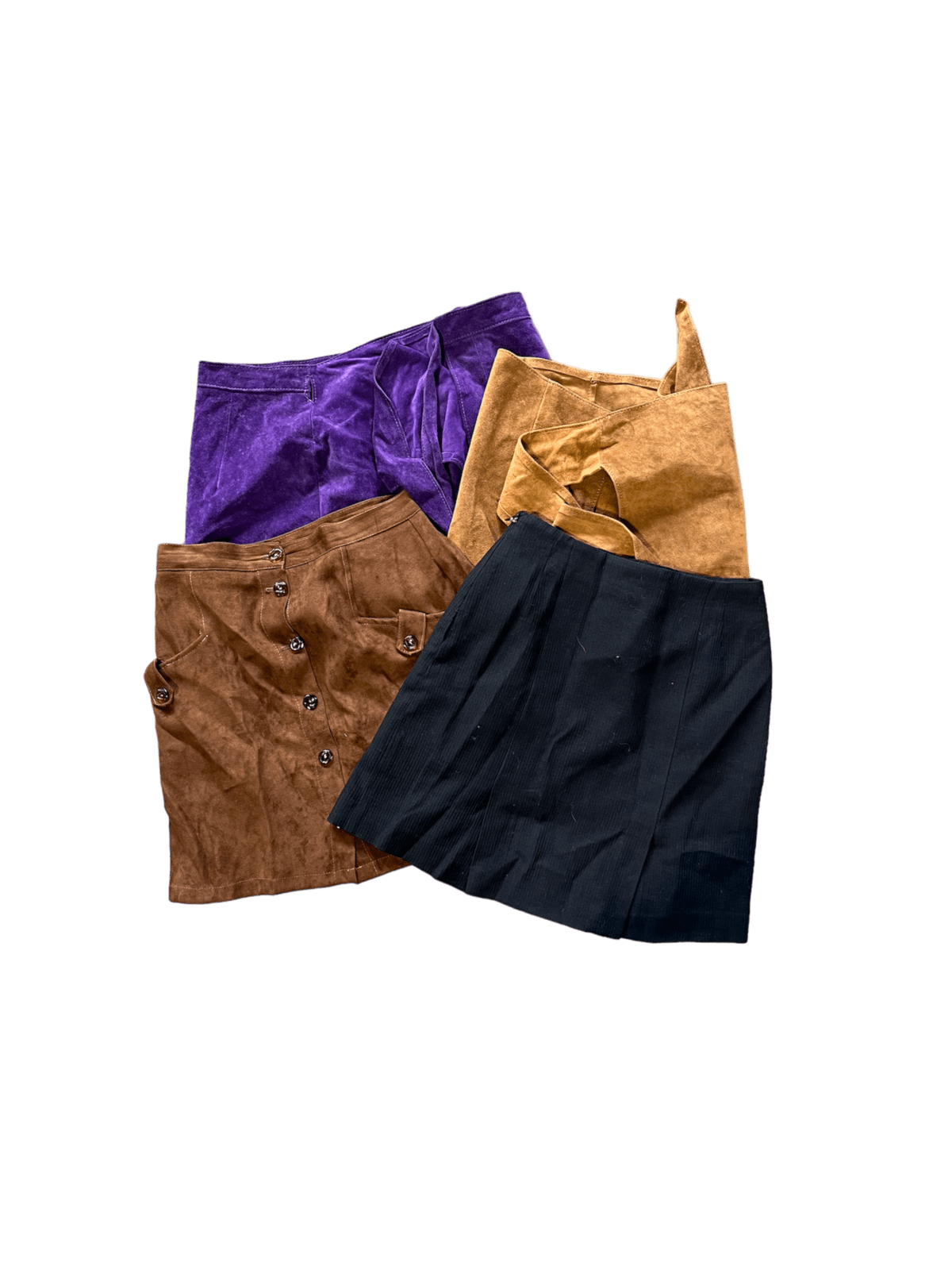
On the flip side, the thrift economy is booming. Depop and Poshmark are filled with vintage mini skirts from the 90s. This is where the real style happens. Finding a vintage leather mini or a 70s A-line skirt is a badge of honor for Gen Z. It’s about "curation" rather than just "consumption."
Real Talk: Practicality and Comfort
Let’s be real for a second. Mini skirts can be annoying. You can’t sit down easily on a subway seat. You’re constantly tugging at the hem. In the winter, you’re essentially relying on the sheer willpower of 80-denier tights to keep from freezing. So why do people keep wearing them?
Because of the silhouette.
Standard styling advice usually suggests a "balance of proportions." If you're wearing a mini skirt, maybe you wear a turtleneck or a long-sleeve top. It’s about creating a visual story. You’ve probably noticed that the most successful outfits aren't the ones that follow "rules," but the ones that lean into the specific vibe of the wearer.
- The A-line: Good for a 60s/70s retro feel. Usually stiffer fabric like denim or wool.
- The Pleated/Tennis: Very 90s/Y2K. Often seen with sneakers and white socks.
- The Bodycon: Think early 2010s "indie sleaze" revival. Usually stretchy.
- The Wrap Skirt: A bit more mature, often seen in linen for summer.
Common Misconceptions About the Trend
One big myth is that the mini skirt is only for a specific body type. That's nonsense. The "body positivity" movement has largely dismantled the idea that you need "model legs" to wear a short skirt. Styling is what matters. Confidence is a cliché, but it’s a cliché for a reason.
Another misconception? That it’s purely "male gaze" fashion. If you talk to most young women in mini skirts, they'll tell you they’re dressing for themselves or for their friends. It’s about the outfit. It’s about the way the colors work together. It’s about feeling like a character in your own life.
How to Style a Mini Skirt in 2026
If you're looking to integrate this into a modern wardrobe, the key is the footwear. In the 60s, it was go-go boots. In the 90s, it was Doc Martens. Now? It’s often a "dad sneaker" or a very sleek, pointed-toe kitten heel.
- Layering is vital. Wear a long coat that is actually longer than the skirt. It creates a cool "flasher" silhouette that is very trendy right now.
- Tonal looks. Wearing a mini skirt in the exact same color as your sweater makes the outfit look expensive.
- Textures. Mix a leather skirt with a fluffy mohair knit. The contrast makes it look like you put in effort, even if you didn't.
The Role of Gender Fluidity
We're also seeing a shift where "mini" isn't just for women anymore. Fashion is becoming increasingly degendered. Men in skirts—mini or otherwise—have been showing up on runways from Dior to Thom Browne. This actually reinforces the mini skirt's original purpose: to challenge the status quo.
Actionable Next Steps for Your Wardrobe
If you want to pull this off without feeling like you're wearing a costume, start with a high-quality A-line skirt in a neutral color like navy or charcoal. These fabrics—think heavy cotton or a wool blend—don't ride up as much as flimsy fast-fashion pieces.
Invest in "safety shorts" or "bike shorts" to wear underneath. It’s a game-changer for comfort and confidence. You don't want to be thinking about your hemline every time you move.
Finally, check the "Care" label. Real vintage skirts often need dry cleaning or a cold hand-wash. Taking care of the fabric ensures the skirt hangs correctly. A cheap, wrinkled skirt will never look as good as one that’s been properly steamed.
Fashion isn't just about what's "in." It's about how you use those pieces to tell people who you are before you even open your mouth. The mini skirt is just a tool in that kit. It’s a bold one, sure. But it’s been around for sixty years for a reason. It’s not going anywhere.



