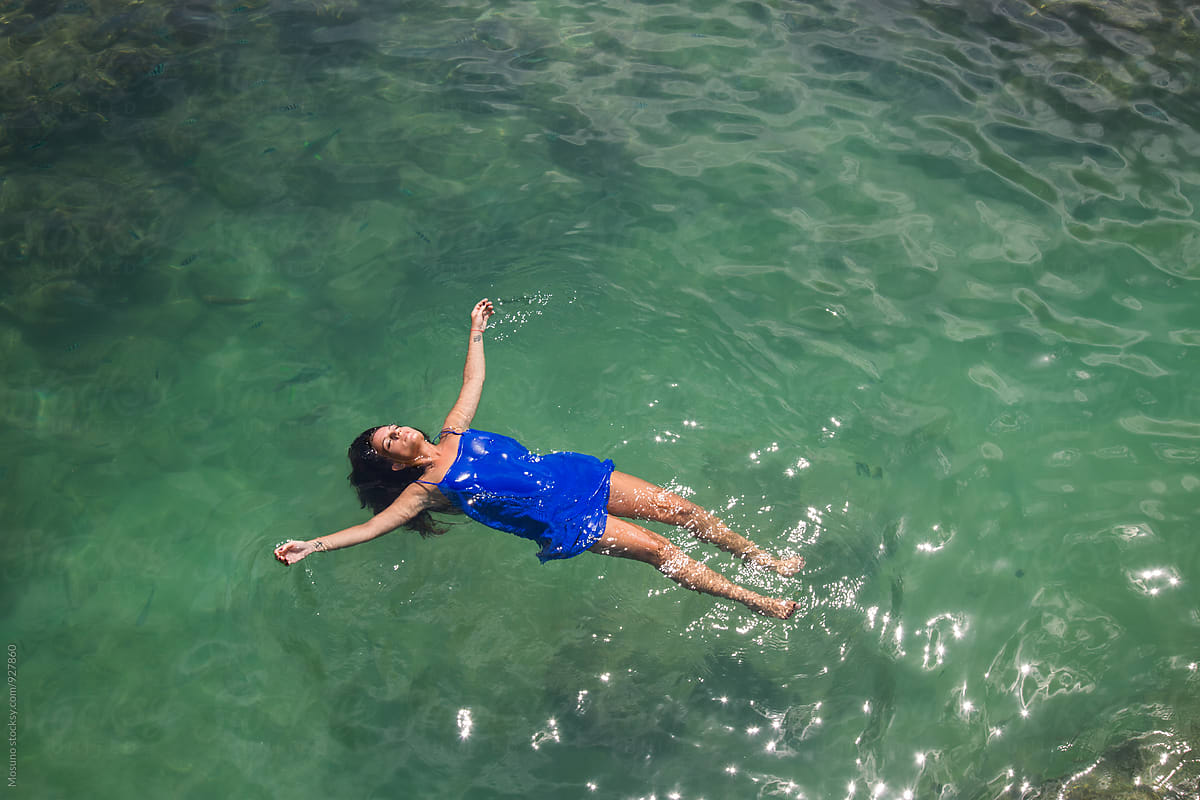
The water is freezing. If you've ever stood on a beach in Northern California or the Atlantic coast of France in January, you know that bone-chilling, gray-blue pull of the tide. For a long time, the narrative of young women in the sea was mostly confined to postcards or highly stylized competitive surfing films. It was a niche. A specific, often sexualized "aesthetic."
But things have shifted. Honestly, it’s about time.
We are seeing a massive, uncoordinated, yet global movement of women under 30 reclaiming marine spaces. This isn't just about "getting a hobby." It’s a radical shift in how we view risk, biology, and environmental stewardship. From the "Haenyeo" traditions in Korea being revitalized by a younger generation to the explosion of female-led freediving communities in the Red Sea, the ocean is no longer a "boys' club" playground. It's becoming a primary site for mental health recovery and scientific discovery.
The Science of Why We Go Under
It’s not just "vibes." There is actual, hard data behind why young women in the sea are reporting better mental health outcomes than their land-locked peers. Dr. Wallace J. Nichols, author of Blue Mind, spent years documenting how being near, in, or under water can lower cortisol.
Think about the mammalian dive reflex.
When you submerge your face in cold water, your heart rate slows down. Blood moves from your limbs to your core. Your brain enters a state of focused calm that is almost impossible to replicate in a cubicle or a gym. For young women navigating a 2026 digital landscape that is—let's be real—pretty exhausting, the ocean offers the only place where you can't check a notification. You can't even breathe unless you're intentional about it.
It’s a forced meditation.
I talked to a freediver in Dahab last year who told me that the sea was the only place she felt "weightless," both physically and emotionally. She isn't alone. Scientific surveys from the International Journal of Environmental Research and Public Health have shown that blue spaces (aquatic environments) are often more effective for psychological restoration than green spaces (forests).
Breaking the Surfing Glass Ceiling
For decades, the image of women in the water was heavily curated. You had to look a certain way. You had to wear a certain brand of bikini. If you weren't "pro," you were basically invisible.
That's dead now.
Groups like Black Girls Surf and various "surf sister" collectives in Cornwall and Byron Bay have dismantled the idea that the ocean belongs to a specific demographic. They’ve proven that young women in the sea come in every shape, color, and skill level. We are seeing a surge in "longboard soul logging"—a style of surfing that prioritizes grace and flow over the aggressive, high-performance "shredding" that dominated the 90s and 2000s.
It’s more inclusive. It’s also just more fun.
The equipment is changing too. Wetsuit technology has finally caught up to the female anatomy. It sounds like a small detail, but if your suit doesn't fit, you get cold. If you’re cold, you leave. By designing gear that actually works for women’s bodies—accounting for different hip-to-waist ratios and thermal needs—brands are literally keeping women in the water longer.
The Rise of the Citizen Scientist
We can't talk about young women in the sea without talking about the climate.
This generation isn't just swimming; they’re documenting. Take a look at the work being done by coral restoration teams in the Maldives or the Great Barrier Reef. A huge percentage of the boots-on-the-ground (or fins-on-the-reef) workers are women in their 20s. They are out there planting heat-resistant coral fragments and tracking sea turtle migrations.
They aren't waiting for a PhD to start helping.
With the rise of high-quality underwater housing for iPhones and affordable action cameras, citizen science has exploded. A young woman snorkeling in a seagrass meadow in Florida can now upload geotagged photos of manatees to databases that researchers actually use. This isn't just "content." It’s a massive, distributed data-collection network.
The Physical Reality: It’s Not All Sunsets
Let’s get real for a second. The ocean is dangerous.
There’s a misconception that because we see beautiful photos of young women in the sea on social media, the experience is always serene. It’s not. It’s salt in your sinuses. It’s "surfer's ear" (exostosis), where your ear canal grows extra bone to protect itself from cold water. It’s jellyfish stings that welt for days.
There is a gritty resilience required here.
Freediving, in particular, requires a level of physical discipline that is frankly intimidating. You are training your body to tolerate high levels of CO2 while holding your breath at 20 or 30 meters. It’s a sport of margins. One mistake with your buoyancy or your equalization, and you’re in trouble. But that’s exactly why it’s growing. In a world that often treats young women as fragile, the sea treats them as capable. The ocean doesn't care about your makeup or your follower count. It only cares if you can handle the swell.
Cultural Shifts and the "New Wave"
In places like Sri Lanka and Morocco, cultural norms are shifting in real-time. Ten years ago, you wouldn't see many local young women in the lineup. Today, female-led surf schools are popping up in Arugam Bay and Taghazout. These women are navigating the complex intersection of tradition and a new, ocean-centric lifestyle. They are becoming business owners, instructors, and environmental advocates in their own communities.
It’s a global "blue" economy.
And it’s being fueled by a desire for authentic experience over material goods. Most young women in the sea would rather spend their money on a plane ticket to a remote break or a high-quality 4/3mm wetsuit than on a designer handbag. It’s a shift in values.
Practical Steps for Entering the Blue
If you’re looking to get involved, don't just buy a board and paddle out into a crowded break. That’s a recipe for an injury or a very frustrated local.
- Find a Community: Look for local "Salty Girls" or "Women in Ocean Science" groups. Having a "surf buddy" isn't just about socializing; it's a critical safety measure.
- Invest in the Right Gear: Don't skimp on your wetsuit. A "cheap" suit will leak, and once you're shivering, your session is over. Look for brands like Patagonia or Billabong's sustainable lines that use Yulex (natural rubber) instead of neoprene.
- Learn the Etiquette: The ocean has unwritten rules. Don't "drop in" on someone else's wave. Understand how to read a tide chart and a swell forecast (apps like Surfline or Magicseaweed are essentials, not extras).
- Start Small: Snorkeling is a gateway drug. You don't need to be a pro surfer to have a relationship with the sea. Just getting your head under the surface and watching the kelp sway is enough to trigger that "Blue Mind" effect.
- Respect the Power: Always check the Rip Current conditions. If in doubt, don't go out. The sea is a teacher, but she can be a very harsh one.
The reality of young women in the sea today is one of empowerment, grit, and a very deep, very real connection to the planet. It’s a movement that is literally changing the face of our coastlines. Whether it's through sport, science, or simple recreation, the gender gap in the water is evaporating.
Get a good suit. Watch the tides. Just get in.
Next Steps for Ocean Advocacy: To move from a casual swimmer to a protector of the blue, consider joining a local chapter of the Surfrider Foundation or Oceana. These organizations provide the infrastructure to turn your love for the sea into policy changes, such as banning single-use plastics or protecting local marine reserves. You can also contribute to global databases by using the iNaturalist app to record marine life sightings during your next dive or surf session.