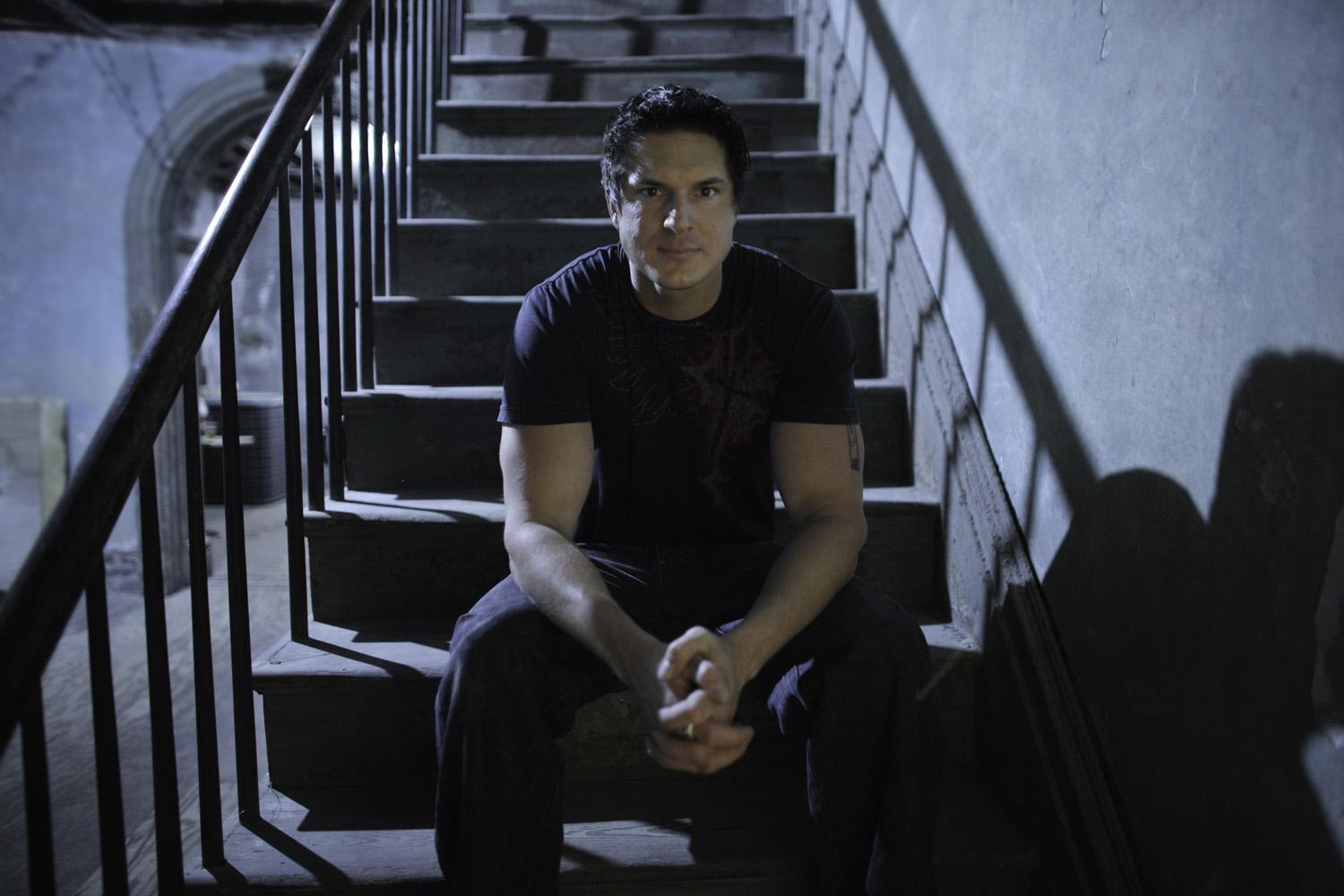
Before the black t-shirts, the dramatic lockdowns, and the "demon" tattoos, there was just a kid named Zachary Alexander Bagans. If you only know him as the guy who shouts at spirits in the dark, you’re basically missing the weirdest parts of his story. Honestly, the way he got started is way less "Hollywood" and way more "suburban Michigan struggle" than most fans realize.
Young Zak Bagans wasn't some lifelong ghost hunter. He wasn't born into a family of psychics or obsessed with the occult from the cradle. In fact, for a long time, he was a total skeptic. He was just a guy trying to figure out if he should be a weatherman or a DJ.
The Glen Ellyn Years and the "Old Soul"
Zak grew up mostly in Glen Ellyn, Illinois. It's a pretty quiet, standard Midwestern suburb. You've probably seen those old photos of him—tall, lanky, maybe a bit more "90s jock" than "paranormal investigator." He actually described himself as an "old soul" back then. He was obsessed with history. He spent a lot of time at Cubs games and working at a Sportmart, where he apparently had a talent for sharpening ice skates and drilling holes in bowling balls.
It sounds normal, right? But even then, things were kinda weird.
There’s this story he tells about being on Munger Road in Bartlett with his friends. They were looking for a "disappearing farmhouse." They saw it, complete with a glowing red light inside, and then—poof—it was gone. That was the first time the paranormal really poked its head into his life. He didn't run out and buy an EVP recorder, though. He mostly just got freaked out and went back to his life.
The Career Path You Didn't Expect
Most people think Zak went straight into film because he wanted to catch ghosts. Not really. After graduating from Glenbard West High School in 1995, he actually went to Western Michigan University. He lasted about two weeks.
He just couldn't do the traditional four-year college thing. He needed to be doing something active. Eventually, he landed at the Motion Picture Institute in Michigan to study documentary filmmaking. This is where he actually learned the skills that would later make Ghost Adventures look the way it does. He graduated with honors, and his final project was a film called The Red Butterfly.
But here’s the kicker: his "day jobs" were all over the place. He was a valet. A landscaper. He even sold urinal supplies and sanitary services. Think about that next time you see him in a haunted asylum.
Oh, and he was a wedding DJ. He went by "Vegas Voltage." He played so many weddings that to this day, he says the song "Celebration" makes him feel physically nauseous.
2002: The Night in Trenton That Changed Everything
If you want to know when young Zak Bagans stopped being a skeptic, you have to look at 2002. He was living in an apartment in Trenton, Michigan.
One night, he woke up at 3:00 a.m. to the sound of a woman screaming his name. Zachary. This happened for a week straight. On the final night, he felt like he was being pinned down—basically sleep paralysis, but with a visual. He saw a woman standing at the corner of his bed.
He later found out a woman had taken her own life in that exact bathroom right before he moved in.
That was it. That was the "lightbulb" moment. He didn't want to just be a filmmaker anymore; he wanted to prove that what he saw was real. He wasn't looking for fame at first; he was looking for validation. He felt like he was losing his mind, and the only way to stay sane was to find evidence that spirits existed.
The Birth of the GAC
In 2004, Zak was still working as a DJ in Las Vegas. That’s where he met Nick Groff. Nick actually hired Zak to DJ his wedding. They hit it off over their shared interest in the paranormal, brought in Aaron Goodwin to handle the cameras, and decided to film a documentary.
They weren't a big TV crew. They were just three guys in a silver van with a bunch of equipment they barely knew how to use. They spent years traveling to places like Virginia City and the Goldfield Hotel, sleeping in their cars and getting kicked out of places.
When they finally finished the Ghost Adventures documentary in 2006, they didn't have a TV deal. They had to hustle. It eventually aired on the Sci-Fi Channel in 2007, and the rest—the 25+ seasons, the museum, the spin-offs—is history.
Why the Early Years Matter
Looking back at young Zak Bagans, you see a guy who was actually quite vulnerable. He’s been open about struggling with anxiety and panic attacks his whole life. The aggressive "come at me, bro" persona he developed on TV was, in many ways, a defense mechanism. He was a former skeptic who got scared half to death in his own bedroom and decided to fight back.
He wasn't always the "dark" figure people see now. In the early seasons, he was much more playful. He joked around with Aaron. He went white-water rafting. He seemed like a guy having an adventure with his friends. It was only later, after years of "attachments" and investigating places like the Demon House, that he became the more serious, sometimes polarizing figure we see today.
Actionable Insights for Fans and Researchers
If you're interested in the trajectory of the paranormal field or just a fan of the show, here’s how to look at Zak's early life through a practical lens:
- Study the Tech Evolution: If you watch the original 2004 documentary, look at the equipment. It’s mostly basic digital cameras and analog recorders. Seeing how Zak moved from "amateur filmmaker" to "tech pioneer" shows how much the field has changed.
- Understand the "Skeptic to Believer" Pipeline: Zak’s story is a classic example of how a personal, unexplainable experience can completely flip someone's worldview. It’s why he’s so intense—he’s trying to convince the "old version" of himself.
- Revisit the Early Seasons: To see the "real" Zak before the massive fame, go back to Seasons 1 through 5. You’ll see a much different energy and a more raw approach to investigating that explains why the show became a hit in the first place.
Start by watching the original 2004 documentary film. It's the purest look at who Zak Bagans was before the Travel Channel cameras and the big budgets changed the game.



