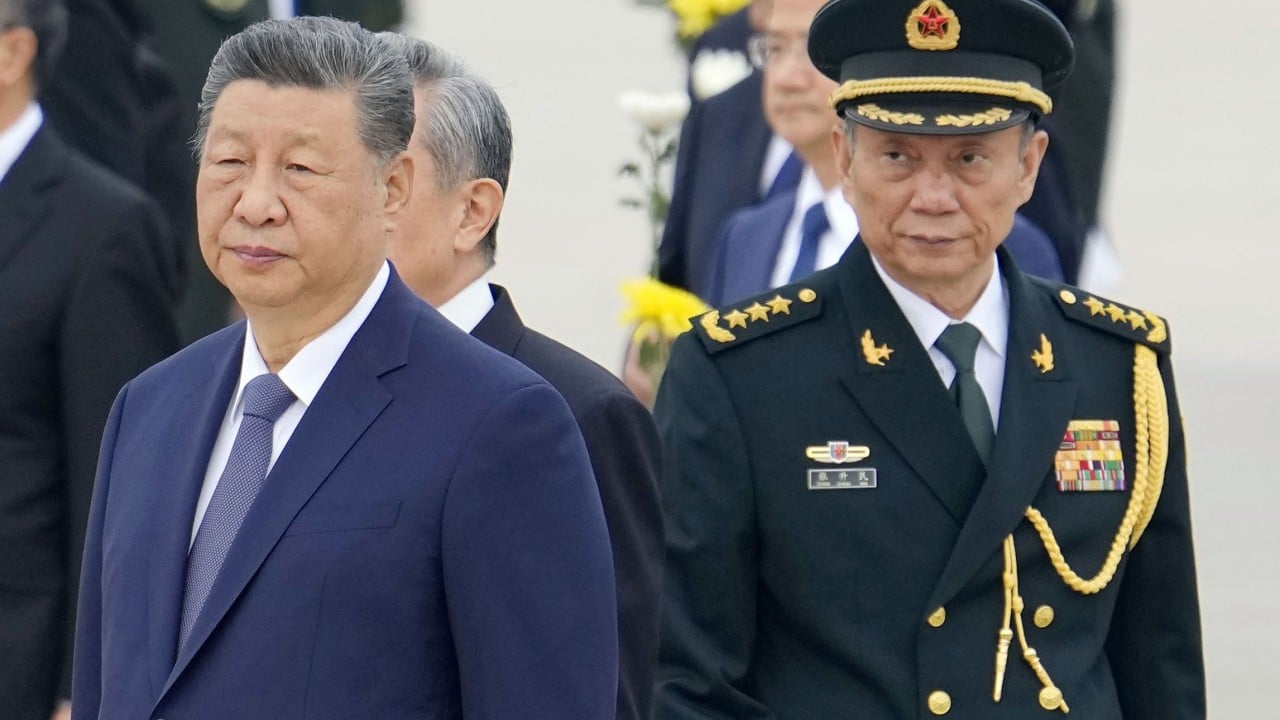
China’s top military leadership has initiated a structural shift in defense oversight by calling for a joint military-civilian anti-corruption mechanism targeting the People’s Liberation Army (PLA) armament system. Rather than treating graft as an isolated disciplinary failure among individual officers, this directive addresses a systemic principal-agent problem embedded in the state-sponsored Military-Civilian Fusion (MCF) strategy. By integrating civilian anti-graft organs with military discipline inspectors, the Central Military Commission (CMC) is attempting to close the regulatory arbitrage gaps that have historically allowed defense contractors and procurement officers to collude across jurisdictional boundaries.
The Structural Flaw in Legacy Defense Oversight
To understand the operational necessity of a joint watch, one must examine the historical bifurcation of Chinese state power. Under traditional Party architecture, the PLA operated as an insular bureaucracy. The CMC Discipline Inspection Commission policed uniformed personnel, while the civilian Central Commission for Discipline Inspection (CCDI) and the National Supervisory Commission (NSC) policed state-owned enterprises (SOEs) and private technology firms. For another perspective, read: this related article.
This jurisdictional wall created a severe blind spot as China accelerated its MCF policy over the past decade. MCF relies on dual-use supply chains, integrating private sector innovation and state-owned defense conglomerates—such as AVIC, CASC, and NORINCO—directly into military research, development, and acquisition (RD&A). When a PLA procurement officer interacts with a civilian defense contractor, the transaction crosses an institutional border.
In economic terms, this environment fostered classic information asymmetry. Military auditors lacked the legal authority and forensic accounting tools to subpoena civilian corporate ledgers, trace shell companies, or audit private subcontractors. Conversely, civilian investigators lacked security clearances to inspect classified military technical specifications, pricing benchmarks, or end-user delivery logs. Corrupt actors exploited this seam through predictable mechanisms: Further analysis on this trend has been published by Associated Press.
- Specification Tailoring: Procurement officers drafted technical requirements so narrow that only a single, favored civilian supplier could qualify, eliminating competitive bidding while maintaining the illusion of compliance.
- Transfer Pricing and Subcontracting Layers: Prime defense SOEs awarded lucrative, non-competitive subcontracts to private entities secretly controlled by the relatives of military acquisition officials.
- Quality Substitution: Contractors delivered components built with substandard materials, relying on the fact that civilian quality-control regulators could not enter military bases and military inspectors lacked visibility into the civilian factory floor.
The recent wave of high-profile removals within the PLA Rocket Force and the Equipment Development Department (EDD) exposed the operational cost of these vulnerabilities. When corruption degrades weapons procurement, the output is not merely financial waste; it is compromised combat readiness—manifested in defective missile fuel systems, unreliable avionics, and delayed force modernization timelines.
The Architecture of the Joint Watch Mechanism
Calling for a joint military-civilian corruption watch signals the dismantling of the jurisdictional firewall between the CMC and the civilian state apparatus. While the public directive outlines the strategic intent, operationalizing a unified oversight regime requires synchronizing four distinct institutional functions.
1. Cross-Jurisdictional Ledger Auditing
A unified watch merges the investigative authority of the NSC with the military’s internal auditing bureaus. In practice, this means a transaction is no longer audited in halves. Investigators can trace capital flows continuously from the Ministry of Finance allocation, through the PLA’s departmental budget, into the prime defense contractor’s accounts, and down to third-tier civilian component suppliers. By linking military contract IDs directly to civilian tax and banking databases, auditors can detect kickbacks and anomalous profit margins that previously vanished at the civilian-military boundary.
2. Standardized Dual-Use Pricing Models
Defense procurement inherently resists standard market pricing due to monopsony conditions—the state is the sole buyer—and classified R&D costs. Historically, Chinese defense pricing relied on a "cost-plus" model, which incentivized contractors to inflate baseline expenses to maximize their guaranteed profit margin. A joint oversight framework introduces cross-sector cost benchmarking. Civilian industrial regulators, who possess vast pricing data on commercial aerospace, shipbuilding, and electronics, can now establish baseline cost ceilings for dual-use components, stripping away the opacity that allowed contractors to overcharge the PLA for off-the-shelf technologies adapted for military use.
3. Unified Blacklisting and Vendor Vetting
Previously, a private vendor sanctioned for fraud in the civilian infrastructure sector could rebrand and bid on military logistics or IT contracts due to disconnected compliance databases. Joint oversight establishes a shared negative list. Corporate credit scores, beneficial ownership registries, and litigation histories maintained by the State Administration for Market Regulation are integrated directly into the PLA’s supplier qualification protocols. If a civilian entity exhibits shell-company characteristics or links to politically exposed persons, it is automatically disqualified from the defense supply chain before a bid is even evaluated.
4. Synchronized Interrogation and Case Transfer
Under Chinese administrative law, military personnel are subject to military tribunals, while civilian executives fall under civilian courts. In complex bribery cases involving both parties, sequential investigations allowed co-conspirators to coordinate stories or destroy evidence while waiting for the other jurisdiction to act. Joint case-handling task forces eliminate this latency. Simultaneous detentions and coordinated interrogations allow investigators to extract corroborating testimony from the supply side (civilian executives) and the demand side (military officers) concurrently.
Second-Order Effects on the Defense Industrial Base
Implementing a stringent, dual-key oversight mechanism solves the immediate problem of illicit rent-seeking, yet it introduces severe operational friction into the defense ecosystem. In organizational theory, tightening compliance controls inevitably increases transaction costs and slows decision-making velocity.
The primary risk is bureaucratic paralysis. Defense R&D requires rapid iteration, tolerance for technical failure, and close collaboration between military engineers and civilian scientists. When every informal consultation, specification adjustment, or cost overrun risks triggering a joint military-civilian anti-graft investigation, rational actors adopt defensive behaviors. Procurement officers become risk-averse, refusing to sign off on novel, unproven technologies from private startups in favor of safe, legacy systems from established SOEs.
This dynamic directly threatens the core objective of Military-Civilian Fusion. Private sector tech firms—already wary of thin profit margins and strict intellectual property rules in the defense sector—face heightened compliance burdens and severe legal exposure. If the cost of regulatory compliance exceeds the expected return on military contracts, agile private innovators will exit the defense market, leaving the PLA dependent on slower, bureaucratic state conglomerates.
Furthermore, aggressive retroactive auditing can disrupt active production lines. When senior executives at prime contractors or key program managers in the EDD are removed mid-project, institutional knowledge is lost, and procurement approvals stall until replacement personnel are vetted and installed.
Operational Realities and Structural Limitations
While a joint military-civilian watch closes obvious jurisdictional loopholes, it cannot eliminate corruption entirely due to fundamental structural constraints inherent to the defense sector.
First, classification remains an operational necessity. Even within a joint framework, total transparency is impossible. Compartmentalization of top-secret weapons programs means that only a small cohort of cleared personnel can verify whether a specific technical requirement is genuinely necessary or artificially tailored to favor a specific vendor. Civilian auditors, regardless of their mandate, will always face technical knowledge gaps when evaluating cutting-edge military hardware.
Second, the principal-agent problem persists at the top. A joint watch relies on the integrity of the inspectors themselves. By concentrating immense investigative power within a combined military-civilian apparatus, the state creates a new node of concentrated authority. Without independent external checks—such as a free press, independent judiciary, or legislative oversight—the watchdog mechanism remains vulnerable to political capture or selective enforcement, where investigations are driven by factional alignment rather than purely objective audit metrics.
Third, incentive structures remain misaligned. Defense procurement officers manage multi-billion-yuan budgets while earning fixed, relatively modest state salaries. As long as the financial asymmetry between the value of the contracts controlled and the compensation of the controller remains vast, the economic incentive for collusion will persist, forcing the state to rely on continuous, high-cost surveillance rather than self-regulating market mechanisms.
Strategic Trajectory for Defense Governance
To prevent the joint corruption watch from choking off technological innovation, the CMC and civilian regulators must transition from reactive, campaign-style purges to automated, rules-based governance.
The immediate operational priority is the deployment of algorithmic auditing across the defense supply chain. By digitizing the entire procurement lifecycle—from initial requirement generation to final delivery acceptance—the joint watch can flag anomalies automatically, such as bid clustering, last-minute specification changes, or repetitive subcontracting patterns, without requiring intrusive, paralyzing physical inspections of every contractor.
Simultaneously, the state must decouple legitimate technical failure from corrupt intent. Establishing clear safe-harbor provisions for R&D projects that fail to meet performance benchmarks—provided procurement protocols were followed transparently—is essential to keep private sector engineers engaged in high-risk defense innovation. The long-term efficacy of China's military modernization depends not on the volume of arrests made by the joint watch, but on its ability to enforce financial discipline without destroying the speed and agility of the dual-use industrial base.