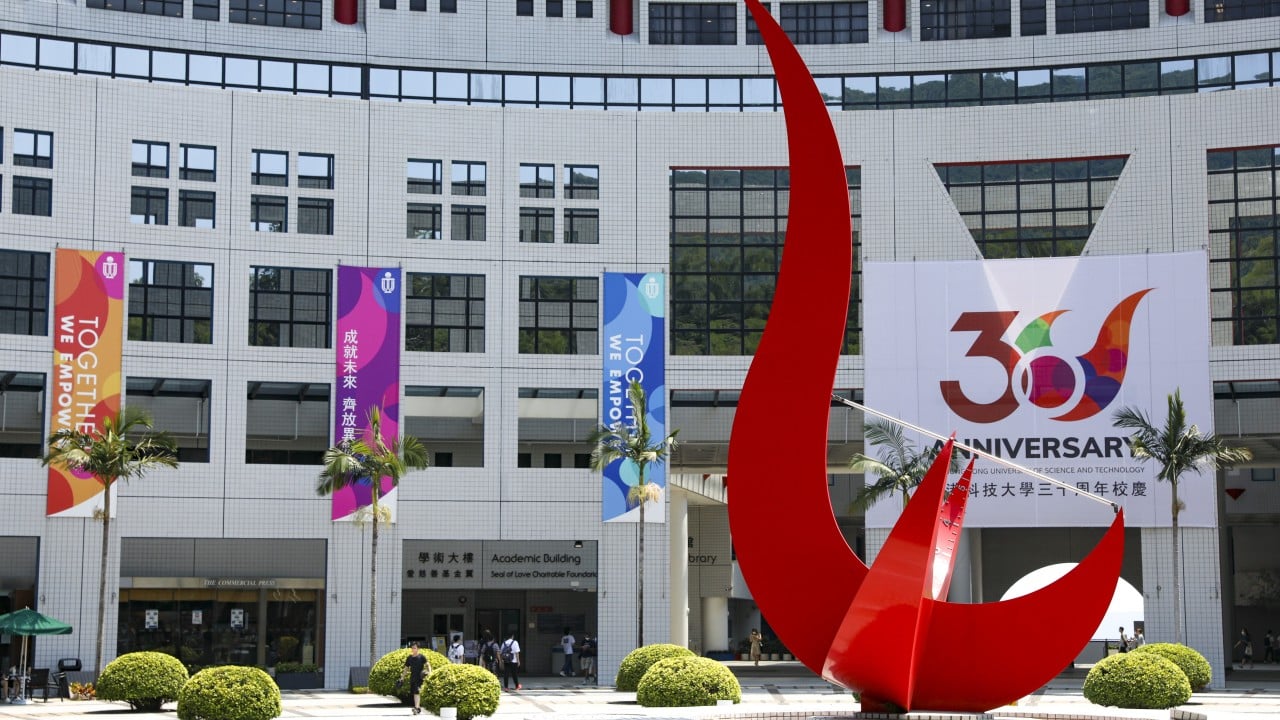
Another academic titan packs his bags. Antonio Facchetti leaving Georgia Tech for the Hong Kong University of Science and Technology triggered the usual round of institutional backslapping. Press releases framed it as a coup for Asian research supremacy. Observers nodded along, assuming brilliant minds simply follow the highest bidder or the newest cleanroom.
They are missing the entire point.
Academic geography is a relic of the twentieth century. The obsession with pinning high-end nanotechnology talent to a specific zip code ignores how modern materials science actually operates. Moving a chemist with a world-class citation index across an ocean does not magically multiply breakthroughs. It just shifts where the overhead gets billed.
I have watched universities blow millions on marquee hirings, treating star professors like NFL quarterbacks. They build multi-million dollar labs, hand out blank-check startup packages, and wait for the Nobel prizes to roll in. It rarely works the way the prospectus promises.
The Real Estate Delusion in Advanced Materials
Let us look at what Antonio Facchetti actually does. He builds high-performance organic electronics—transistors, photovoltaics, functional polymers. This is not about a single researcher sitting at a bench pouring chemicals into a beaker. It is about global synthesis networks, automated screening, and massive cross-continental data pipelines.
The lazy consensus says that proximity to a specific campus creates innovation. That is false. Innovation in organic semiconductors happens where the supply chains and characterization tools converge, not where a famous name parks his briefcase.
Georgia Tech lost a heavy hitter. HKUST gained a marquee name for its marketing brochures. But the material science community operates in a distributed matrix. Facchetti could formulate novel printable electronics from a cabin in Montana or a high-rise in Kowloon; the synthesis output depends on molecular design rules and cleanroom access, not local latitude. Universities buy the illusion of a localized cluster while the actual science happens in decentralized nodes.
When institutions celebrate these poached appointments as localized victories, they misunderstand the economics of modern research. You cannot buy a silicon or polymer breakthrough by writing a bigger retention check. You buy administrative prestige. There is a massive gulf between collecting intellectual property and actually commercializing it.
The Commercialization Trap Nobody Talks About
The press release celebrating this transition assumes academic pedigree translates directly into market-ready technology. That is the second major delusion.
I have spent years watching venture capitalists throw capital at university spinouts led by academic royalty. The failure rate is staggering. Brilliant synthetic chemists often make terrible product architects. They optimize for the Journal of the American Chemical Society, not for manufacturing yields at scale.
Organic electronics have struggled with commercial viability for decades not because we lacked smart people in Georgia, but because stability, degradation pathways, and large-area processing are brutally unglamorous engineering hurdles. A new polymer backbone that looks incredible in a controlled academic paper often falls apart when exposed to real-world oxygen, moisture, and thermal stress.
Shifting that research lab from Atlanta to Clear Water Bay does not change the laws of chemical degradation. It changes the funding source and the administrative overhead.
If HKUST wants to turn this high-profile recruitment into actual market disruption, they have to break the academic publishing feedback loop. They need to stop rewarding papers that prioritize novelty over manufacturability. Facchetti brings immense technical horsepower—his work on n-type organic semiconductors is foundational. But if his team falls into the trap of chasing academic impact factors instead of solving scaling bottlenecks, this move is nothing more than an expensive geographic shuffle.
Stop Treating Scientists Like Pop Stars
The academic hiring market is broken because it mimics celebrity culture. Universities want the jersey swap. They want to announce that they stole a star from an American powerhouse to signal prowess to global ranking bodies.
This obsession distorts talent allocation. Junior researchers, engineers, and postdocs who do the heavy lifting in these labs get buried under the shadow of the principal investigator's brand. Real progress in nanotechnology comes from the bottom up—from the graduate student who figures out why a batch of solution-processed transistors keeps shorting out, not from the endowed chair who signs the grant applications.
When we reduce complex scientific migration to a turf war between North America and Asia, we infantalize the global research community. Science is not a zero-sum territorial game. It is a continuous accumulation of empirical truth that cares very little about which university logo is printed on the letterhead.
Antonio Facchetti is a brilliant mind. His contributions to printed electronics are undeniable. But the next breakthrough in flexible displays or energy-harvesting polymers will not happen because he crossed the Pacific. It will happen despite it.
Stop watching the transfer window. Start looking at the chemistry.