Hollywood trades are popping champagne over a procedural technicality, and it is embarrassing to watch.
When an appeals court greenlit the Crichton estate’s breach-of-contract and copyright lawsuit against Warner Bros. Television over the Max medical drama The Pitt, the industry's lazy consensus formed in under ten minutes. Pundits immediately framed the decision as a David-versus-Goliath triumph. The narrative is predictable. A greedy studio tried to stiff a dead creator's family out of credit and cash by filing the serial numbers off an ER reboot, and the courts finally held the corporate giants accountable.
That narrative is completely backwards.
If you actually read the mechanics of what just happened, this ruling is not a shield protecting writers from corporate theft. It is a loaded gun aimed directly at the head of every showrunner, executive producer, and creator trying to get original television made in a contracting market. By lowering the bar for what constitutes "substantial similarity" in a procedural genre, the courts are handing legacy estates a permanent veto over future storytelling.
The Procedural Trap Nobody Wants to Admit
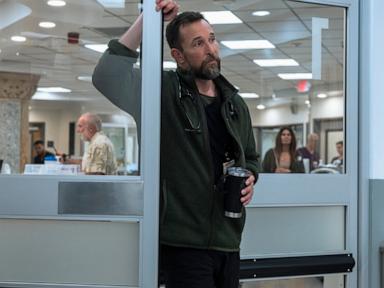
Let’s look at the actual dispute. The Pitt, starring Noah Wyle and run by R. Scott Gemmill and John Wells, began life as an explicit ER revival. When negotiations with Michael Crichton’s estate collapsed over creative control and credit—specifically, the estate demanding Crichton receive a "Created By" credit on a new show he had nothing to do with—Warner Bros. pivoted. They changed the setting from Chicago to Pittsburgh. They shifted the format to a real-time, single-shift structure modeled closer to 24 than traditional network television. They changed the character names, the backstory, and the pacing.
The Crichton estate sued anyway, arguing The Pitt was still an unauthorized derivative work and a breach of Crichton's original 1994 contract. Warner Bros. tried to kill the suit early using California’s anti-SLAPP statute, arguing the show was protected creative expression. The lower court said no. Now, the appeals court has agreed, ruling that a jury could reasonably find the two shows substantially similar.
I have sat in development rooms where studios killed brilliant pitches simply because an executive got spooked by a tangential resemblance to a dormant library title. We are talking about millions of dollars in development sunk into black holes because legal departments refuse to take on litigation risk. When an appeals court signals that a surviving anti-SLAPP motion is enough to drag a studio into years of costly discovery over a medical drama, the chilling effect is instantaneous.
Legal experts call this the scenes a faire doctrine. In copyright law, you cannot own the standard, indispensable elements of a genre. If you write a Western, you do not own the shootout at high noon, the dusty saloon, or the corrupt sheriff. If you write a medical procedural set in an urban emergency room, you do not own exhausted doctors, gunshot wounds, triage chaos, bureaucratic hospital administrators, or romantic tension in the supply closet.
Crichton did not invent the emergency room drama. St. Elsewhere and Trapper John, M.D. were doing it years before ER premiered in 1994. Yet, because The Pitt shares creative DNA with the people who made ER, the court is allowing a jury to conflate creative personnel with protected intellectual property.
Why the "Substantial Similarity" Standard is Broken for Television
To understand why this ruling is a disaster, you have to understand the extrinsic test used in the Ninth Circuit to evaluate copyright infringement. Under this test, courts dissect a work into objective elements—plot, themes, dialogue, mood, setting, pace, characters, and sequence of events—to see if they overlap.
Here is the flaw. When you apply the extrinsic test to a hyper-specific workplace procedural, everything overlaps.
- Setting: An underfunded, overburdened urban trauma center. (Every medical show since 1982).
- Pace: Frenetic, life-or-death urgency punctuated by dark humor. (Every medical show ever).
- Themes: The crushing weight of the American healthcare system on idealistic practitioners. (The literal thesis of New Amsterdam, The Resident, and Chicago Med).
- Characters: The stoic, burned-out attending physician mentoring cocky, terrified interns. (Dr. Mark Greene, Dr. Gregory House, Dr. Miranda Bailey, Dr. Perry Cox).
If you strip away the specific names and dialogue, ER and The Pitt look remarkably similar on a legal spreadsheet. So do ER and Grey's Anatomy. So do Law & Order and CSI.
The appeals court leaned heavily on the origin story of the project. Because The Pitt started as an ER reboot, the court treated the pivot to an original show as a suspicious disguise rather than a legitimate creative reset. Think about the precedent that sets. Imagine a scenario where a showrunner develops a detective series based on an old IP, the rights deal falls through, and the writer salvages their original character arcs by placing them in a new precinct. Under this logic, that writer is now legally radioactive. Their previous proximity to the IP permanently taints their ability to work in that genre.
Dismantling the Myth of the "Stolen" Reboot
Whenever a lawsuit like this hits the press, the public—and plenty of naive industry commentators—immediately ask the wrong question: Why didn't Warner Bros. just pay the Crichton estate?
That question fundamentally misunderstands how television deals work in the post-streaming era. This was never just about money. According to court filings, the Crichton estate demanded a "Created By" credit for Michael Crichton on The Pitt, alongside massive financial participation and approval rights.
In Hollywood, credits are not vanity badges. They are structural levers of power and backend economics. Giving a deceased author a "Created By" credit on a brand-new series that uses zero original characters, zero original scripts, and a completely different narrative engine is an insult to the living writers who actually built the show. John Wells and R. Scott Gemmill spent over a decade running ER. They wrote hundreds of hours of that universe. Michael Crichton wrote the original pilot script in 1974 and largely stepped away from the day-to-day creative heavy lifting after the first few seasons.
To argue that Crichton owns the concept of Noah Wyle playing a stressed-out emergency room doctor in a naturalistic style is absurd. Actors carry personas across projects. Creators carry sensibilities across careers. Dick Wolf has made the exact same show forty times with different three-letter acronyms. Taylor Sheridan has built a billion-dollar empire out of brooding men on horses fighting over land. Nobody sues Sheridan for infringing on his own tone when he moves from Yellowstone to 1883 or Landman.
Yet, because Warner Bros. originally explored an ER continuation before walking away from the table, the estate is attempting to claim ownership over the creative sensibility of the showrunners themselves.
The Uncomfortable Truth About Estate Hoarding
We need to have an honest conversation about the estate economy in entertainment. Over the last decade, studios became addicted to existing IP because risk-averse executives thought familiarity guaranteed eyeballs. That obsession inflated the ego and leverage of literary and creator estates to unsustainable levels.
Estates do not create. They manage assets. Their singular fiduciary duty is to extract maximum financial value from work done decades ago. When an estate demands creative veto power over modern adaptations—or sues when a studio decides to build something original rather than submit to extortionate terms—they are actively strangling the medium.
Look at the real-world fallout of the The Pitt litigation:
- Death of the "Spiritual Successor": Studios will stop hiring legacy showrunners to launch new shows in the same genre. If you ran a famous cop show in the 2000s, good luck getting a network to greenlight your new cop show today. The legal department will flag it as an infringement risk against your own former employer.
- Talent Lockout: Actors are going to be collateral damage. Noah Wyle is phenomenal in The Pitt. His presence is a massive draw for audiences who loved Dr. John Carter. Under the logic of this lawsuit, casting an iconic actor in a similar profession becomes Exhibit A for "consumer confusion" and derivative theft.
- Weaponized Discovery: The appeals court didn't rule that Warner Bros. lost the case. They ruled that the case can move forward. In corporate litigation, surviving a motion to dismiss is the victory. The Crichton estate now gets to subpoena years of internal emails, text messages, and early drafts from Wells, Gemmill, and Warner Bros. executives. The pressure to settle for tens of millions of dollars just to avoid airing dirty laundry in public will be immense.
The Counter-Argument You Need to Consider
To be completely fair, Warner Bros. handed the Crichton estate the ammunition for this fight. You cannot ignore the paper trail. The studio spent months actively negotiating an ER reboot with the estate. They pitched it. They developed it under that banner. When those talks blew up over the credit dispute, the studio announced The Pitt almost immediately with the exact same core creative team and lead actor.
From a purely contractual standpoint—separate from copyright law—the Crichton estate has a real argument. Crichton's 1994 agreement with Warner Bros. contained specific provisions regarding sequels, spinoffs, and derivative works. Contracts are about intent and circumvention. If a court finds that Warner Bros. intentionally restructured the deal solely to evade its contractual obligations to a deceased partner, the studio deserves to get burned. Studios have a long, ugly history of creative accounting and contractual sleight-of-hand to screw talent out of backend profits.
That is the nuance the cheerleaders are missing. You can despise studio accounting practices while still recognizing that expanding copyright protection to cover genre tropes and creative teams is poison for the industry.
How Creators and Studios Must Pivot Now
If you are an executive, a showrunner, or an entertainment attorney watching this unfold, hoping the California Supreme Court steps in to clean up the mess is not a strategy. You have to change how development is structured right now.
First, kill the "clean room" illusion. If negotiations for an IP reboot fail, you cannot simply pivot the same creative team onto a suspiciously similar original project the next morning. If a studio wants to build a spiritual successor after an estate deal collapses, there must be a hard firewall. Different writers, different lead actors, and a documented paper trail proving the new concept was independently generated without using a single page of the aborted reboot’s development materials.
Second, stop negotiating IP deals without pre-agreed credit caps. Studios walked into this trap by leaving "Created By" definitions ambiguous in 90s-era contracts. Modern agreements must explicitly define what constitutes a derivative work versus an independent genre entry, stripping estates of the ability to claim authorship over projects where they contribute zero written material.
Third, force the courts to separate contract law from copyright law. The entertainment press loves lumping these together, and plaintiffs' attorneys exploit that confusion to sway juries. A breach of contract is a private business dispute between two signing parties. Copyright infringement is a declaration that certain ideas belong to one entity to the exclusion of the rest of society. Hollywood lawyers must aggressively fight to sever copyright claims at the pleading stage so juries aren't tricked into thinking a contract dispute means an estate owns the concept of an emergency room.
The appeals court didn't save Michael Crichton's legacy today. They just made it infinitely harder for the next generation of writers to build their own without a lawyer sitting in the writers' room.