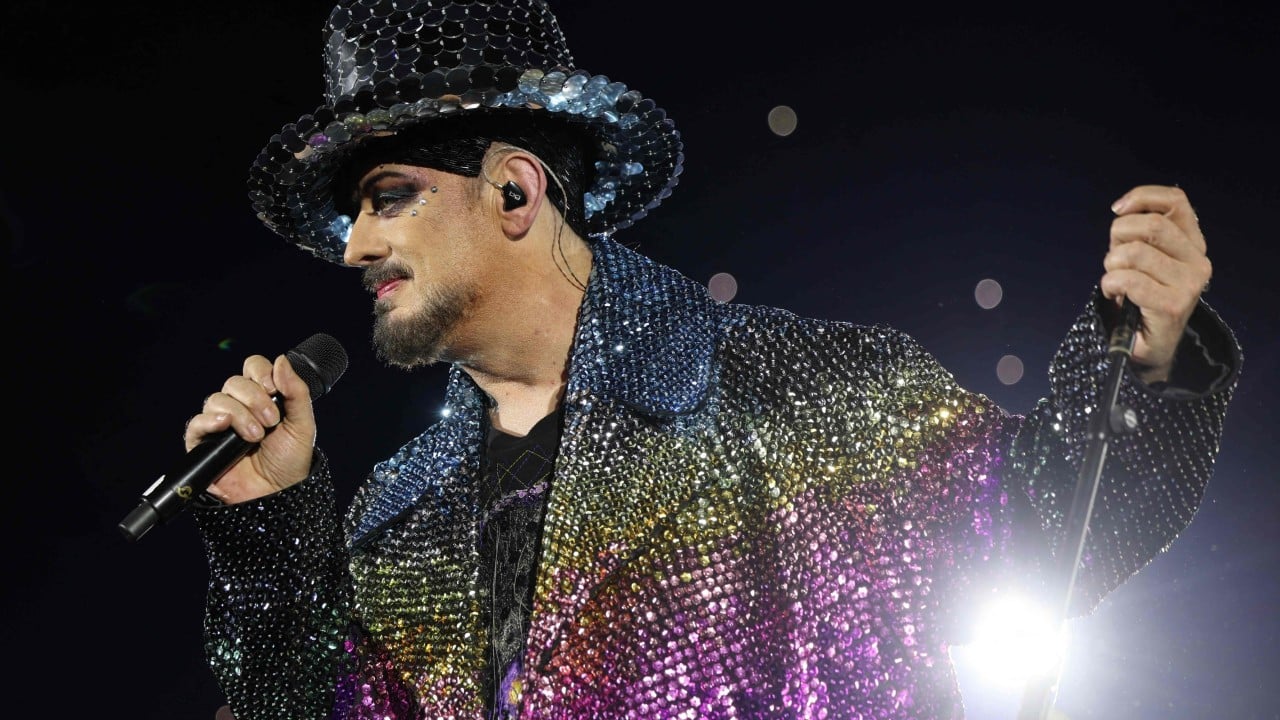
Boy George walked onto a Tel Aviv arena stage in November 2026 to thunderous applause, while critics half a world away called him a sellout or worse. One crowd saw a rare international pop icon refusing to bow to a cultural boycott. Another saw an artist crossing a moral line amid a brutal, ongoing conflict.
Honestly, that split screen tells you almost everything about how pop culture and geopolitics collide right now. When Boy George performed in Israel for two nights at Tel Aviv's Menora Mivtachim Arena on November 4 and November 7, 2026, he wasn't just singing "Karma Chameleon" or "Do You Really Want to Hurt Me". He was stepping right into a fierce tug-of-war over whether artists have a duty to boycott, a right to perform, or a blind spot when politics gets messy.
Why This Performance Became a Flashpoint
To understand why Boy George defying the cultural boycott stirred such loud reactions, you have to rewind a few months before November. In July 2026, he released a pop-reggae track titled "We Will Dance Again" (also shared with the Hebrew title Od Nirkod), inspired by the Nova music festival massacre and aimed squarely at defending Israel's military response while pushing back against accusations of genocide.
That single didn't sit quietly in a playlist. Backlash hit fast. Within days, Boy George exited a scheduled run as King Herod in a London Palladium production of Jesus Christ Superstar, parted ways with a music label manager, and drew sharp condemnation from boycott advocates, including the Palestinian Campaign for the Academic and Cultural Boycott of Israel (PACBI) and fellow musicians like Martyn Ware.
Then came the trip itself. Ahead of the Tel Aviv shows, Boy George met with Israeli President Isaac Herzog in Jerusalem and visited the Nova festival site near Kibbutz Re'im alongside survivors and families of victims. For supporters in Israel, showing up in person after months of online piling-on felt like loyalty when plenty of big names stayed away. For critics, showing up after releasing a song that dismissed "genocide" claims looked like taking a hard political side rather than simply playing music for fans.
The Tension Inside the Cultural Boycott
Cultural boycotts have a long history in music, going all the way back to anti-apartheid campaigns targeting South Africa in the 1980s. Boy George himself has brought up that comparison when pressed by critics, arguing that South Africa under apartheid was a "completely different equation" for him personally, while insisting his ties to Jewish friends and the Jewish community run deep.
Still, critics of his trip argue that a concert in a major arena isn't a neutral event. Boycott organizers contend that high-profile international performances normalize policies and military actions that harm Palestinians, especially when paired with lyrics or public statements backing the state's war effort. From that viewpoint, calling an artist a "hero" for performing ignores Palestinian suffering and treats cultural solidarity as one-sided.
On the flip side, defenders of his visit say artists shouldn't be treated as diplomats or forced into loyalty oaths by activists. Many concertgoers in Tel Aviv—including survivors, families affected by October 7, and everyday fans—spoke about relief, healing, and simply wanting a night of music after years of war and strain. Even some commentators who aren't lockstep with every Israeli government policy have argued that audiences shouldn't be cut off from live music, nor should a performer lose their livelihood over unpopular views.
What Happened Behind the Scenes and On Stage
What makes this story stranger than a standard celebrity feud is how messy the logistics and reactions actually were. In October 2026, Boy George told Israeli media he had faced threats and was struggling to put together a band willing to make the trip. Later that month, his publicity team indicated musicians would travel with him after all, and the November shows went ahead—with the second night dedicating 1,500 donated tickets to Nova survivors and bereaved families and bringing survivors on stage.
Even inside the arena, the mood wasn't one monolithic cheer. According to Times of Israel coverage of the second Tel Aviv show, there were sound hiccups, guitar trouble, forgotten lyrics, and a candid quip from the 65-year-old singer about not caring what online detractors thought. Some fans loved the raw, imperfect warmth and humor. At least one attendee from Jaffa came away unimpressed by both the uneven singing and what he saw as a desperate hunger for outside validation.
That detail matters if you care about media accuracy. A crowd cheering a pop star doesn't erase internal debates inside Israel, nor does viral outrage online capture every fan in the room. Real life is always a little messier than a headline.
Why Boy George's Stance Draws Sharp Pushback
Boy George built his career on nonconformity—dressing boldly, bending gender norms, and irritating stuffy gatekeepers in the 1980s. Ironically, in 2026, his critics accused him of conforming to a different kind of pressure, while his supporters saw him bucking music-industry groupthink.
There's also a real contradiction in how he frames his own position. At times, he has said he doesn't feel strongly connected to the state of Israel itself, that he cares about innocent people on all sides, and that music should unite people. At other times, his song lyrics and public remarks take a sharp stand on the war and accuse critics of ignoring Israeli victims or antisemitism.
Kudos to him for speaking plainly instead of hiding behind bland PR boilerplate. At the same time, when you write lyrics wading straight into wartime disputes and fly in for state-adjacent appearances, people are going to read your concert as political—whether you call it a political stance or not.
Practical Ways to Read Boycotts and Artist Controversies
Whenever a musician or actor gets tangled up in a cultural boycott, most of us end up scrolling past hot takes that leave out half the picture. If you want to form a grounded view instead of reacting to a clipped quote or a viral thread, try a few simple habits:
- Read the primary statements in full. Check what the artist actually said or sang—including any expressed concern for civilians or specific political claims—rather than relying on a second-hand summary.
- Separate artistic freedom from endorsement. You can criticize a song or a government while still thinking through whether boycotts work, who they affect, and where free expression fits in.
- Look at what boycott organizers are asking for. Understand the stated goals of groups like the BDS movement and PACBI alongside the counterarguments from artists, fans, and human-rights or cultural commentators.
- Notice who gets centered in the coverage. Pay attention to whether stories focus on concertgoers, survivors, Palestinian civilians, industry insiders, or the celebrity ego at the center.
Culturally, moments like this show how hard it is to keep pop music in a neat little bubble when real people are grieving and fighting. Whether you view Boy George's Tel Aviv shows as an act of solidarity or a provocation, the argument itself says just as much about our polarized times as anything he sang on stage.