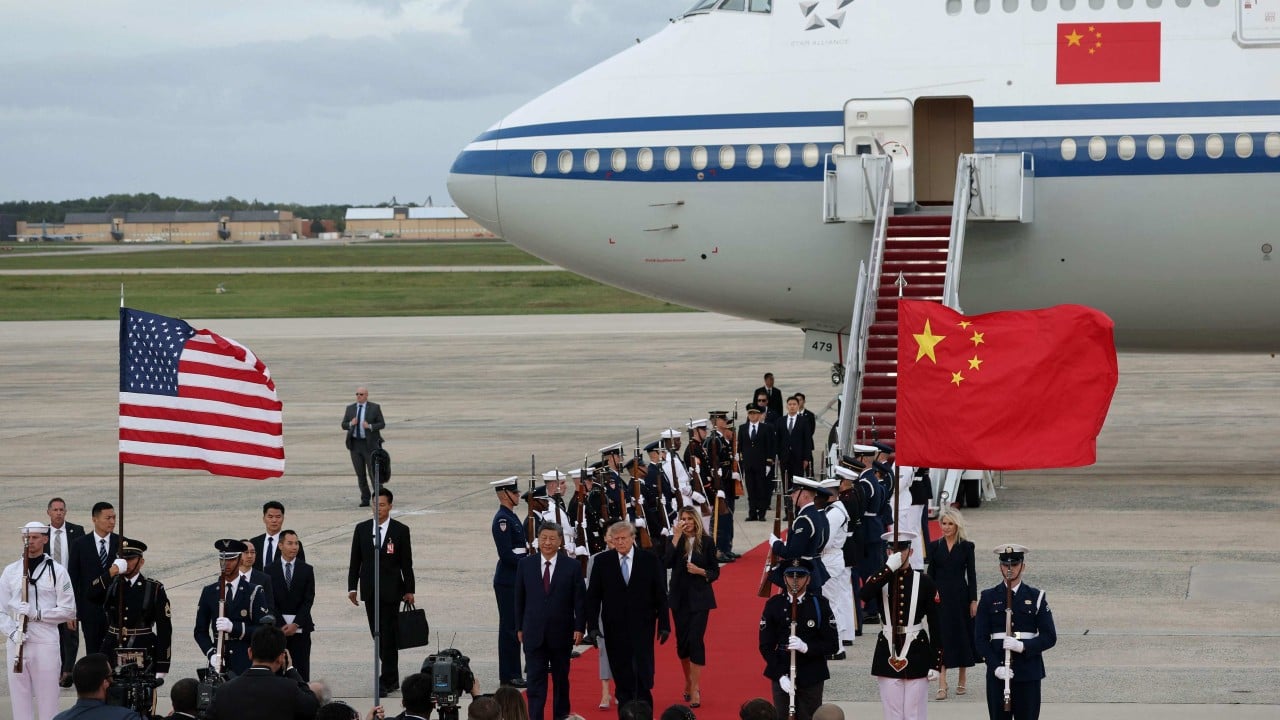
The exclusion of Chinese chief executives from the September 24, 2026 White House state dinner for President Xi Jinping was not a protocol oversight or a last-minute scheduling failure. It was the calculated execution of an asymmetric trade doctrine designed to decouple diplomatic theater from commercial market access. While more than 130 guests—anchored by American technology and financial executives representing trillions of dollars in market capitalization—filled the East Room, a contingent of Chinese corporate leaders who had traveled to Washington with valid visas remained sidelined without invitations.
To understand why Beijing’s corporate champions were barred from the room while American executives sat at the head table, analysts must look past diplomatic pleasantries and examine the structural friction between Washington and Beijing. The divergence stems from three operational failures: broken diplomatic reciprocity, irreconcilable definitions of national security risk, and the collapse of pre-summit investment deliverables. Expanding on this topic, you can also read: The Mechanics of Border Friction Why Trade Sanctions Fail to Alter Macroeconomic Vectors.
The Collapse of Diplomatic Reciprocity
In traditional statecraft, bilateral summits operate on strict mirror-imaging. When President Donald Trump visited Beijing in May 2026, the Chinese state banquet functioned as a classic commercial showcase. American executives dined directly alongside major Chinese private-sector figures, including Lenovo chief Yang Yuanqing, Xiaomi founder Lei Jun, and ByteDance CEO Liang Rubo. That symmetry mirrored Xi’s earlier 2015 state visit to the United States during the Barack Obama administration, when Alibaba founder Jack Ma and Tencent chief Pony Ma participated in high-profile bilateral roundtables prior to the Washington proceedings.
The September 2026 Washington summit shattered that precedent. The guest list inside the White House reflected an intentional imbalance: Analysts at Harvard Business Review have provided expertise on this matter.
- The American Contingent: Seated directly at the head table with Trump, Xi, and their spouses were Tesla and SpaceX CEO Elon Musk, Nvidia CEO Jensen Huang, AMD CEO Lisa Su, and Apple executive chairman Tim Cook. Elsewhere in the room were OpenAI CEO Sam Altman, Meta CEO Mark Zuckerberg, Amazon executive chairman Jeff Bezos, Microsoft CEO Satya Nadella, Google CEO Sundar Pichai, Goldman Sachs CEO David Solomon, and BlackRock CEO Larry Fink.
- The Chinese Contingent: Zero private-sector Chinese executives received official seats. Beijing’s delegation consisted strictly of party and state officials, including Politburo Standing Committee member Cai Qi, Foreign Minister Wang Yi, Vice Premier He Lifeng, National Development and Reform Commission chairman Zheng Shanjie, and Commerce Minister Wang Wentao.
This lopsided configuration reveals how the two capitals weaponized the guest list for opposing strategic objectives. For Beijing, placing executives from electric vehicle manufacturers BYD and Xiaomi, battery giant CATL, and optical transceiver supplier Zhongji Innolight inside the White House was meant to serve as a tangible diplomatic deliverable. A state dinner appearance would have signaled to domestic and global markets that stabilizing bilateral ties could translate into renewed commercial legitimacy and capital access in the United States.
Washington viewed that exact optics outcome as a strategic liability. Granting White House prestige to Chinese firms actively competing against—or restricted by—U.S. industrial policy would have undermined the administration's domestic trade posture. By inviting American CEOs whose supply chains and revenues depend heavily on China while excluding their Chinese counterparts, the White House projected leverage: American corporate interests would be championed at the highest level, while Chinese corporate access to the U.S. market remained strictly conditional.
The Pre-Summit Negotiation Bottleneck
The absence of Chinese executives at the dinner table was the visible symptom of a negotiation breakdown that occurred weeks before Xi’s aircraft landed in Maryland. Prior to the summit, U.S. Treasury Secretary Scott Bessent and U.S. Trade Representative Jamieson Greer held two rounds of preparatory meetings with Chinese Vice Premier He Lifeng in New York and Washington.
Those preparatory sessions exposed a fundamental deadlock over market access and industrial investment:
- The Investment Forum Stall: Following the May 2026 Beijing summit, both sides had floated the creation of a bilateral investment forum intended to channel capital and stabilize commercial expectations. Negotiators failed to establish parameters for the forum before September, stripping Chinese executives of an institutional vehicle to justify their presence in Washington.
- Failed Deal-Making: Behind closed doors, negotiators explored announcing specific commercial transactions during Xi’s visit—most notably a prospective joint venture or manufacturing agreement involving Chinese battery technology. Those talks failed to reach a viable framework, leaving the two sides without a headline commercial deliverable to anchor a business delegation.
- Divergent Bargaining Core: Washington demanded concrete structural concessions to expand American corporate access to Chinese domestic markets, whereas Beijing prioritized the relaxation of U.S. export controls on advanced semiconductors and the removal of tariff and regulatory barriers against Chinese green-tech exporters.
Without an agreed framework on commercial deliverables, U.S. officials saw no reason to grant ceremonial legitimacy to a Chinese business delegation. While a small group of Chinese executives still traveled to Washington independently—holding valid U.S. visas and hoping for a last-minute diplomatic breakthrough—the White House declined to issue formal invitations.
The National Security Vetting Wall
The second structural barrier preventing Chinese CEOs from entering the East Room was the collision between commercial diplomacy and U.S. national security doctrine. Under Washington's current regulatory architecture, the boundary separating private Chinese enterprise from state strategic apparatus has effectively dissolved in key sectors.
According to diplomatic reporting surrounding the summit, U.S. officials explicitly resisted hosting Chinese companies perceived to have operational links to China's military-industrial complex or state-backed technological ambitions. This vetting friction directly impacted the exact companies Beijing sought to showcase:
- Battery and EV Champions (CATL, BYD, Xiaomi): While Beijing frames these firms as commercial leaders in the global energy transition, Washington views Chinese dominance in lithium-ion battery supply chains and connected electric vehicles as acute economic and national security vulnerabilities.
- AI Hardware Suppliers (Zhongji Innolight): As a major supplier of high-speed optical transceivers to U.S. data center operators, Zhongji Innolight sits directly inside the contested artificial intelligence infrastructure stack—an arena where U.S. policymakers are actively tightening scrutiny rather than celebrating integration.
From a pure soft-power perspective, some observers argued that Chinese business leaders should have attended in force regardless of immediate deal outcomes, viewing presence alone as a public relations victory. That assessment ignores the domestic political cost function inside Washington. Placing executives from sanctioned or scrutinized Chinese sectors alongside U.S. defense contractors like Lockheed Martin CEO James Taiclet and Pentagon leadership—including Defense Secretary Pete Hegseth and Joint Chiefs Chairman Dan Caine, both of whom attended the dinner—would have triggered immediate bipartisan backlash on Capitol Hill.
The Dual-Audience Trap for Chinese Executives
For China’s leading entrepreneurs, securing a seat at a U.S.-China summit is never solely about engaging American regulators or counterparties; it is equally about signaling political standing to Beijing. In China’s state-capitalist system, proximity to Xi Jinping during high-stakes foreign travel serves as a critical indicator of political favor and regulatory safety at home.
When the White House closed the door to a Chinese corporate delegation, it trapped those executives in a strategic vacuum:
- Lost Domestic Signaling: Without a seat in the East Room, Chinese founders lost the high-visibility domestic validation of dining alongside their head of state on global television.
- Asymmetric Lobbying Exposure: Conversely, American tech executives gained uninterrupted, direct access to both Trump and Xi at the same table. During the banquet, Xi publicly emphasized that China and the United States must keep artificial intelligence under human control—a message delivered directly to the founders and CEOs of Nvidia, OpenAI, Google, Meta, and Microsoft, without a single Chinese AI or hardware executive present to participate in the margin conversations.
Strategic Limitations and Risks of the Exclusion Play
While excluding Chinese CEOs allowed the White House to project uncompromising trade discipline and avoid domestic political friction, the tactic carries measurable operational limitations for U.S. economic statecraft:
- Erosion of Back-Channel Commercial Diplomacy: Historically, bilateral business roundtables have functioned as shock absorbers during geopolitical downturns, allowing private-sector leaders to propose technical compromises that diplomats cannot publicly endorse. Removing Chinese corporate leaders from the room eliminates a vital feedback loop for de-escalating supply chain disputes.
- Accelerated Chinese Localization: Publicly sidelining China's most globally competitive private firms reinforces Beijing’s narrative that the U.S. market is permanently closed to Chinese capital, accelerating state-directed efforts to purge American technology from Chinese supply chains.
- Fragility of the Trade Truce: Although the September summit coincided with a temporary extension of the U.S.-China trade truce through January 10, 2027, the absence of institutional business engagement leaves that truce entirely dependent on executive-level political mood rather than anchored in binding commercial interdependence.
The Strategic Play for Multinational Operators
The September 2026 state dinner establishes a clear operating baseline for corporate leaders managing cross-border exposure between the world's two largest economies. Summit optics no longer signal impending market liberalization; they reflect managed, asymmetric competition.
Multinational executives and institutional investors must calibrate their 2027 capital allocation strategies around three realities:
- Discount Ceremonial Diplomacy: Do not treat high-level leadership meetings or temporary tariff extensions as precursors to relaxed export controls or expanded cross-border investment approvals. Until Washington and Beijing agree on a formal definition of non-strategic commercial sectors, bilateral summits will produce tactical pauses rather than structural market openings.
- Prepare for Parallel Supply Chains: With Chinese battery and green-tech firms unable to secure political cover for U.S. market entry even during a presidential state visit, joint ventures relying on Chinese intellectual property or equity in North America face prohibitive regulatory execution risk. Capital expenditure must be ring-fenced into non-overlapping regional ecosystems.
- Watch the APEC Shenzhen Summit for Symmetry: When President Trump travels to Shenzhen for APEC China 2026, monitor whether Beijing retaliates by restricting American corporate access or doubles down on hosting U.S. CEOs to drive a wedge between corporate America and Washington policymakers. Until reciprocity returns to the guest list, cross-border deal-making remains subordinated to national security vetting.