Every time a yellow bus makes headlines for a tragic collision, the national reflex is immediate and lazy. We demand harsher background checks, stricter hours-of-service regulations for drivers, or immediate termination of whoever was behind the wheel. We treat transportation tragedies as isolated moral failures of individuals rather than systemic design failures of heavy machinery moving human cargo without basic physics protection.
That mindset is costing lives. Don't miss our earlier post on this related article.
When a school bus hits another vehicle or a fixed barrier, the occupants inside experience violent, unbelted acceleration and deceleration forces. Yet the standard public conversation focuses almost entirely on driver qualifications, speed limits, or route optimization. It is an absurd misallocation of outrage. We are interrogating human error while ignoring the fact that we put children into multi-ton steel boxes built decades ago with interior safety standards that would never pass muster in a modern passenger car.
Let us look at the mechanics of what happens when a bus crashes. Most traditional yellow school buses rely on compartmentalization. This is the industry term for closely spaced, padded seats designed to absorb energy during a frontal impact by catching the child's torso. It works reasonably well for head-on collisions. If you want more about the context of this, The Washington Post offers an in-depth summary.
It fails completely during side impacts, rollovers, or rear-end strikes at high speeds.
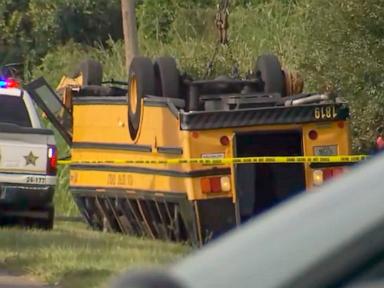
When a bus rolls over, compartmentalization stops being a safety feature and becomes a revolving trapdoor. Children are tossed sideways across the aisle, colliding with each other, the metal frame, and the roof. But if you suggest retrofitting every single school bus in the country with three-point lap-shoulder seatbelts, school boards panic over the price tag and bus manufacturers claim it reduces seating capacity. We prioritize seating density and municipal budget lines over modern occupant kinematics.
Industry insiders know a dirty secret. School buses are statistically safer than passenger cars on a per-mile basis, primarily because of their sheer mass and size. When a bus hits a Honda Civic, the Civic absorbs the kinetic punishment. That statistical reassurance makes communities complacent. It tricks parents into believing that massive size equals personal occupant protection. It does not. Size protects the bus from smaller cars; it does nothing to protect a child's internal organs when the bus itself comes to an abrupt, violent stop against an immovable object.
Fixing this requires dropping the comfort blanket of institutional denial.
First, stop treating seatbelts on buses as optional accessories. The National Highway Traffic Safety Administration has shifted its official stance over the years, endorsing lap-shoulder belts in new large buses, but the implementation timeline across thousands of school districts is glacially slow. Districts plead poverty. Taxpayers vote down bonds. Meanwhile, children ride without restraints that have been mandatory in standard automobiles for generations. If a vehicle transports thirty million children a day, treating basic restraint systems as an expensive luxury is indefensible.
Second, reevaluate route engineering and urban planning around school zones. Too many tragedies occur because heavy commercial truck corridors intersect directly with neighborhood school bus stops due to outdated zoning laws. Instead of spending millions on driver re-training seminars that change nothing about vehicle physics, cities need to aggressively separate heavy freight traffic from student transit corridors.
The next time a headline breaks about a school bus accident, resist the urge to join the chorus crying for the driver's head. Demand better engineering. Demand structural crashworthiness. Refuse to accept that cargo trucks get modern safety cages while our children get padded bench seats and a prayer.
Physics does not care about school district budgets.