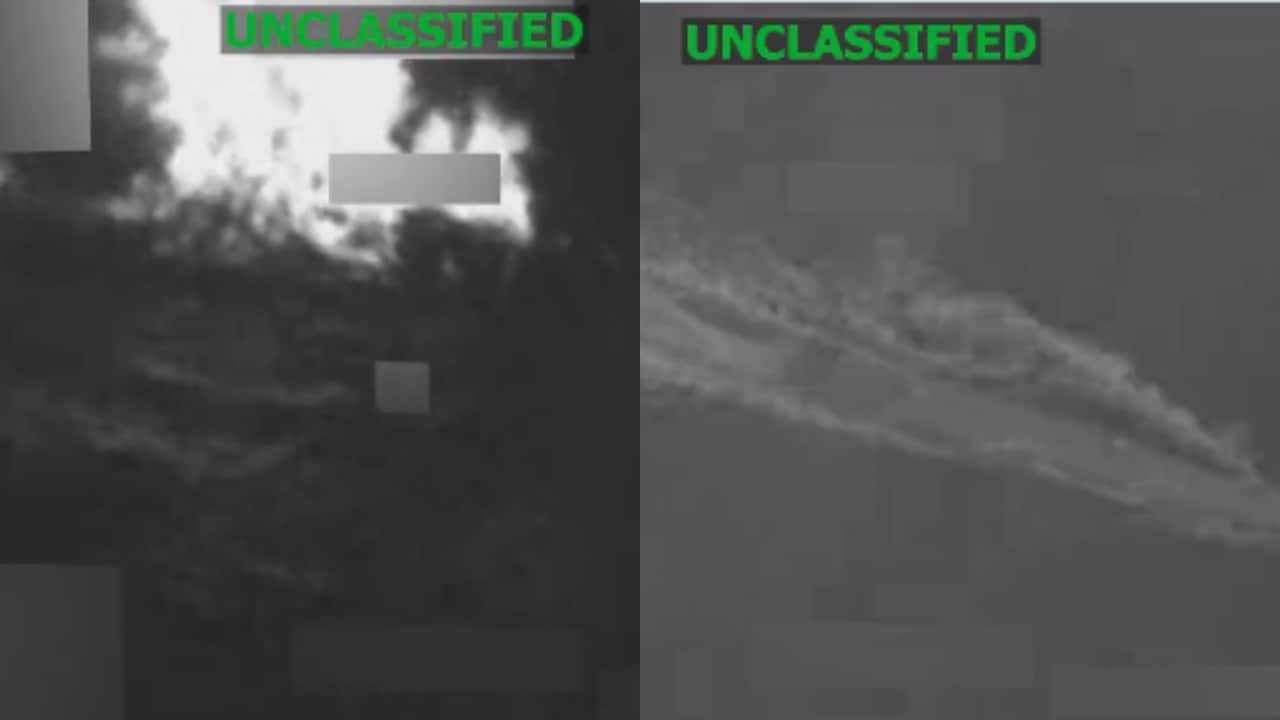
The headlines rolled in with predictable, numbing uniformity. Another speed-boat intercepted in the Eastern Pacific. Another official statement citing maritime drug trafficking. Another casualty count that the press dutifully transcribes from a three-paragraph press release handed down by a command center thousands of miles away.
Everyone focuses on the grammar of the government's justification. Did the vessel meet the legal threshold for kinetic intervention? Was the intelligence accurate? Was the escalation proportional? These questions are completely useless. They treat a structural crisis of modern statecraft like a traffic dispute.
I have watched policy analysts obsess over these tactical theater pieces for over a decade. They tear apart rules of engagement while ignoring the rotting foundation underneath. When a military asset obliterates a target on the open water under the banner of narcotics enforcement, the public thinks they are watching a war on drugs. They are not. They are watching a bureaucratic feedback loop consume its own tail.
The Lazy Consensus Of Maritime Interdiction
The conventional narrative goes like this: cartels run drugs north, the United States Navy and Coast Guard stop them south, and every kinetic strike is a regrettable necessity in an existential war. This framing is lazy, comfortable, and fundamentally dishonest.
If you believe that intercepting a fiberglass panga off the coast of Central America makes even a fractional dent in the street price or availability of illicit substances in Chicago or Miami, you failed high school economics. Drug supply chains are antifragile. They are decentralized networks designed to absorb losses the way a sponge absorbs water. Every time a boat goes down, the cartel's pricing model simply adjusts for the friction.
Yet the defense establishment clings to these kinetic exercises because they provide measurable outputs for unmeasurable failures. It is much easier to point to tonnage seized or a boat destroyed than it is to admit that domestic demand and structural foreign policy failures have rendered maritime interdiction an expensive exercise in noise-making.
The media eats it up because explosions and drug busts look good on a six o'clock broadcast. But nobody asks the hard mechanical question: what problem are we actually solving here?
The Legal Fiction Of The Eastern Pacific Transit Zone
Let us talk about jurisdiction and operational reality. The Eastern Pacific is a massive maritime commons. Patrolling it requires a staggering expenditure of fuel, radar capability, and human capital.
When an engagement occurs, the legal architecture leans heavily on designations like suspected drug trafficking vessels. Under international maritime law, these designations grant broad authorities, but they also create a dangerous gray zone. We have militarized a policing function and civilianized a military operation, creating a hybrid monster that operates with minimal transparency.
"When you turn a customs enforcement problem into a kinetic battlefield, every tool you use will eventually look like a hammer, and every target will look like a nail."
Let us run a brief thought experiment. Imagine a domestic police force responding to a neighborhood property dispute by deploying an anti-tank missile. You would call it insane. Yet scale that exact logic up to the high seas, slap a geopolitical label on it, and the press nods along because the word narcotics was mentioned in the brief.
The operators executing these missions are professionals doing what they are ordered to do within the strict parameters they are given. I am not blaming the sailors in the hull or the pilots in the air. The rot is at the strategic level. Command authorities use these operations to justify budgets and signal resolve to domestic constituencies, maintaining an illusion of control over a border policy that has no coherent endgame.
The Brutal Economics Of The Panga Economy
Why do young men continue to pilot these death traps across thousands of miles of open ocean despite the extreme risk of interdiction or kinetic elimination? Because the alternative is absolute economic oblivion.
In large swaths of coastal South and Central America, the informal economy is the only economy. A single successful run can yield life-changing capital for a family trapped in systemic poverty. The cartels do not draft people at gunpoint for these runs; they do not need to. They have a limitless supply of desperate labor willing to roll the dice against a ten percent survival or evasion probability because the land offers zero upward mobility.
When a strike destroys a boat and kills the crew, the syndicate does not cry. They write off the asset as a minor overhead cost, factor the loss into their quarterly logistics sheet, and recruit the next desperate twenty-something from a coastal village by sundown.
Until we understand that maritime drug interdiction is an economic containment strategy masquerading as national security, we will keep repeating this cycle. We are treating a symptom of global wealth inequality with high-explosive ordnance.
What Real Reform Actually Looks Like
If we want to stop writing these grim headlines, we have to abandon the comforting fiction that kinetic force can solve a supply-and-demand curve.
First, stop funding naval patrols as a substitute for domestic public health and foreign economic development. Every dollar spent on launching kinetic strikes against wooden boats in the Eastern Pacific is a dollar stolen from programs that actually reduce consumption and dismantle the domestic financial networks that launder cartel capital in our own banking sector.
Second, force transparency. If a government agency claims a vessel was an active threat meriting lethal kinetic action, release the unedited sensor feeds, the full intelligence packages, and the after-action reports. Sunlight is the only disinfectant for the shadowy gray zones of modern maritime warfare.
The next time you read about a boat burning on the horizon and a couple of nameless casualties written off as drug traffickers, do not ask if the strike was legal. Ask why we are still pretending it matters.
Stop watching the water. Look at the shore.