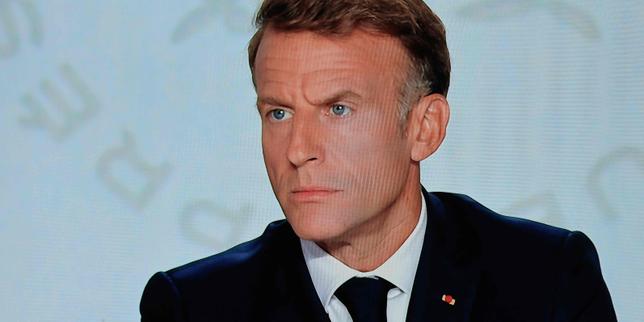
The recent political gambit to deploy French military assets to the strategic Saudi energy export hub of Yanbu exposes a desperate reality: western leaders are running out of levers to pull against skyrocketing pump prices. When Emmanuel Macron announced this defensive mission on national television alongside an elusive promise regarding state levies, he attempted a high-wire act. He tried to convince working-class motorists that projecting power thousands of miles away will somehow cool down a local crisis where diesel flirts with 2.40 euros per liter.
It is an expensive distraction from structural failure.
The Illusion of Remote Control
Let us examine the mechanics of what executive branch communications call protection. The justification rests on securing infrastructure against regional volatility to reassure international markets and prevent supply disruptions. Yet, pinning domestic economic stability in Europe to radar batteries and infantry detachments stationed on the Red Sea coast reveals a profound misalignment.
The fluctuations hitting the consumer aren't merely caused by physical blockades on a single export pier. They are driven by multi-layered systemic pressures: refining capacity bottlenecks, speculative trading on global exchanges, and a structural addiction to hydrocarbons that decades of empty transition promises failed to break.
Sending troops to guard foreign terminals does nothing to alter the fundamental pricing power held by cartel agreements and commodity traders. It militarizes diplomacy while leaving the domestic tax structure untouched.
The Trap of Fiscal Addiction
For months, households watching fuel gauges cross painful thresholds have demanded a straightforward intervention: lower the taxes. In nations like France, government take-home from energy duties represents nearly half of every liter pumped.
When pressed on this fiscal reality, leaders pivot toward tactical ambiguity, suggesting that a reduction remains possible only if conditions deteriorate further.
This hesitation is entirely calculated. State budgets rely heavily on these constant petroleum revenues to fund public services. Cutting taxes means finding savings elsewhere or bloating national debt.
Instead of choosing between fiscal austerity at home or honest admissions about state dependency on energy taxes, the administration opts for foreign staging. A military deployment looks active on the evening news. It signals strength. But it shifts the theater of operations away from the Ministry of Finance, where the real levers of relief actually sit.
The Cost of Strategic Misdirection
The political opposition has been quick to criticize the legal and operational risks of this maneuver, noting that stationing soldiers in an active geopolitical theater invites unwanted escalation. But the critique often misses the deeper economic injury. Every euro spent projecting military logistics to secure foreign pipelines is a resource diverted from domestic adaptation and economic buffering.
Energy shocks are no longer temporary anomalies. They are recurring checkpoints in a volatile global economy. Treating them with old-school gunboat economics mistakes symptoms for causes.
As long as governments refuse to reconcile their domestic tax burdens with the economic realities faced by citizens at the pump, grand deployments overseas will remain what they truly are: expensive theater designed to buy time while the tank runs dry.
Fuel: Why France is deploying "military resources" in Saudi Arabia
This video provides a concise look at the official rationale behind the military deployment to Saudi Arabia amid escalating fuel concerns.