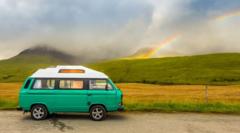
Waking up to a misty Scottish sunrise, pulling back the curtains of your rolling home, and sipping coffee with a view of the Old Man of Storr sounds perfect. It is the ultimate slow-travel fantasy. But for the people who actually live on the Isle of Skye, that fantasy smells like raw sewage and looks like a blocked driveway.
The boom in motorhome and campervan travel has hit the Scottish Highlands and Islands hard. What used to be a managed stream of summer visitors has turned into an overwhelming flood of large vehicles clogging narrow infrastructure. Local residents are reaching a breaking point, dealing with ruined single track roads, blocked cemetery gates, and visitors using front gardens as public toilets.
The tension isn't about being anti-tourist. Tourism keeps the lights on in many rural Scottish communities. The real issue is a fundamental mismatch between massive modern vehicles and fragile, historic infrastructure.
The Friction on Single Track Roads
If you have never driven a wider-than-average vehicle on a single track road, Skye will test you. The island relies heavily on narrow roads with designated passing places. These cutouts exist specifically to allow oncoming traffic to pass or to let faster vehicles overtake.
Too many visitors mistake passing places for overnight parking spots. When a campervan sets up camp in a passing place, it breaks the transport link. Oncoming cars are forced to reverse long distances on blind bends.
Worse, rental campervans are often driven by people who don't understand the physical size of their vehicle. It takes only one rented motorhome dropping a wheel into a ditch to paralyze an entire area. A recent incident on the single track road from Staffin to the Quiraing saw a rental van get stuck while trying to squeeze past a car without using a passing place. The resulting gridlock lasted hours because recovery vehicles couldn't even reach the site through the jammed traffic.
The Wild Camping Misconception
Scotland's Land Reform Act of 2003 established progressive access rights, often called the right to roam. It allows people to access private land for recreation and wild camping. But there is a massive catch that motorhome drivers consistently miss.
The right to roam applies only to non-motorized access. It does not give anyone the right to park a vehicle anywhere they want.
Parking a motorized vehicle overnight on a verge, in a layby, or near private property isn't wild camping. It is just unauthorized parking. Because smaller campervans often lack built-in toilet facilities, this casual parking leads directly to environmental fouling. Residents report finding human waste and litter near paths, historic sites, and residential boundaries.
Public washrooms and chemical disposal points on the island are facing unprecedented pressure. Some visitors have even been spotted trying to empty chemical toilet tanks into standard public toilets or freshwater ditches, risking damage to local water systems and septic infrastructure that simply wasn't designed to handle harsh chemicals.
The Economic Imbalance
The biggest frustration for locals might be the economic reality of the self-contained traveler. The classic argument for high tourism numbers is that visitors spend money in the community. With modern campervans, that link is weakening.
Many visitors rent their vans in Edinburgh or Glasgow, stock up on groceries at a major mainland supermarket, and drive north. They sleep in the van, cook their own food, and leave behind nothing but their rubbish and waste. They aren't booking local bed and breakfasts, and they aren't eating at local restaurants. The local community bears the full burden of the infrastructure wear and tear without seeing the financial return.
When local shops do get used, the sudden influx can strip the shelves of essentials, leaving residents struggling to buy basic groceries during peak weeks.
Practical Steps for Responsible Touring
If you are planning to visit Skye in a motorhome or campervan, you can enjoy the trip without contributing to the problem. It requires a shift from spontaneous wandering to deliberate planning.
- Book designated campsites: Do not rely on pull-offs. Use official campsites that offer proper hookups, waste disposal, and fresh water. Book these months in advance.
- Learn the road etiquette: Never park in a passing place. If a queue of cars forms behind you, pull into a passing place on your left (or pause opposite one on your right) to let them pass.
- Pack it out: If your vehicle does not have a built-in toilet, do not camp away from public facilities. Carry trash bags and dispose of waste only at designated recycling and refuse points.
- Support local businesses: Buy your groceries from village shops, stop at local cafes, and purchase fuel on the island. Make sure your presence financially supports the community you are enjoying.

:strip_icc()/GettyImages-181861505-4e63227ed0a14dc9bfe86848ef54caf3.jpg)